


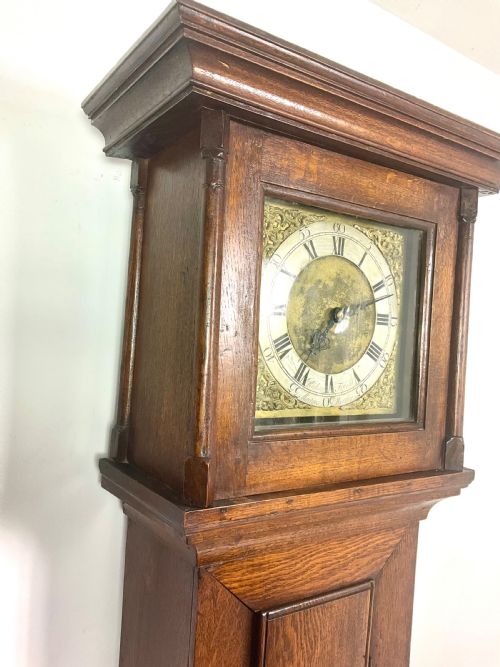


Eighteenth Century Floor Clock
An eighteenth century floor clock commands a room with its stately proportions and rhythmic tick, bringing centuries of mechanical heritage directly into your home.
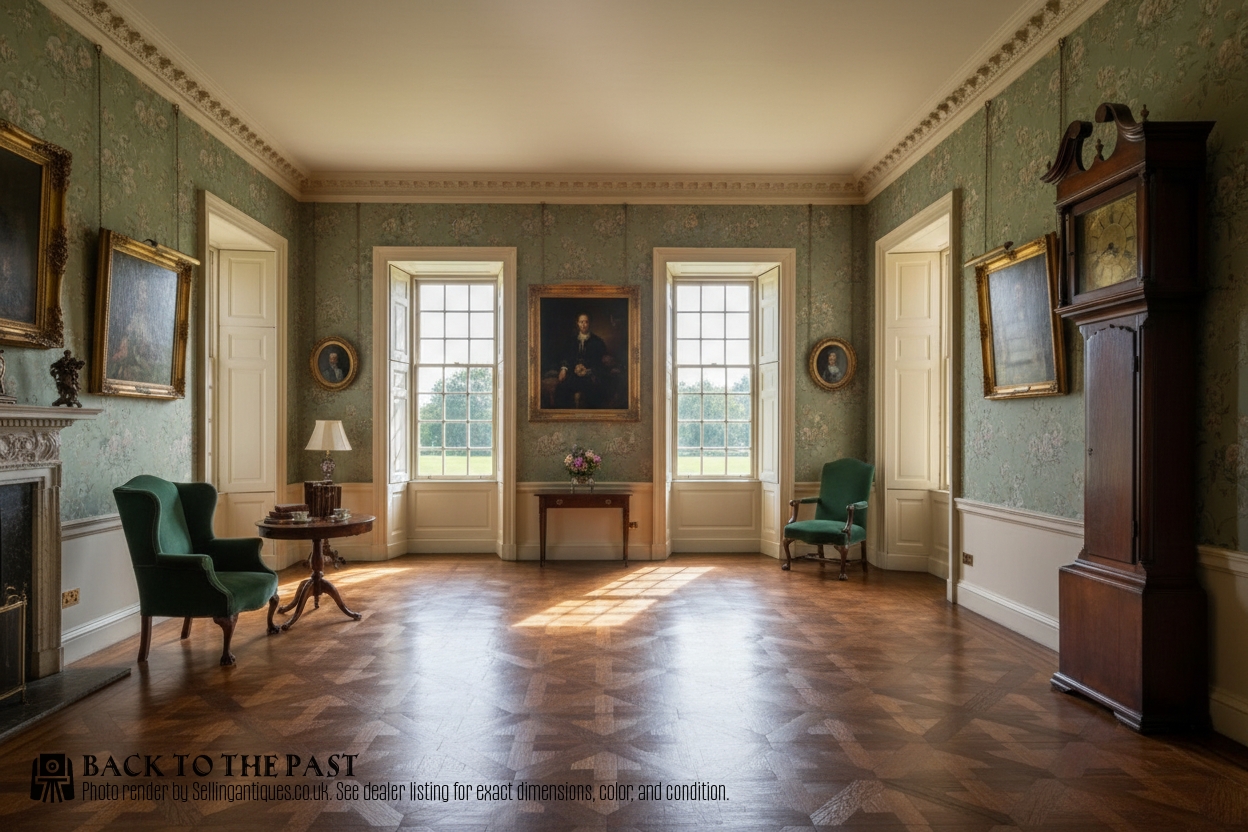
Eighteenth Century Floor Clock
An eighteenth century floor clock, often called a longcase or grandfather clock, stands as a monumental piece of domestic furniture housing an intricate weight-driven movement. These timepieces were built to measure hours with precision while serving as the architectural anchor of a grand room.
The versions most commonly met on this page span the Georgian and George III periods, constructed predominantly in rich mahogany or sturdy oak. Regional examples emerge from makers across England and Scotland, showing local variations in dial design and timber choice.
What varies in quality
The refinement of the cabinetwork and the complexity of the dial separate standard examples from finer pieces. Heavy mahogany cases with sophisticated architectural mouldings indicate superior workmanship compared to simpler regional boxes.
Complications on the face, such as rolling moons, rocking ships, or automata, signal a higher grade of horological ambition and execution by the maker.
Watch closely as the hours pass and Father Time or a painted ship rocks gently across the dial, driven entirely by concealed brass gears.
Gillows·Richard Biggs Romsey·Stanyer Nantwich·Dwerrihouse And Carter·Samuel Buxton Diss·James Rayner Hull·John Jackson London·Robert Darling Melrose·Archibald Collier Bond Street
The Eighteenth Century Floor Clock Glossary
- Longcase clock
- A tall pendulum clock enclosed in a wooden case designed to stand directly on the floor. These timepieces are frequently referred to as grandfather clocks.
- Dial
- The visible face of the clock that displays the hours, minutes, and often secondary indications like calendar dates or moon phases. These brass and silvered plates are frequently engraved with the maker's name.
- Moonphase
- A specialised dial mechanism that tracks the lunar cycle through a rotating painted disc. This complication adds visual movement and technical intricacy to the clock face.
- Automata
- Mechanical figures or moving scenes integrated into the dial, such as a rocking ship or Father Time. These animated elements operate in time with the movement of the clock.
Eighteenth Century Floor Clock: Frequently Asked Questions
How do I wind an eighteenth century floor clock?
Winding requires raising the internal weights by inserting a key into the winding holes on the dial face and turning carefully until the weights reach their upper limit.
Take care not to overwind the movement, as this places excessive tension on the internal mechanism and can damage the gut lines or chains.
Where should I place a longcase clock?
Position the clock against a solid interior wall where temperature fluctuations and direct sunlight remain minimal to protect the timber case and delicate movement.
Ensure the floor beneath is entirely level so the pendulum swings evenly and keeps accurate time without catching.
How do I tell different Georgian periods apart?
Early Georgian and George II examples often feature rich walnut or early oak timbers with simpler proportions and square brass dials.
Later George III pieces frequently display figured mahogany, break arch brass dials, and more refined architectural cabinetry influenced by neoclassical design.
What is the difference between an oak and a mahogany case?
Oak cases typically reflect provincial workshops and earlier regional traditions, offering a robust texture and warm grain.
Mahogany cases generally indicate metropolitan London makers or high-end provincial commissions, utilising finer tropical hardwoods suited to elaborate carving.