



Egyptian Revival Figure
An egyptian revival figure brings the monumental sculpture and ancient iconography of the Nile into domestic spaces through bronze, marble and gilt wood.
Egyptian Revival Figure
An egyptian revival figure encompasses sculptural works produced across the nineteenth and twentieth centuries that draw directly upon pharaonic design, mythology and architecture. Buyers looking at this selection will find domestic sculptures, statuettes, amulets, doorstops and wall art that translate ancient forms into contemporary decorative objects.
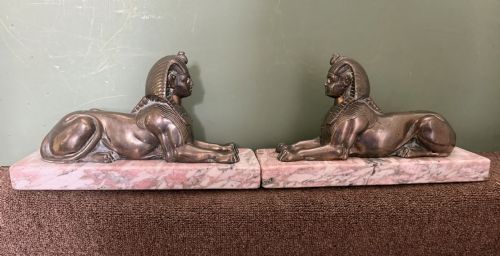
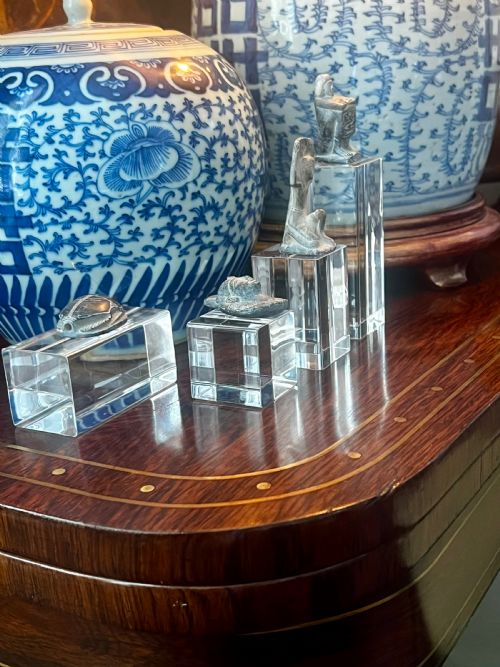
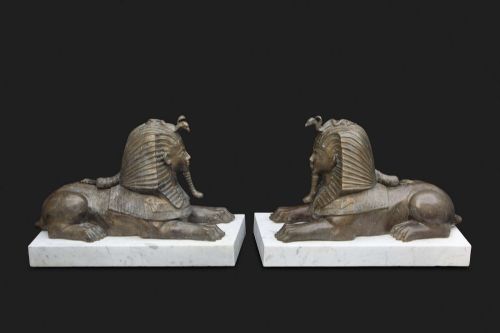
The material record on this page spans distinct periods including the Victorian era, the Grand Tour epoch, and the Art Deco movement. Pieces range from cast iron doorstops and granite-mounted shabtis to monumental bronze sphinxes resting upon marble plinths.
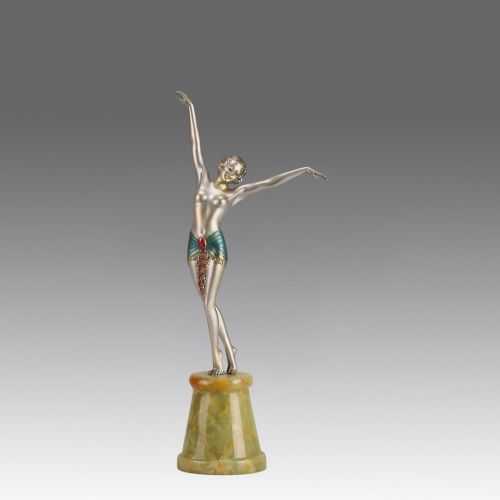
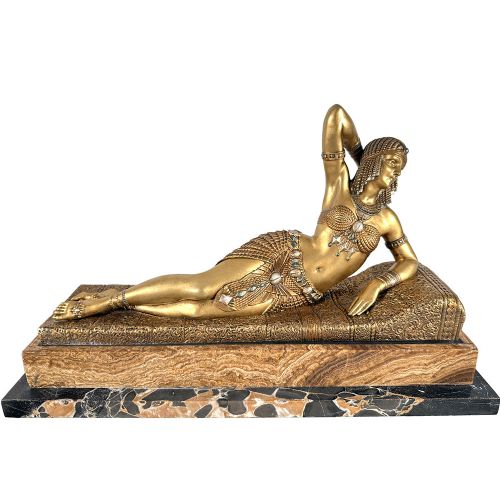
Art Deco interpretations frequently merge classical dance with archaeological motifs, as seen in representations of Egyptian dancers and deities. These works trace an evolving fascination with antiquity, shifting from scholarly Grand Tour souvenirs to stylised modernist sculptures.
Materials and construction
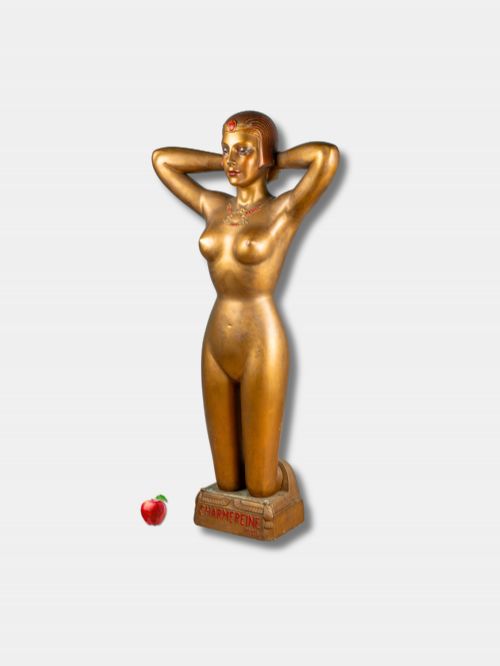
Foundry-cast bronze forms the primary medium for these sculptures, often enhanced with cold-painting, patination or gilding. Makers frequently mounted these metal figures upon heavy bases of marble, onyx or granite to provide stability and visual contrast.
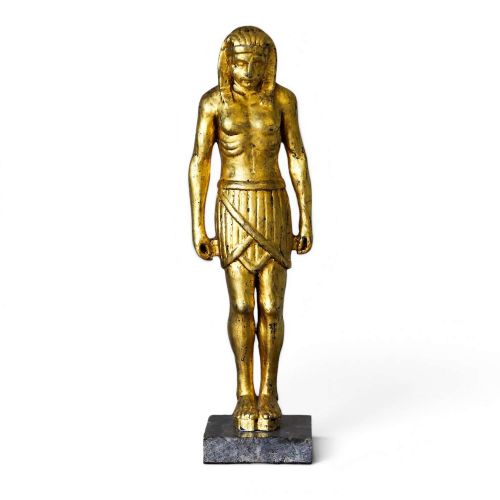
Wood and stone appear in specific traditional forms, demonstrated by gilt wooden shabtis resting on stone plinths. Paper and ink also feature in wall art and prints, capturing historical imagery through graphic media.
Cast iron serves utilitarian objects such as heavy doorstops, while alabaster provides a translucent medium for figural carving. These varied media reflect the specific demands of each period, from Regency ironwork to twentieth-century bronze casting.
The listings on this page span the 19th Century, Victorian period, Regency era, 1920, 1930, 1940, 1950, and Pre 16th century.
Assessing quality in the collection
Quality separates mass-produced decorative items from masterworks through the precision of the casting and the fidelity of the chasing. Finer bronzes exhibit crisp detail in hieroglyphs, facial expressions and drapery, whereas lesser examples show softened edges and smoothed surfaces.
The selection of base materials dictates the overall substance of the piece, with veined Carrara marble and heavy granite offering superior weight and durability compared to simple timber or basic stone plinths. Superior patination and original cold-painted finishes maintain their depth and adherence over time, enhancing the sculptural definition.
Attribution to documented sculptors or renowned foundries elevates certain works beyond anonymous decorative castings. The harmony between the sculptural figure and its architectural or mineral mount determines the visual balance of the complete object.
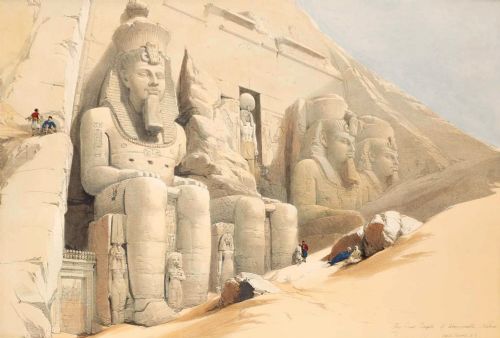
Josef Lorenzl·Demetre Chiparus·Guillot·David Roberts
The Egyptian Revival Figure Glossary
- Shabti
- A funerary figurine placed in ancient Egyptian tombs to act as a servant for the deceased in the afterlife. Later nineteenth-century interpretations recreated these figures in gilt wood and stone as decorative collectibles.
- Grand Tour
- A traditional trip through Europe undertaken by upper-class travellers to study classical art and architecture. Souvenirs from these journeys included small bronzes and sculptural representations of ancient monuments.
- Sphinx
- A mythical creature with the body of a lion and the head of a human, ram or hawk. This motif recurs frequently in monumental bronze sculptures and architectural doorstops.
- Cold-painted bronze
- A manufacturing technique where the bronze is painted with cold enamel rather than fired in a kiln. Over time, genuine pieces show characteristic wear to this delicate surface layer.
- Art Deco
- An international design style that flourished in the nineteen-twenties and thirties, characterised by streamlined geometric forms. Sculptors applied this aesthetic to ancient subjects, producing stylised dancers and deities.
Egyptian Revival Figure: Frequently Asked Questions
How do I date an egyptian revival figure?
Dating relies upon identifying the specific artistic style, the foundry marks and the materials used in the construction of the base. Victorian and Regency pieces often reflect academic or archaeological discoveries, whilst items from the nineteen-twenties and thirties display stylised Art Deco geometry.
Examining the casting technique and the nature of the patination also helps determine the era of manufacture. Early works often display hand-chased details that differ from later commercial production.
Where were these figures displayed originally?
These sculptures typically occupied libraries, studies and drawing rooms in nineteenth and twentieth-century homes. Grand Tour bronzes and shabtis served as conversation pieces that demonstrated the owner's cultural education and travel.
Later Art Deco figures functioned as stylish mantelpiece ornaments or advertising displays in fashionable interior settings. Their scale allowed them to sit comfortably upon desks, cabinets and marble architectural plinths.
How should I clean a bronze sculpture?
Bronze sculptures require gentle dusting with a soft, dry microfibre cloth to prevent the accumulation of abrasive particles. Avoid using water, household detergents or chemical polishes, as these substances can strip the original patination or damage cold-painted surfaces.
Maintaining a stable indoor humidity helps protect both the metal casting and any integrated marble or onyx bases. Professional conservation is recommended if deeper cleaning or wax application becomes necessary.