

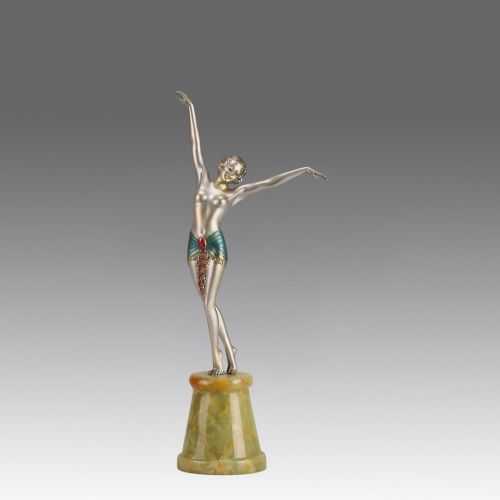



Green Onyx Base Statue
A green onyx base statue grounds figural sculpture in dense mineral weight, pairing carved stone plinths with cast metal figures.
Green Onyx Base Statue
A green onyx base statue combines a polished natural stone foundation with a cast metal figure, creating a weighty display piece. These sculptures primarily feature female figures, dancers, and animal subjects mounted securely to rectangular or stepped plinths. When searching for a green onyx base statue, buyers encounter distinct periods ranging from Victorian French works to definitive Art Deco creations.
The most common examples on this page date from the 1920s and 1930s, reflecting the sleek lines and dynamic poses of the Art Deco era. Figures range from cold-painted bronze dancers and spelter models to bronze animal studies and clock garniture components. Each piece balances the organic banding of the stone base with the precise contours of the metal sculpture above.
How they were made
Makers shaped the heavy foundations from natural onyx, cutting and polishing the stone to display its characteristic green banding and smooth planes. Figures were typically cast in bronze or spelter using traditional methods, capturing intricate details in costume and posture. Metal elements were then secured directly to the stone plinths.
Surface finish varied according to the medium, utilising cold-painting techniques to apply vibrant polychrome details to bronze figures or leaving the metal in its natural gilt or patinated state. Enamel accents occasionally added colour to specific garments or decorative elements within the composition.
Listings span four distinct decades, stretching from 1860 Victorian works to 1930 Art Deco bronzes.
What varies in quality
The complexity of the subject and the application of surface decoration also set pieces apart. Multi-step cold-painted finishes executed with precision elevate a sculpture above plain patinated metal. Similarly, the integration between the heavy stone base and the upper figure demonstrates the maker's structural ambition.
Josef Lorenzl·Bruno Zach·P. Sega
The Green Onyx Base Statue Glossary
- Onyx
- A banded variety of chalcedony quartz that takes a high polish, utilised here for substantial sculptural plinths. Its natural variations produce distinct green hues.
- Spelter
- A zinc alloy commonly cast as a substitute for bronze in decorative figures. It accepts patination and cold-painted finishes readily.
- Cold-painted bronze
- A technique where paint is applied to a bronze casting without subsequent firing. This method yields delicate polychrome surfaces on period figures.
- Garniture set
- A matching set of decorative objects, typically comprising a central clock flanked by matching side ornaments on shared bases. They anchor mantelpiece displays.
- Patina
- The surface sheen or colour developed on metal over time through age and handling, or applied chemically by the maker to enhance depth.
Green Onyx Base Statue: Frequently Asked Questions
What is a green onyx base statue?
It is a decorative sculpture featuring a metal figure mounted on a polished stone plinth made of green onyx.
These pieces primarily date from the late nineteenth century through the Art Deco period of the 1920s and 1930s.
How do I identify Art Deco figures?
Art Deco figures display stylised anatomical forms, dynamic poses such as dancing or running, and distinct contemporary costume details.
They frequently utilise materials like cold-painted bronze paired with geometric green onyx bases.
What is the difference between bronze and spelter?
Bronze is a durable copper alloy that captures fine detail and patinates richly over decades of display.
Spelter is a softer, lighter zinc-based metal that served as an accessible alternative for decorative statuary during the nineteenth and early twentieth centuries.
Where were these statues displayed?
They were designed as interior display pieces for mantelpieces, sideboards, and occasional tables in period homes.
Clock garniture sets positioned them alongside matching timepieces to create symmetrical decorative arrangements.