
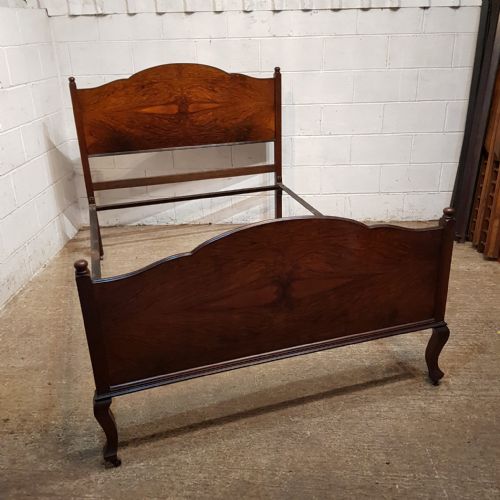
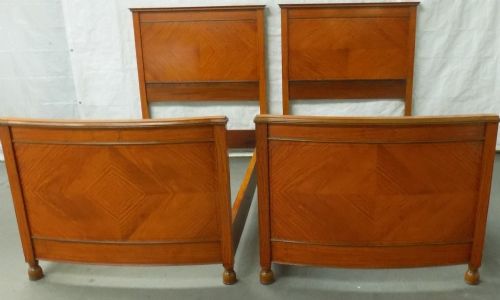


Edwardian Wooden Bedstead
An edwardian wooden bedstead brings substantial timber framing and period presence to a bedroom, offering solid construction alongside historic character.
Edwardian Wooden Bedstead
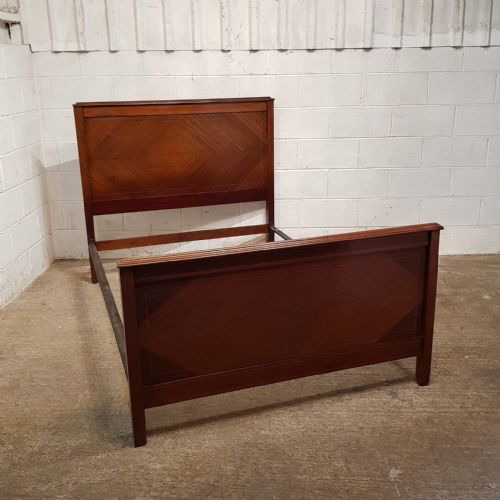
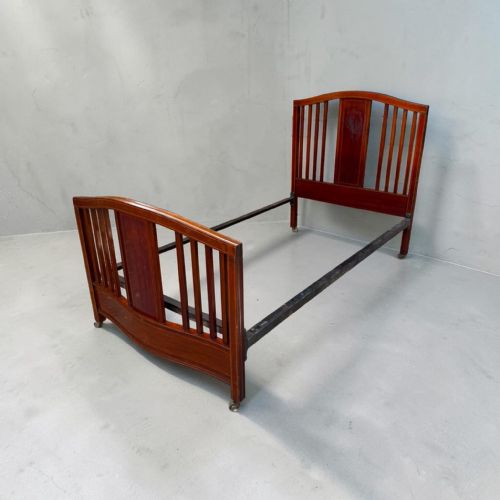
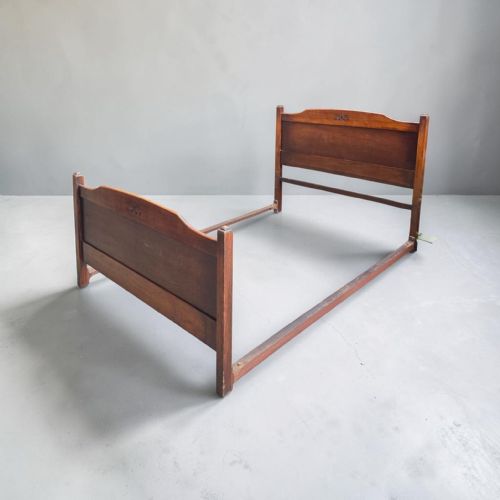
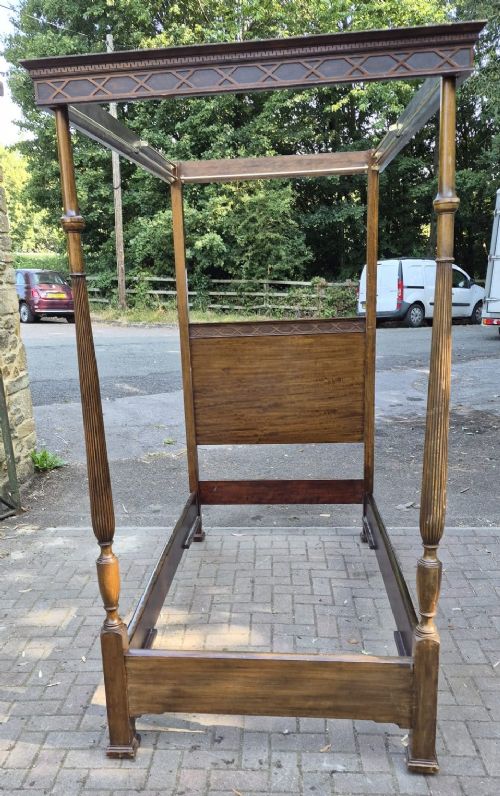
The edwardian wooden bedstead appears primarily in mahogany, oak, walnut, and satinwood, spanning single, double, and four poster configurations. Buyers encounter frames featuring inlaid details, panelled headboards, and carved elements reflecting the dominant aesthetic of the early twentieth century.
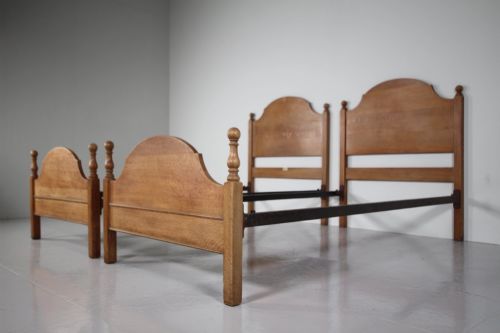
Makers such as Heal and Son produced notable single and pair variations in oak and walnut during this period. Pieces range from straightforward domestic frames to large-scale four poster beds built in revival styles.
Single beds frequently survive as matching pairs, while double variations provide larger sleeping surfaces framed in figured timbers. Miniature doll specimens also occur alongside full-sized domestic furniture.
Materials and Construction
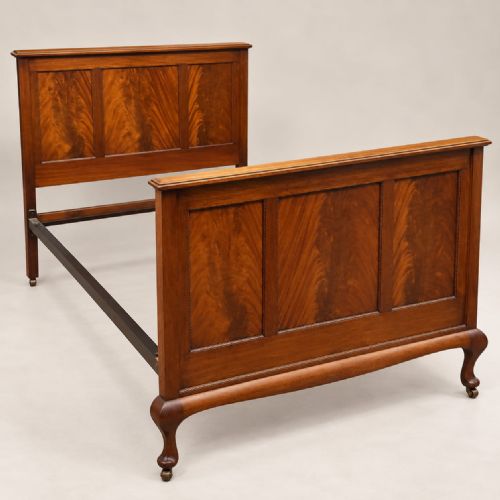
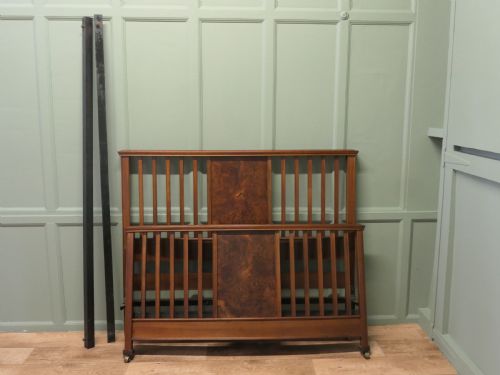
Cabinetmakers utilised hardwoods including solid mahogany, oak, and burr walnut, frequently applying marquetry, painted decoration, and contrasting inlay. Timber selection governed the visual weight of the frame, with figured veneers enhancing prominent head and foot panels.
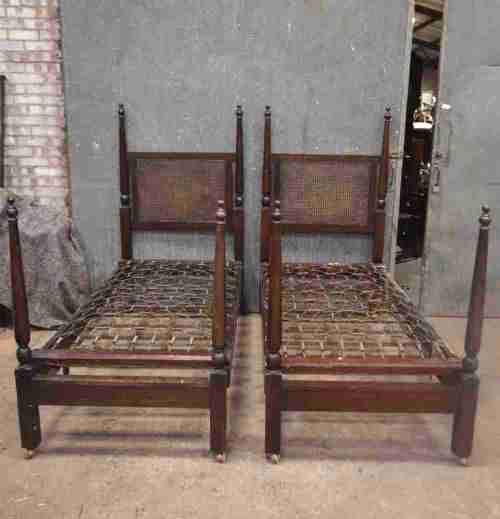
Structural joinery relied on panelled framing, carved solid sections, and four poster uprights designed to support heavy bedding. Secondary details incorporated brass hardware, cane inserts, and slatted mattress supports within the wooden framework.
Listings feature oak, mahogany, walnut, satinwood, iron, and brass across Edwardian, Victorian, and Arts and Crafts styles.
Distinctions in Quality
Quality rests upon the selection of timber figures, such as burr walnut or plum pudding mahogany, and the precision of inlaid marquetry and carving. Labelled examples by documented makers like Heal and Son command attention for their verified workshop origin.
Design ambition separates basic domestic frames from elaborate four poster beds built in the Georgian or Arts and Crafts style. The integrity of the timber panels and the balance of proportions determine the overall presence of the bedstead.
Heal and Son·Heals·Maple and Co
The Edwardian Wooden Bedstead Glossary
- Bedstead
- A framework of a bed supporting the mattress and springs. It encompasses both single and double wooden structures from the period.
- Bergere
- A type of chair or bed panel characterised by woven cane inserts. This technique appears on select oak framing.
- Marquetry
- Decorative veneer work forming geometric or floral patterns on wood surfaces. It embellishes the headboards of fine domestic frames.
- Inlay
- Contrasting timber or material inserted into a recessed surface to form a design. Satinwood and darker woods frequently provide this contrast.
- Four Poster
- A bed with four vertical columns supporting an upper canopy frame. Examples from this era follow revival or Arts and Crafts designs.
Edwardian Wooden Bedstead: Frequently Asked Questions
What sizes are available?
The listings include single beds, double bedsteads, and larger four poster formats designed for domestic rooms. Pairs of single beds also appear frequently.
Dimensions range from compact single frames to substantial double widths and miniature doll examples.
Which woods were used?
Cabinetmakers utilised mahogany, oak, walnut, satinwood, and burr walnut for these frames. Figured veneers and solid timbers formed the primary structures.
Additional materials such as brass hardware, cane, and iron supplemented the wooden construction.
Are pairs common?
Matching pairs of single beds survive from this era, often produced by prominent makers like Heal and Son. These sets share identical inlay and timber characteristics.
Single configurations often retain their original matching companion piece from the same workshop.
How do revival styles differ?
Revival pieces draw inspiration from Georgian, Queen Anne, and colonial aesthetics using early twentieth-century construction methods. These incorporate specific carving and proportions associated with earlier epochs.
Arts and Crafts examples focus on straightforward joinery and the natural grain of oak.