

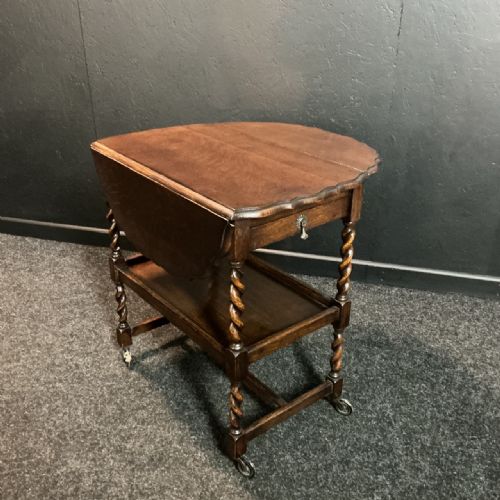


Edwardian Wooden Bar Cart
These edwardian wooden bar cart pieces bring portable hospitality to any room, offering period charm and practical shelving for daily entertaining.
Edwardian Wooden Bar Cart
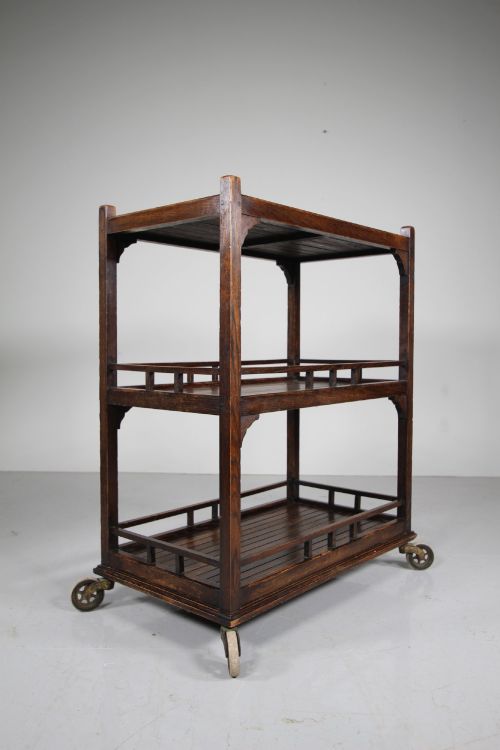
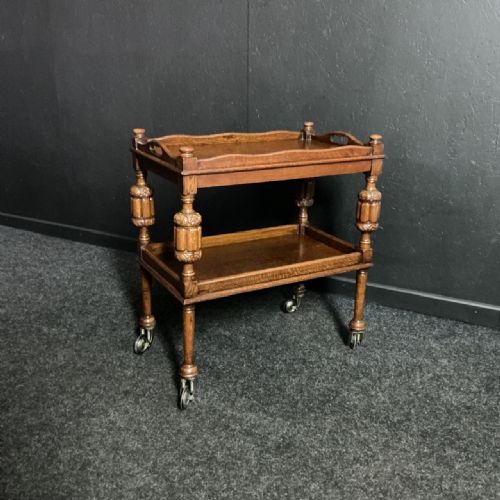
An edwardian wooden bar cart spans practical tea trolleys, serving trolleys, and drinks cabinets designed for domestic hosting. These pieces combine tiered wooden shelving with mobility, providing surfaces for serving afternoon tea or holding drinks.
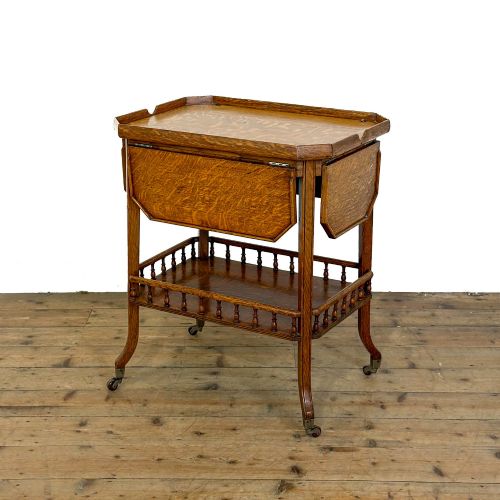
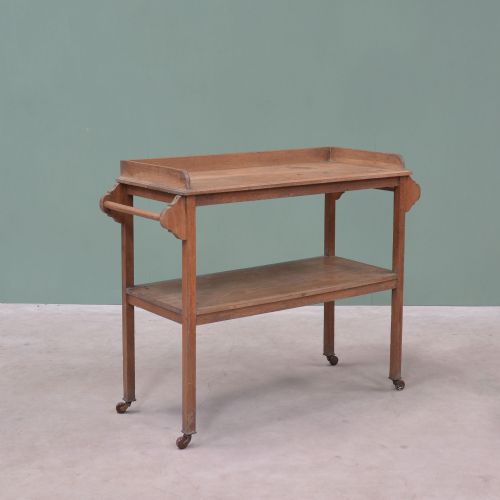
The versions most commonly met on this page include oak and mahogany tea trolleys from the Edwardian period and the early twentieth century. Examples range from simple two-tier side tables to folding top designs and items featuring removable trays.
Makers and styles stretch from simple utilitarian designs to inlaid mahogany and ebonised details. Alongside standard tea trolleys, forms include serving trolleys with dropleaves and drinks cabinets incorporating silver-plated galleries.
How they were made
Construction relies primarily on timbers such as oak and mahogany, occasionally complemented by satinwood inlay or ebonised finishes. Carpenters joined these woods to form stable multi-level frames capable of supporting heavy glassware and ceramic tea services.
Metal components play a structural and decorative role, featuring brass fixtures, iron elements, and silver-plated galleries. Glass inserts and baize-lined surfaces also appear, adding functional variety to the serving areas.
Edwardian Wooden Bar Cart Retail Price Guide 2026
Typical asking prices for edwardian wooden bar cart among the pieces listed under this phrase on Sellingantiques today, from the lower quarter to the upper quarter. They describe what is for sale here now, not the wider market.
Listings span several decades, including Edwardian, 1910s, 1920s, and 1930s periods, alongside occasional Georgian-influenced items.
What varies in quality
Quality separates simple utility furniture from pieces finished with finer decorative flourishes. The presence of satinwood inlay, folding mechanisms, and removable trays indicates a higher grade of manufacture.
Choice of timber grain and the neatness of wood turning dictate the visual appeal of an individual trolley. Heavier framing and robust wheel attachments distinguish sturdier examples intended for frequent movement.
Heals of London
The Edwardian Wooden Bar Cart Glossary
- Tea Trolley
- A small wheeled table designed for serving tea or drinks. These pieces typically feature two or more levels for carrying cups, pots, and bottles.
- Dropleaf
- A hinged table leaf that can be folded down to save space or raised to extend the surface area. This mechanism allows the cart footprint to adapt to smaller rooms.
- Silver Plate
- A thin layer of silver applied to a base metal object such as a tray gallery. This finish provides the appearance of solid silver at a lower weight and cost.
- Baize
- A coarse woolen fabric resembling felt, often used to line serving or card table surfaces. It cushions items placed upon it and dampens sound during use.
- Ebonised
- Wood treated with a dark finish to imitate ebony. This technique creates a dramatic contrast against metal mounts and lighter inlaid woods.
Edwardian Wooden Bar Cart: Frequently Asked Questions
What is an edwardian wooden bar cart?
An edwardian wooden bar cart is a mobile serving piece featuring multiple tiers for holding tea services, glassware, and bottles. These carts were designed to transport refreshments easily between rooms during domestic gatherings.
Most examples date from the early twentieth century and utilise timbers like oak or mahogany. Their formats include drop leaves, folding tops, and removable trays.
How were tea trolleys used originally?
Originally, these trolleys served afternoon tea or drinks in sitting rooms and parlors without requiring multiple trips by servants or hosts. They allowed heavy porcelain teapots and silver services to roll smoothly across carpets and floorboards.
Over time, their uses expanded to include holding drinks cabinets and providing auxiliary table space during parties. The lower tiers held spare cups, plates, or bottles while the top surface remained clear for pouring.
How do I identify an Edwardian piece?
Edwardian items typically display lighter timbers, simpler lines than Victorian furniture, and occasional Sheraton revival inlays. The period spans the reign of Edward VII and the immediate surrounding decades.
Construction details such as specific brass castors and straightforward joinery help confirm the era. Stylistic overlaps with late Victorian and early 1920s work also appear across these trolleys.
Can I use a vintage trolley daily?
Vintage trolleys suit regular daily use provided the wheels and wooden frames remain stable. Many designs feature sturdy oak or mahogany construction built to withstand heavy items.
Care should be taken with historical finishes, particularly when placing wet glasses or hot pots on older wood surfaces. Using coasters and protective mats preserves the polish and inlaid details.