

Edwardian Wood Server
An edwardian wood server brings practical storage and refined dining room service, pairing rich mahogany or oak timbers with delicate inlay.
Edwardian Wood Server
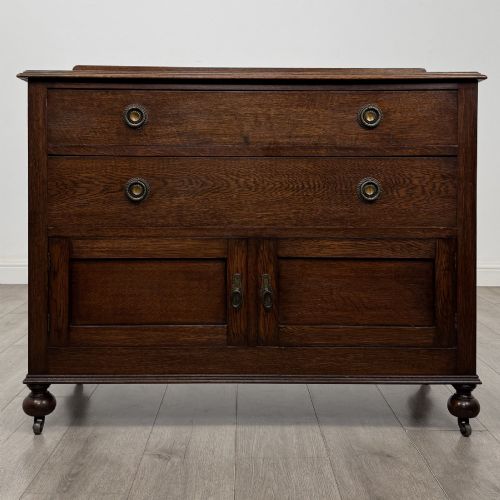
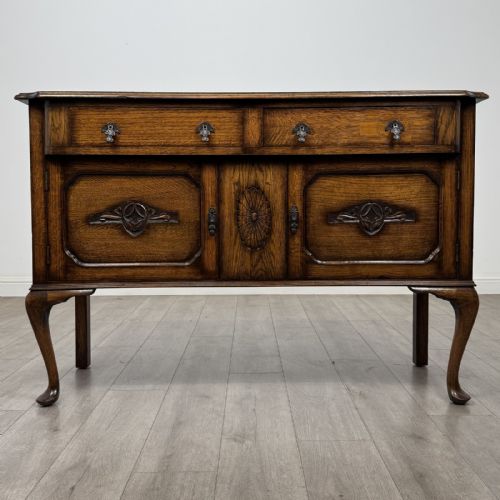
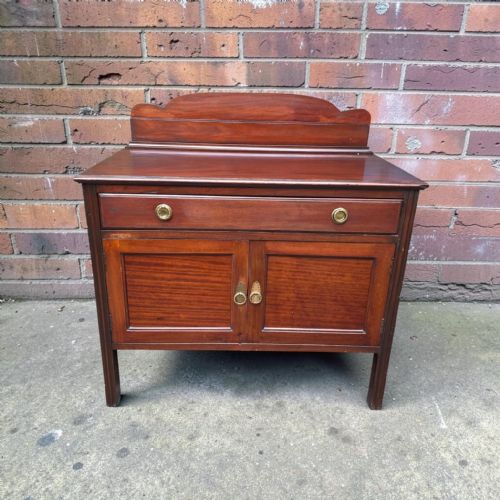
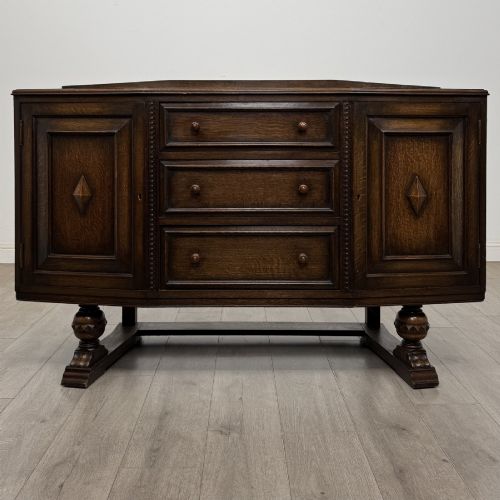
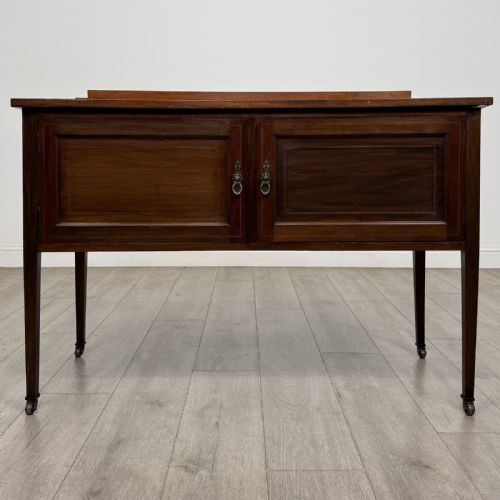
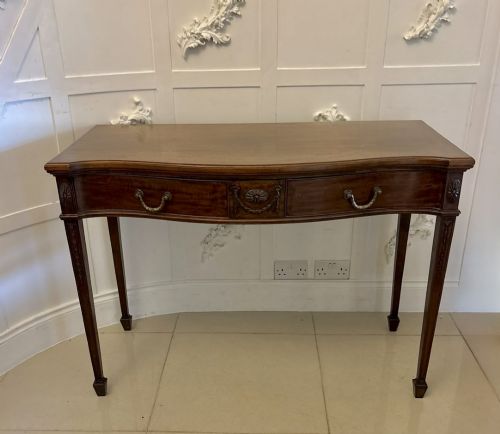
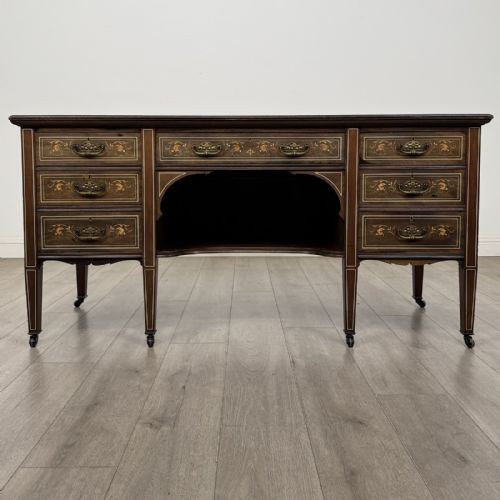
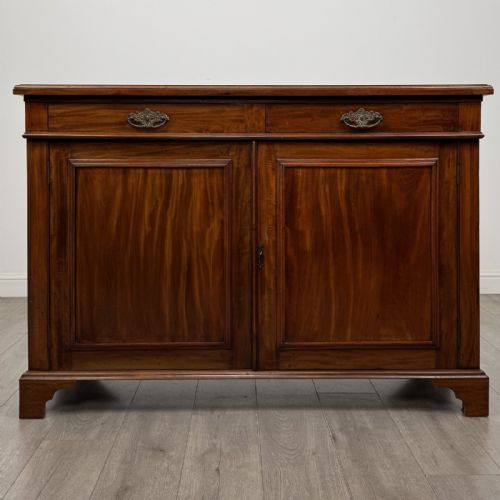
An edwardian wood server encompasses various forms of dining furniture designed for serving food and storing tableware, ranging from substantial sideboards to compact side tables and cabinets. When exploring this selection, buyers frequently encounter mahogany and oak pieces that reflect the dominant tastes of the period.
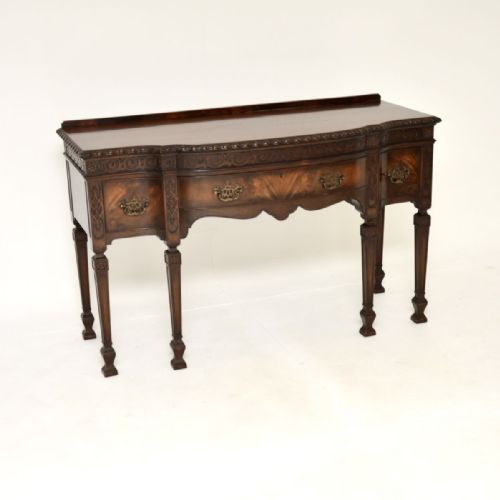
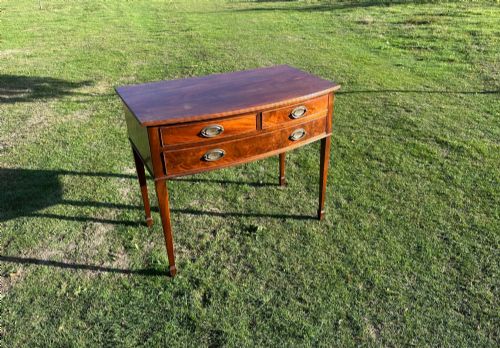
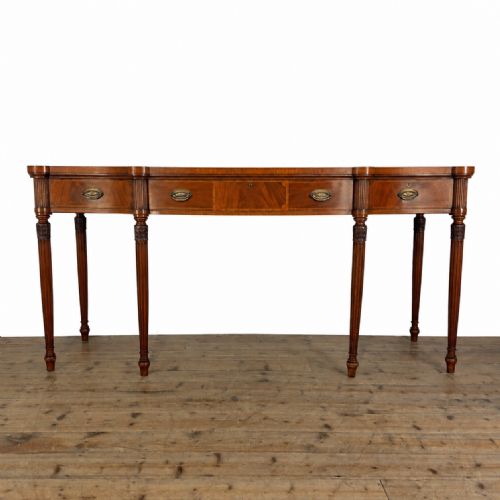
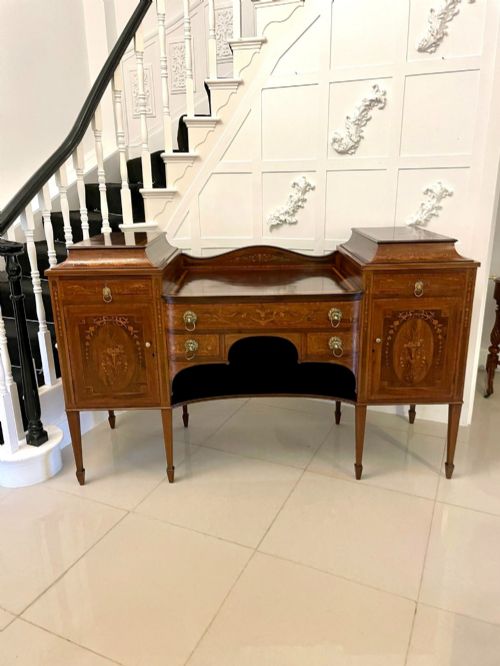
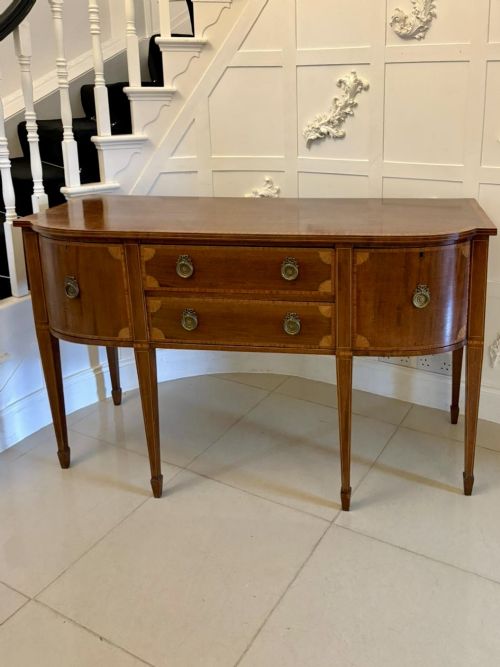
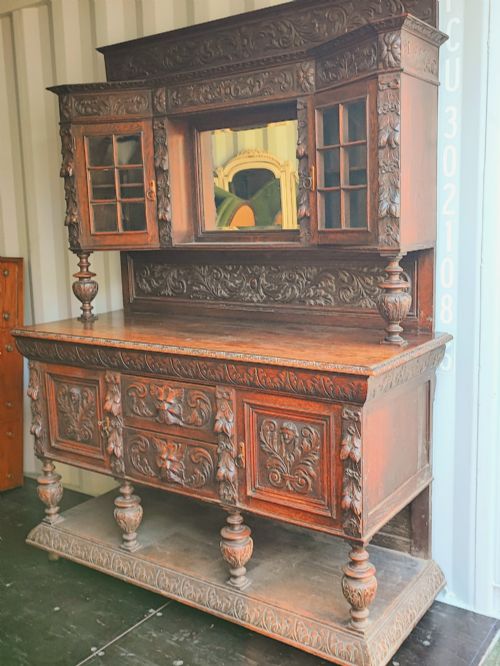
The objects span multiple styles within the Edwardian era and surrounding decades, including Sheraton Revival, Arts and Crafts, and Jacobean Revival variants. These range from bow-fronted sideboards with crossbanding to narrow oak side tables featuring turned legs or barley twist supports.
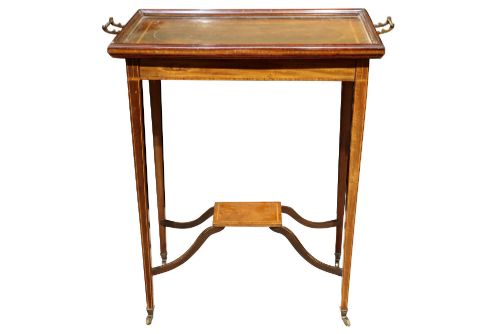
Many examples incorporate practical attributes such as drawers, cupboard bases, and mirrored backs, alongside decorative elements like marquetry, brass hardware, and boxwood inlay. The variety extends to console tables and serving tables suited to both traditional dining spaces and contemporary hallways.
Materials and construction methods
Makers utilised solid timbers alongside veneered surfaces, predominantly selecting mahogany and oak as the foundational woods for these servers and sideboards. Flame mahogany veneer and satinwood crossbanding provided decorative contrast on formal Edwardian pieces, while boxwood inlay added linear detail.
Joinery techniques supported structural stability in heavy pieces like breakfront sideboards and carved cupboards, employing standard cabinet-making methods of the late nineteenth and early twentieth centuries. Brass fittings, handles, and occasional gallery rails complemented the woodwork, alongside glass panels on glazed display cabinets.
Edwardian Wood Server Retail Price Guide 2026
Typical asking prices for edwardian wood server among the pieces listed under this phrase on Sellingantiques today, from the lower quarter to the upper quarter. They describe what is for sale here now, not the wider market.
Listings feature mahogany, oak, and walnut timbers, with decorative accents in satinwood, brass, and boxwood inlay across the Edwardian period.
Distinctions in craftsmanship
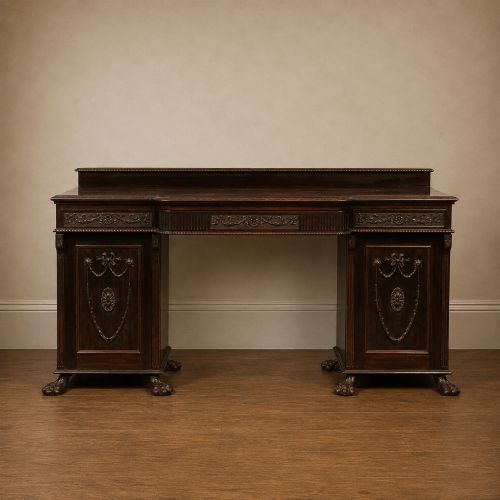
The grade of timber and the precision of the veneer work largely determine the quality of an edwardian wood server, with figured flame mahogany and crisp satinwood crossbanding marking out superior examples. Hand-carved details, such as claw and ball feet or geometric panels, demonstrate greater artisan involvement than simpler machine-milled mouldings.
Internal construction, including drawer linings and the robust fitting of doors and legs, separates standard production items from finer workshop pieces. The integration of decorative elements like marquetry inlay and well-cast brass hardware further distinguishes higher-tier items from plainer utility furniture.
Hewetsons London
The Edwardian Wood Server Glossary
- Bow Front
- A convex curved front section common on sideboards and serving tables. This curved profile softens the rectangular lines of dining furniture.
- Crossbanding
- A strip of veneer applied perpendicularly to the grain of the main surface. It creates a contrasting border around drawer fronts or tabletops.
- Marquetry
- Decorative patterns formed by fitting together small pieces of coloured wood veneer. These intricate designs often feature floral or geometric motifs.
- Barley Twist
- A turned furniture leg carved into a spiral resembling barley sugar. This decorative turning appears frequently on oak pieces from the period.
- Breakfront
- A cabinet or sideboard whose central section projects forward from the flanking wings. This architectural arrangement adds depth and presence to larger servers.
Edwardian Wood Server: Frequently Asked Questions
What is an edwardian wood server?
An edwardian wood server is a dining room or hallway piece designed for serving food, storing tableware, or displaying decorative items. These items include sideboards, side tables, and cabinets made during the early twentieth century.
They combine practical storage compartments, such as drawers and cupboards, with the decorative wood veneers and inlays characteristic of the Edwardian period.
How do I style a wood server at home?
A wood server works effectively in a dining room for holding serving dishes or in a hallway as a console table. Placing lamps, trays, or mirrors on top enhances its visual presence.
Matching the timber tone, such as mahogany or oak, with existing room furnishings helps integrate the piece while maintaining its functional role.
How do I tell Edwardian furniture from Victorian pieces?
Edwardian furniture generally exhibits lighter proportions, brighter wood tones, and restrained ornamentation compared to earlier Victorian designs. Styles often draw on Sheraton Revival aesthetics rather than heavier historic revival themes.
Victorian pieces frequently utilise darker mahogany, heavier carvings, and more substantial structural elements, reflecting different interior tastes of the nineteenth century.
What woods were used for these servers?
Makers relied primarily on mahogany and oak for the primary structure of these servers. Flame mahogany veneers and satinwood were chosen for formal decorative surfaces.
Additional details incorporated boxwood inlay and brass hardware, while secondary woods were used for internal drawer construction and carcases.