


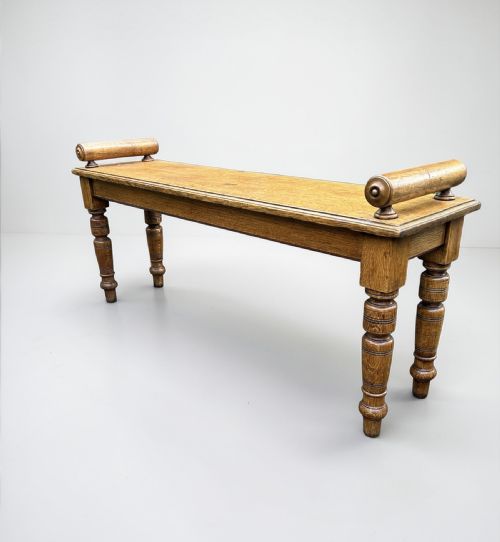

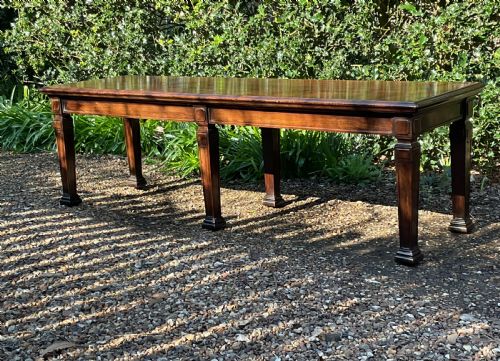

Edwardian Window Bench
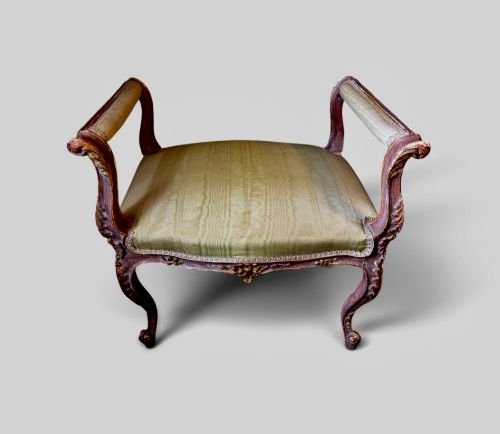
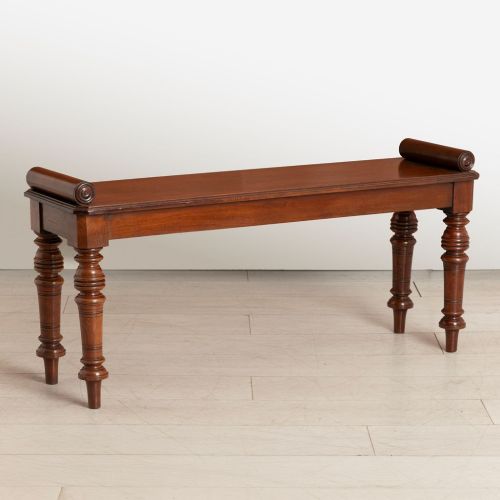
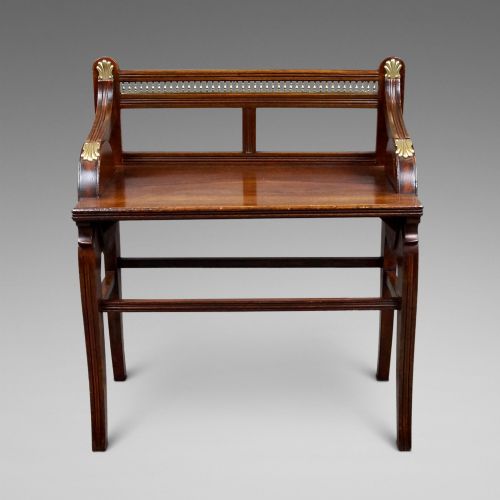
An Edwardian window bench provides low, narrow seating beneath a sill, combining slender mahogany frames with upholstered pads.
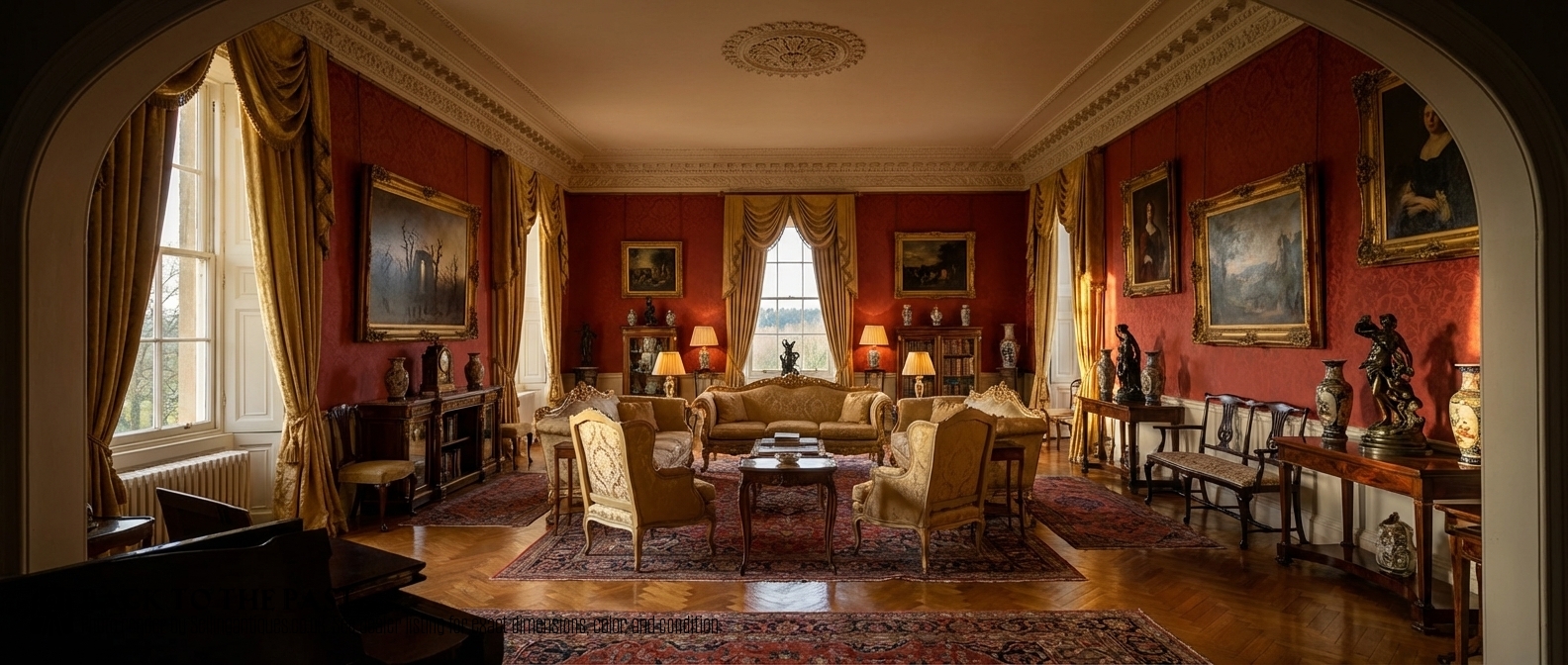
Edwardian Window Bench
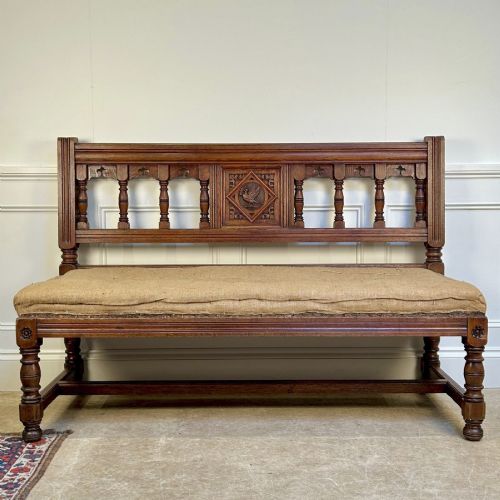
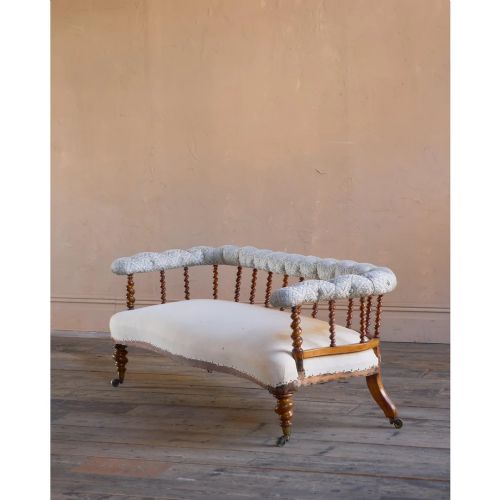
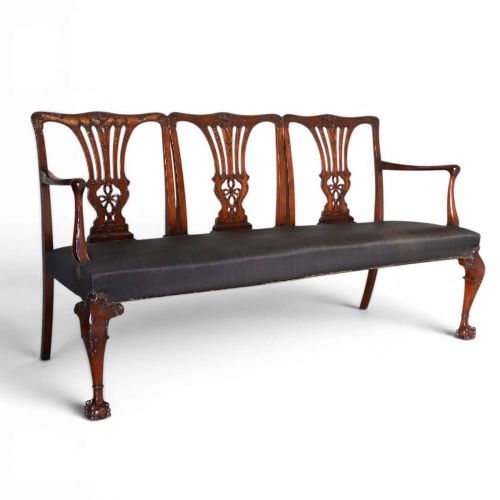
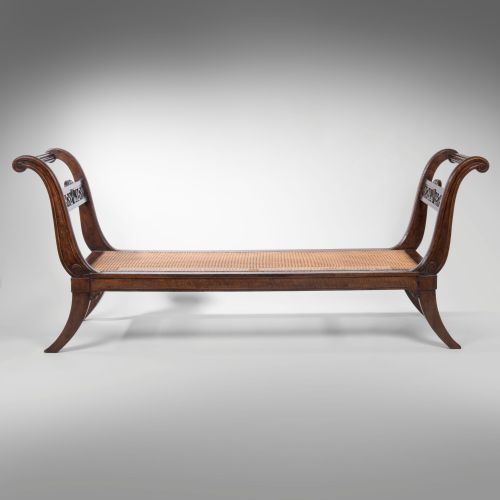
An Edwardian window bench serves as a low seat specifically shaped to fit beneath sills or at the foot of a bed, drawing on forms recorded from the Edwardian period alongside earlier Victorian and Regency designs.
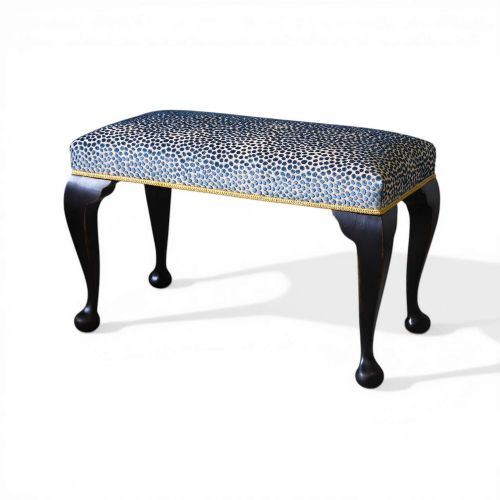
Buyers encounter long settees, paired duet stools, and narrow open benches that utilise spindle backs, inlaid satinwood frames, or X-frame supports.
The objects span simpler utilitarian seating to inlaid mahogany and ebonised frames intended for principal rooms, reflecting diverse cabinet-making traditions.
Materials and construction
Cabinet-makers relied on solid timbers such as mahogany, oak, walnut, and satinwood, often accentuating the grain or applying ebonised finishes.
Decoration incorporated delicate bone inlay, carved details, and brass mounts, paired with canework panels or upholstered seats covered in fabric, leather, velvet, and damask.
Listings feature woods like mahogany, oak, walnut, and satinwood alongside fabric, leather, brass, and textile elements.
Distinctions in construction and finish
The standard of timber selection and the crispness of inlaid satinwood or carved details distinguish simpler workshop pieces from those produced by major firms.
Structural integrity depends on the tightness of joinery in slender frames like spindle backs and X-frame supports, alongside the quality of traditional upholstery materials.
Gillows·C Hindley And Sons·Jas Shoolbred·James Shoolbred And Co
The Edwardian Window Bench Glossary
- Ebonised
- Wood stained or painted black to imitate ebony. This dark finish gained popularity in Victorian and Edwardian furniture for a formal appearance.
- Inlay
- Contrasting materials set flush into a wooden surface to form patterns. Satinwood and bone frequently appear as decorative insertions on mahogany frames.
- X-frame
- A furniture base formed by intersecting diagonal cross-members. This structural shape recurs in classical and Regency revival window seats.
- Duet stool
- A wide seat designed for two people playing a piano together or sitting side by side. These pieces often feature upholstered pads and turned legs.
- Canework
- Woven cane or rattan used to form open panels on seats and backs. This light technique provides flexible support without solid upholstery.
Edwardian Window Bench: Frequently Asked Questions
Where should a window bench go?
These narrow seats fit naturally beneath low window sills where standard chairs obstruct the view or block light.
They also function effectively at the foot of a bed or along hallways as convenient low seating.
How do I identify an Edwardian piece?
Edwardian seating typically exhibits lighter proportions than heavy Victorian furniture, often utilising mahogany or inlaid satinwood.
Details like delicate bone inlay and slender turned legs help separate this 1900s output from earlier nineteenth-century designs.
What is an X-frame seat?
An X-frame seat uses intersecting diagonal supports beneath the cushion to distribute weight and create a distinct architectural silhouette.
This classic form appears in Regency models as well as later revival pieces.
Can I reupholster a vintage bench?
Original upholstery can be replaced to match modern interiors without diminishing the value of the wooden frame.
Traditional stuffing and appropriate fabric choices help preserve the authentic character of the piece.