
Edwardian Walnut Writing Desk
An edwardian walnut writing desk combines practical compartments with figured grain, offering a functional workspace rooted in early twentieth-century cabinetmaking.
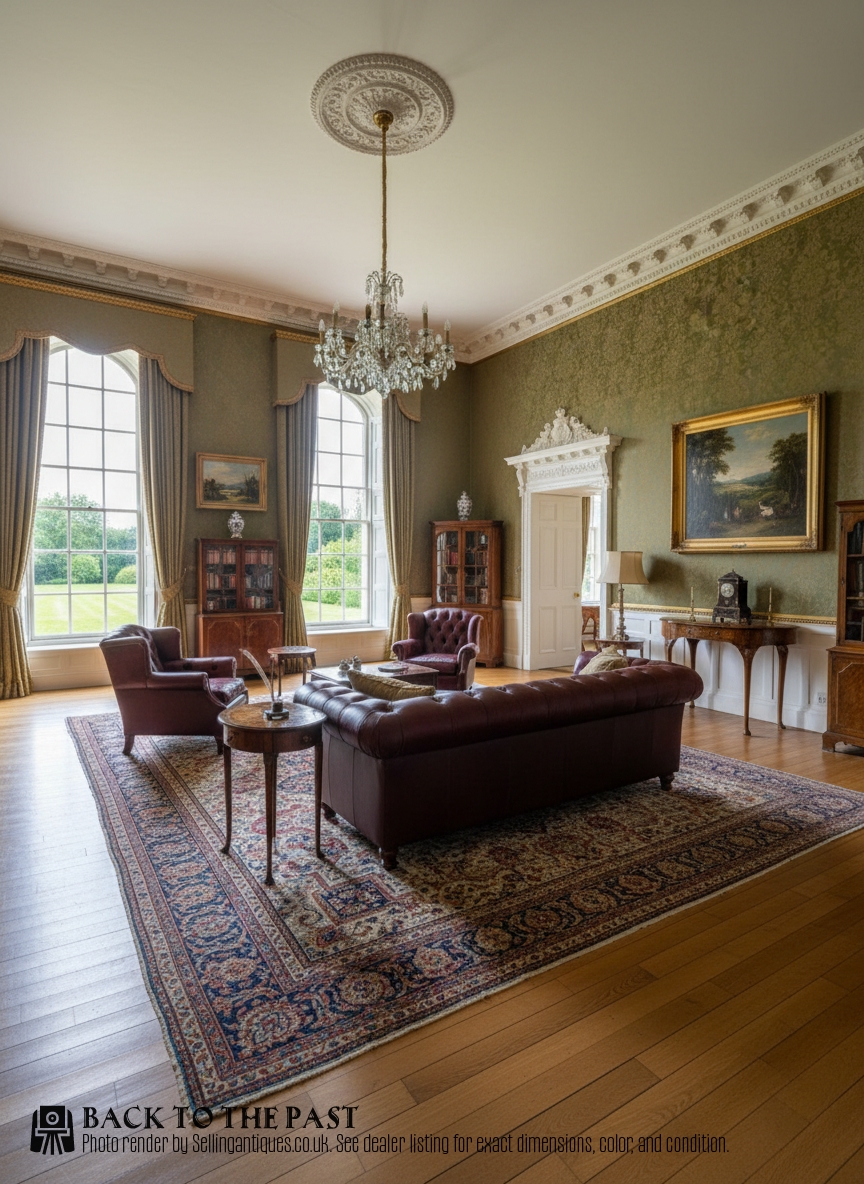
Edwardian Walnut Writing Desk
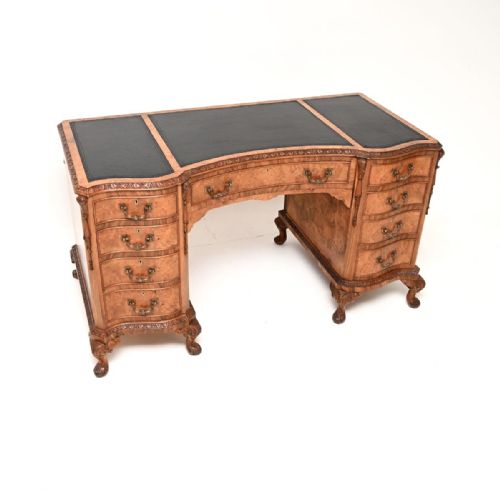
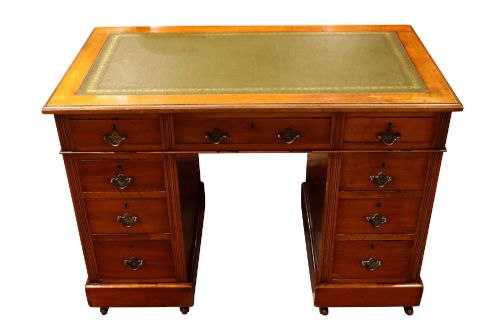
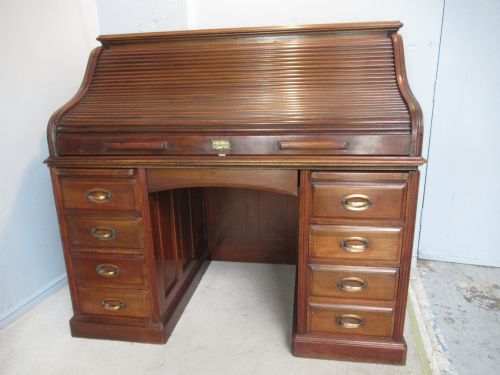
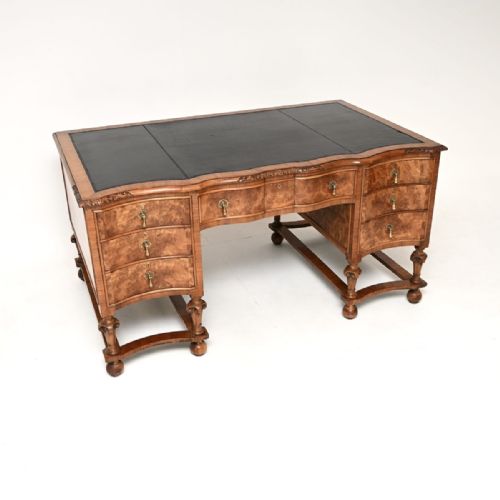
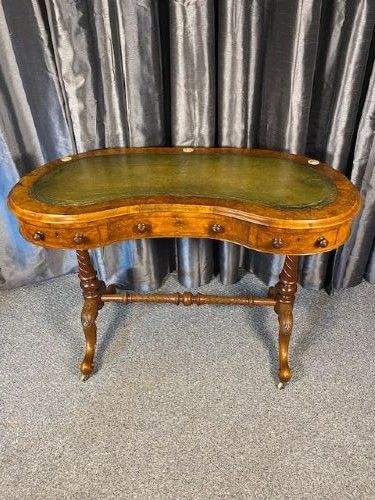
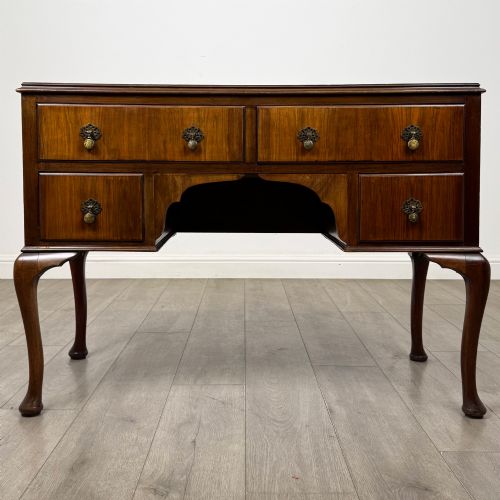
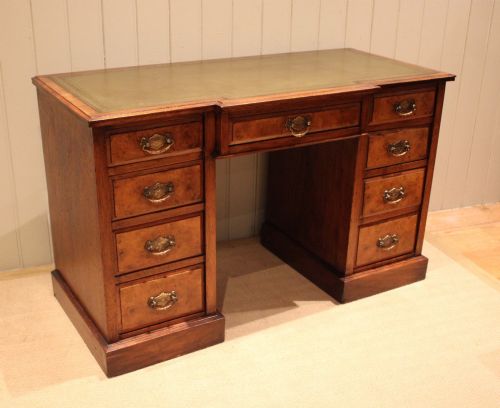
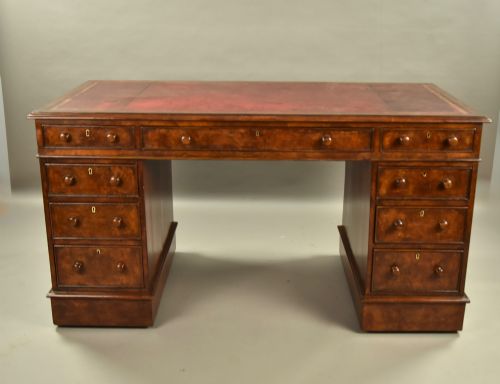
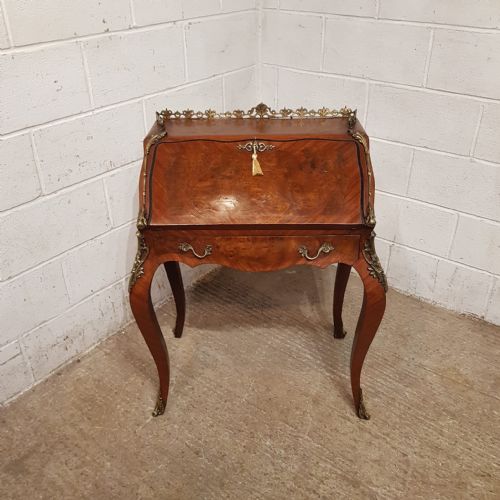
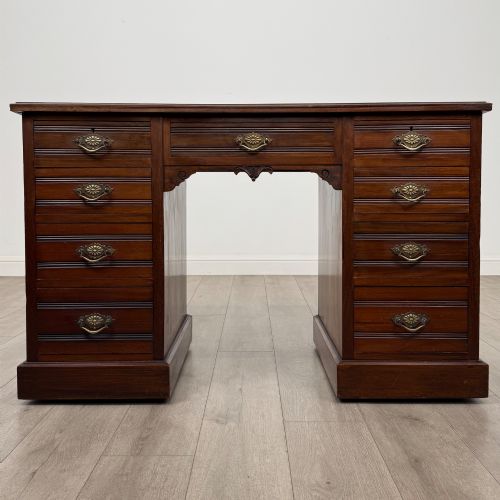
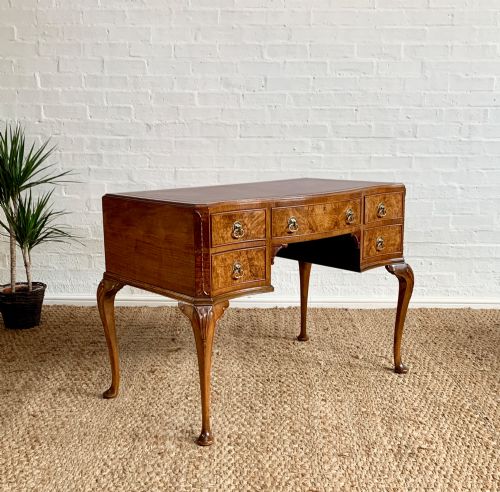
The edwardian walnut writing desk appears primarily in pedestal formats, kneehole configurations, and compact ladies writing tables dating around nineteen hundred.
Makers of this period drew heavily on earlier revivals, producing pieces that echo Queen Anne and Georgian design through cabriole legs and restrained proportions.
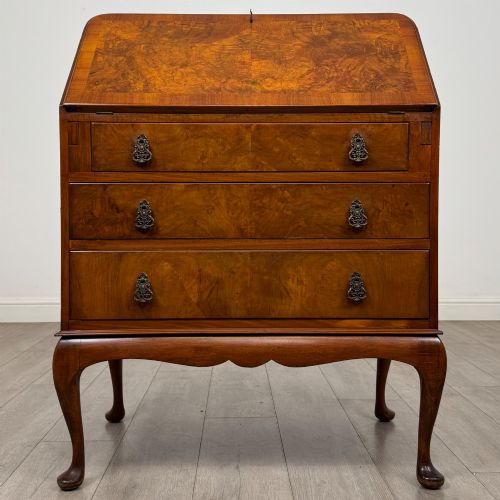
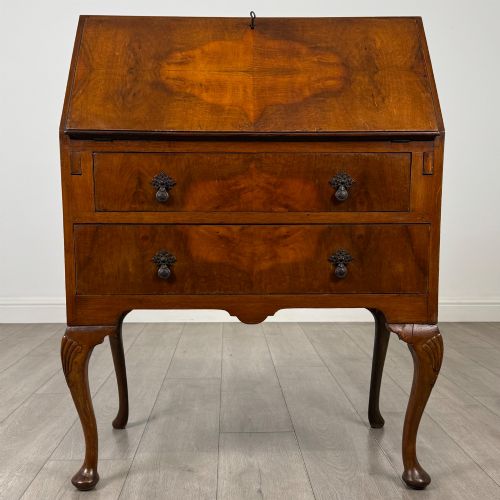
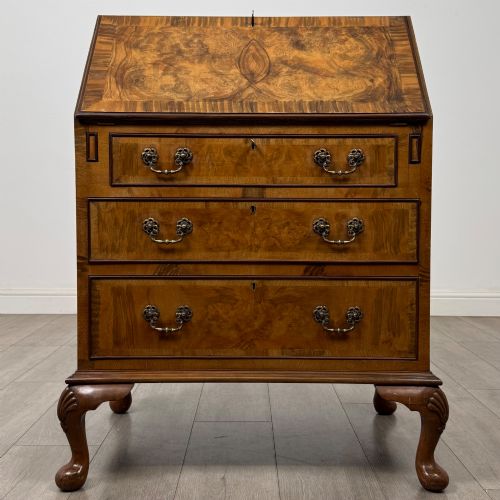
Alongside standard writing tables, variants include roll-top desks, davenports, and bureaus incorporating fitted interiors.
Materials and technique
Cabinetmakers utilised solid walnut and decorative walnut veneers, often selecting burr or figured variants to create patterned top surfaces.
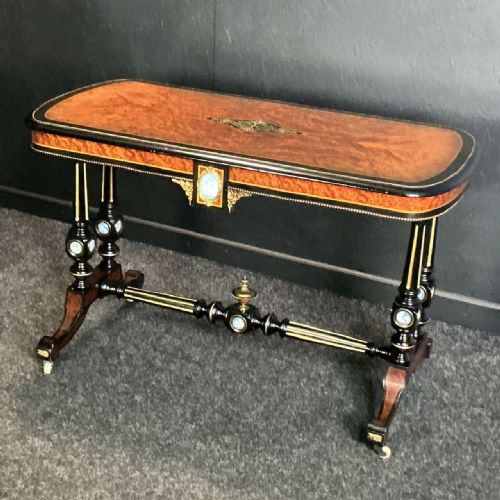
Writing surfaces were frequently inset with panels of tooled leather, complemented by brass hardware, boxwood inlay, and occasional ormolu mounts.
Listings demonstrate that walnut veneer, brass hardware, and tooled leather define the primary material palette for these desks.
Assessing quality
Quality rests upon the selection of the timber veneers and the precision of the cabinetwork, particularly in matched grain across multiple drawers.
The integration of secondary timbers, original brass fittings, and branded maker stamps elevates a piece above standard commercial production.
Maple and Co·Wylie and Lochhead Glasgow·Edwards and Roberts·Gill and Reigate·Gillow·Angus of London·Horrocks Desk Company
The Edwardian Walnut Writing Desk Glossary
- Burr walnut
- A wood figure derived from the gnarled growth of a walnut tree, prized for swirling, speckled patterns used in veneer work.
- Pedestal desk
- A freestanding desk comprising two supporting banks of drawers beneath a rectangular writing surface.
- Davenport desk
- A compact writing desk featuring a sloping, hinged writing lid above a side-opening pedestal of drawers.
- Kneehole desk
- A small writing table with a central recess for the user's legs, flanked by pedestals containing drawers.
- Leather inset
- A writing surface panel of coloured hide, often decorated with gold-tooled borders.
Edwardian Walnut Writing Desk: Frequently Asked Questions
How do I care for a leather writing surface?
Clean the leather gently using a soft, dry cloth and avoid excessive moisture or harsh chemical cleaners. Conditioning balms can maintain the suppleness of older hide over time.
Keep the desk away from direct sunlight and heat sources to prevent the leather and surrounding walnut veneer from drying and cracking.
Are these desks suitable for daily laptop use?
Most edwardian walnut writing desk examples offer adequate surface area for modern writing tasks or laptops. Compact ladies variants have smaller surface dimensions, so measuring internal kneeholes is advisable.
Ensure that the weight distribution and height align with comfortable daily seating arrangements.
How can I distinguish Edwardian pieces from Victorian ones?
Edwardian furniture generally exhibits lighter proportions, simpler lines, and a revival of eighteenth-century styles compared to heavier Victorian counterparts. Walnut veneer usage also shifted towards more subtle figured and burr patterns.
Examining drawer construction and secondary woods often provides further chronological context.
What is a partner desk?
A partners desk is a large double-sided writing table designed for two people to work opposite one another, featuring drawers and cupboards on both faces.
These pieces require substantial floor space and typically anchor large studies or libraries.