
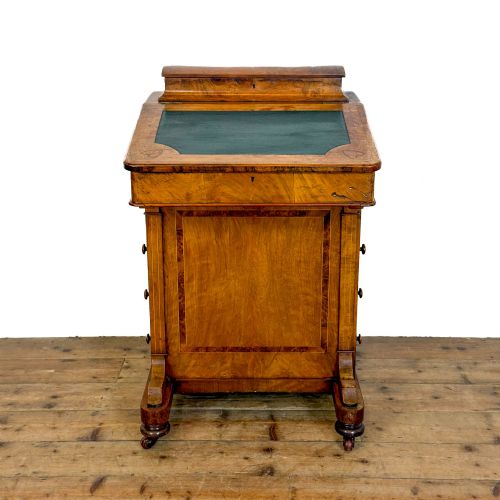

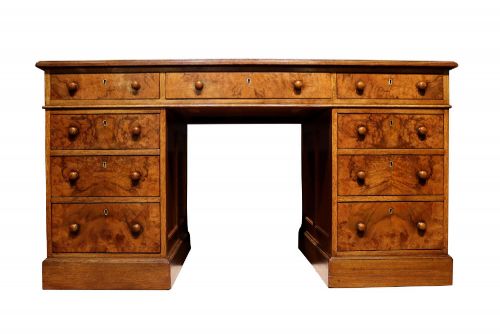


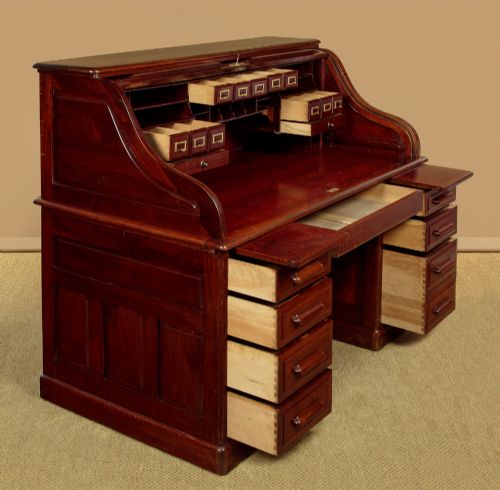


Edwardian Walnut Pedestal Desk
An edwardian walnut pedestal desk brings substantial timber presence and practical writing space into a study.
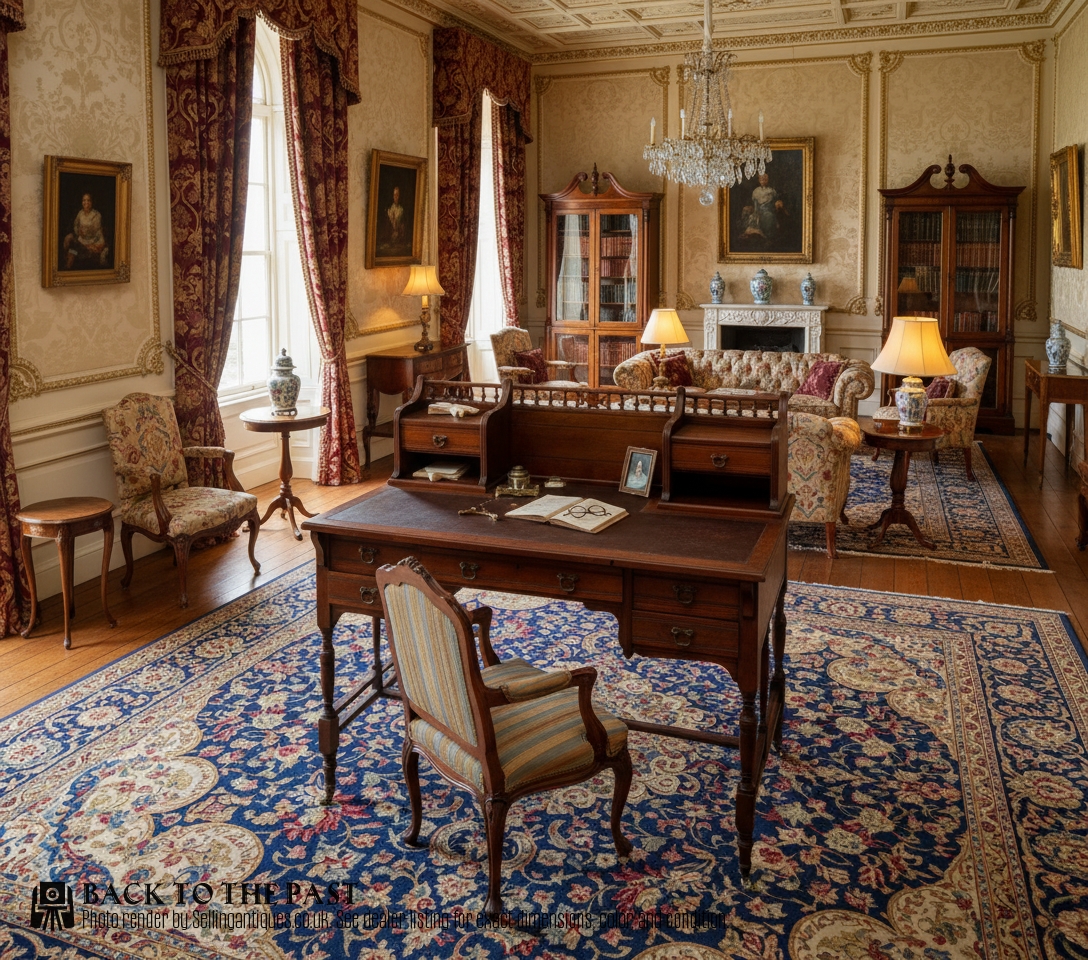
Edwardian Walnut Pedestal Desk
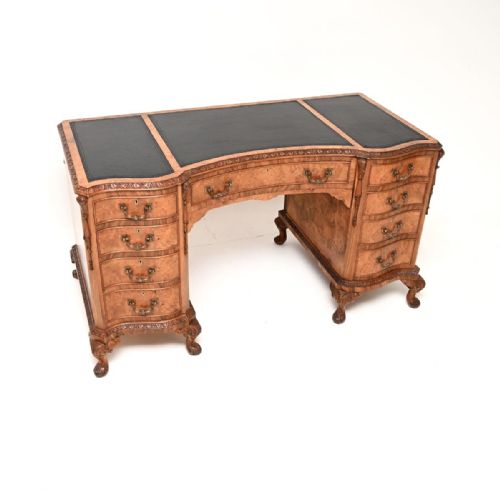
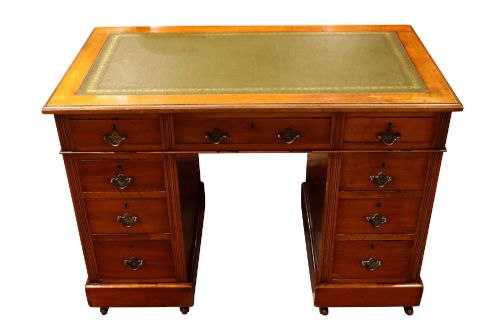
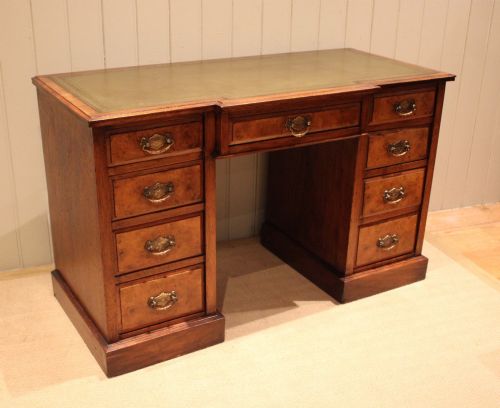
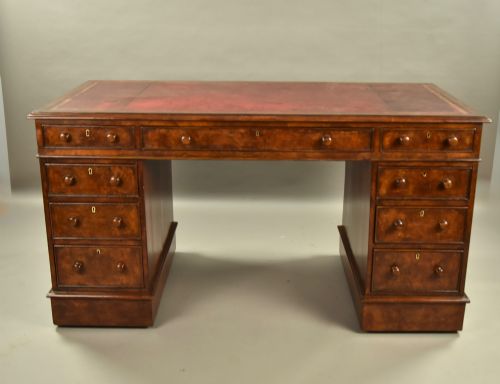
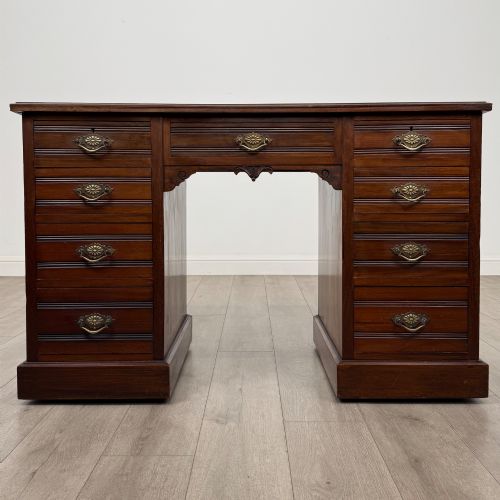
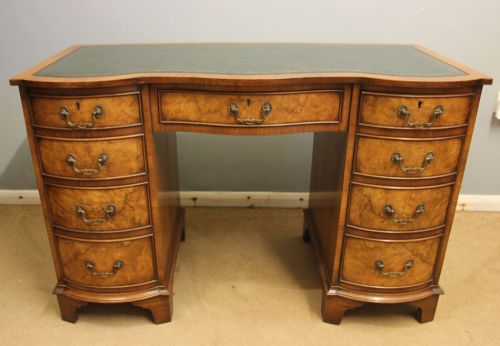
An edwardian walnut pedestal desk combines a twin-pedestal configuration with multiple drawers, typically featuring an inset leather writing surface. The form appears frequently from the Edwardian period and the surrounding decades, often showing nine-drawer layouts or partners formats.
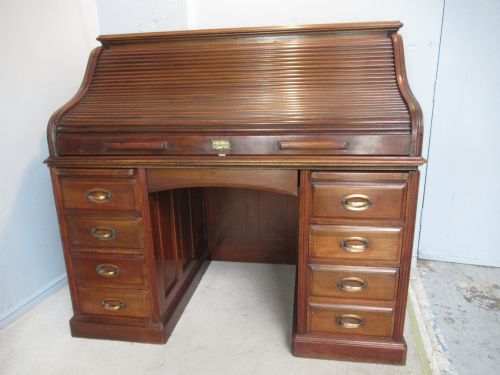
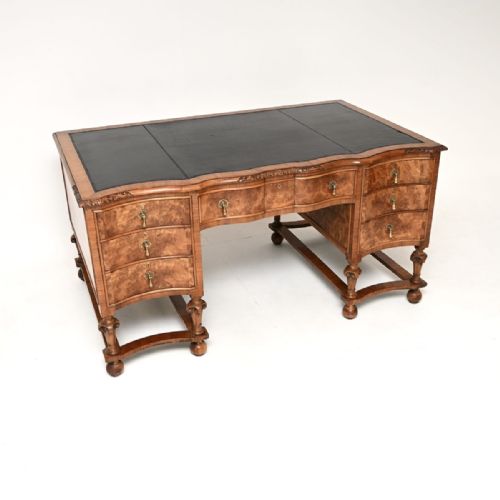
Makers constructed these writing tables using solid timber and decorative veneers to furnish studies and offices. Examples range from compact writing desks to large roll-top variations and partners desks designed for use from both sides.
How they were made
Cabinet makers utilised walnut and burr walnut veneers over secondary timbers, often applying French polish to highlight the figured grain patterns. Writing surfaces incorporated tooled leather or Moroccan leather insets surrounded by wooden borders.
Brass handles, escutcheons, and drawer pulls completed the construction, whilst internal drawer carcases relied on traditional dovetail joinery. Heavier office variations included roll-top mechanisms and panelled pedestals.
Some models hide stationery drawers behind tambour cylinders that roll shut with a satisfying wooden click.
What varies in quality
The selection of timber grain significantly divides the standard of construction, with figured burr walnut commanding greater visual depth than plain dark walnut. Cabinet work by established retailers shows finer attention to internal drawer linings and structural symmetry.
The survival of original hardware, leather inserts, and working locks distinguishes well-preserved examples from heavily restored pieces. Proportions also differ, ranging from modest nine-drawer kneehole formats to substantial partners desks.
Maple and Co·Gill and Reigate·Edwards and Roberts·Heal and Sons·Angus of London·Horrocks Desk Company
The Edwardian Walnut Pedestal Desk Glossary
- Burr walnut
- A highly figured wood grain obtained from tree growths, producing intricate patterns used for decorative veneer on desk fronts and top surfaces.
- Partners desk
- A large pedestal desk designed with drawers and cupboards on both sides so two people could work opposite each other.
- Pedestal desk
- A heavy freestanding writing table supported by two upright banks of drawers rather than conventional legs.
- Kneehole desk
- A smaller pedestal desk featuring a central recess for the legs, often fitted with a single shallow drawer above.
- Roll top desk
- A writing desk featuring a slatted wooden tambour cylinder that pulls down to conceal the pigeonholes and writing surface.
Edwardian Walnut Pedestal Desk: Frequently Asked Questions
How do I care for the leather top?
Clean the leather surface gently using a damp cloth and treat it periodically with appropriate leather balm to prevent cracking.
Avoid placing hot cups or direct moisture on the desktop to preserve the gilt tooling and the underlying hide.
Can these desks be dismantled for moving?
Many pedestal desks separate into three main components comprising the two drawer pedestals and the top section.
Lifting the top requires care, especially on larger partners desks or roll-top variants where heavy timber mechanisms add considerable weight.
What is the difference between a partners desk and a standard desk?
A standard pedestal desk places drawers against a finished back panel and accommodates a single user facing a wall or window.
A partners desk provides functional drawer and cupboard space on both the front and reverse elevations for dual occupancy.
How do I identify burr walnut?
Burr walnut displays swirling, knotty grain patterns created by irregular growth formations in the timber.
Cabinet makers sliced this wood thinly to create decorative veneers across the drawer fronts and writing surfaces.