


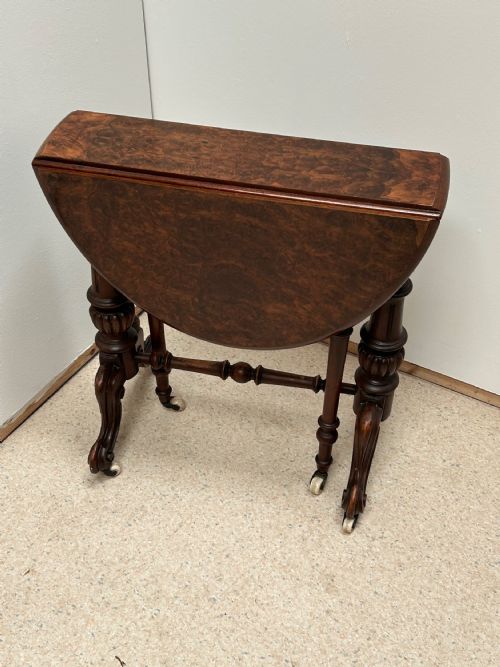


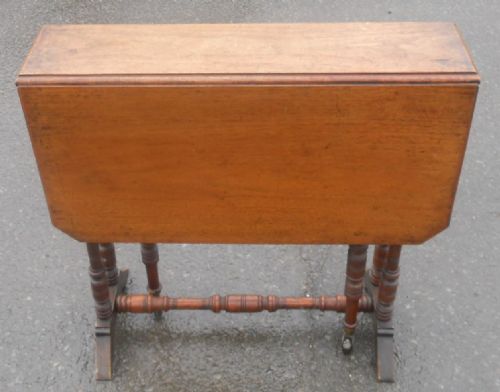


Edwardian Walnut Drop Leaf Table
These pieces of edwardian walnut drop leaf table furniture offer clever space-saving design paired with rich wood grain.
Edwardian Walnut Drop Leaf Table
An edwardian walnut drop leaf table provides a versatile surface that expands when entertaining and folds down compactly for everyday room placement. Most pieces meeting this search phrase take the form of Sutherland tables, coffee tables, or occasional tables featuring hinged flaps supported by swinging gate legs.
Makers of the period adapted earlier Queen Anne style influences and traditional drop leaf mechanisms into lighter, more portable formats suitable for smaller domestic spaces. Walnut and burr walnut dominate the construction, providing distinctive figure and warm tone across the surface.
How they were made
Cabinet makers utilised solid walnut and burr walnut veneer applied to stable secondary woods, ensuring rich surface patterns without excessive weight. Marquetry and wood inlay appear on selected examples, adding decorative contrast to the tops and borders.
Functional hardware such as brass hinges and small ceramic castors support the movement of the folding leaves and overall mobility of the tables. Joinery relied on traditional methods to withstand the repeated action of raising and lowering the hinged leaves over decades.
Some baby Sutherland tables are small enough to serve afternoon tea for two without leaving the armchair.
What varies in quality
The richness and symmetry of the burr walnut veneer set finer examples apart from plainer timber surfaces. Selection of highly figured grain on the main leaves demonstrates greater ambition by the original cabinet maker.
The crispness of inlay and the subtlety of turned gate leg supports indicate the standard of craftsmanship invested in the piece. Smooth operation of the drop leaf hinges and sturdy alignment of the folding leaves complete the assessment of execution.
The Edwardian Walnut Drop Leaf Table Glossary
- Sutherland table
- A narrow table with exceptionally slender drop leaves that fold almost vertically when not in use. This form became particularly popular during the Victorian and Edwardian periods for tea and occasional room usage.
- Burr walnut
- Timber sliced from the warty growths on walnut trees, showing highly twisted and mottled grain patterns. Cabinet makers prized this material for veneering prominent surfaces.
- Drop leaf table
- A table with a fixed centre section and hinged flaps that fold down at the sides. It allows the footprint of the furniture to adjust according to available space.
- Marquetry
- Decorative patterns formed by fitting together small pieces of wood veneer into a larger design. Craftsmen applied this technique to tabletop surfaces for visual enrichment.
Edwardian Walnut Drop Leaf Table: Frequently Asked Questions
Where should I place an edwardian walnut drop leaf table?
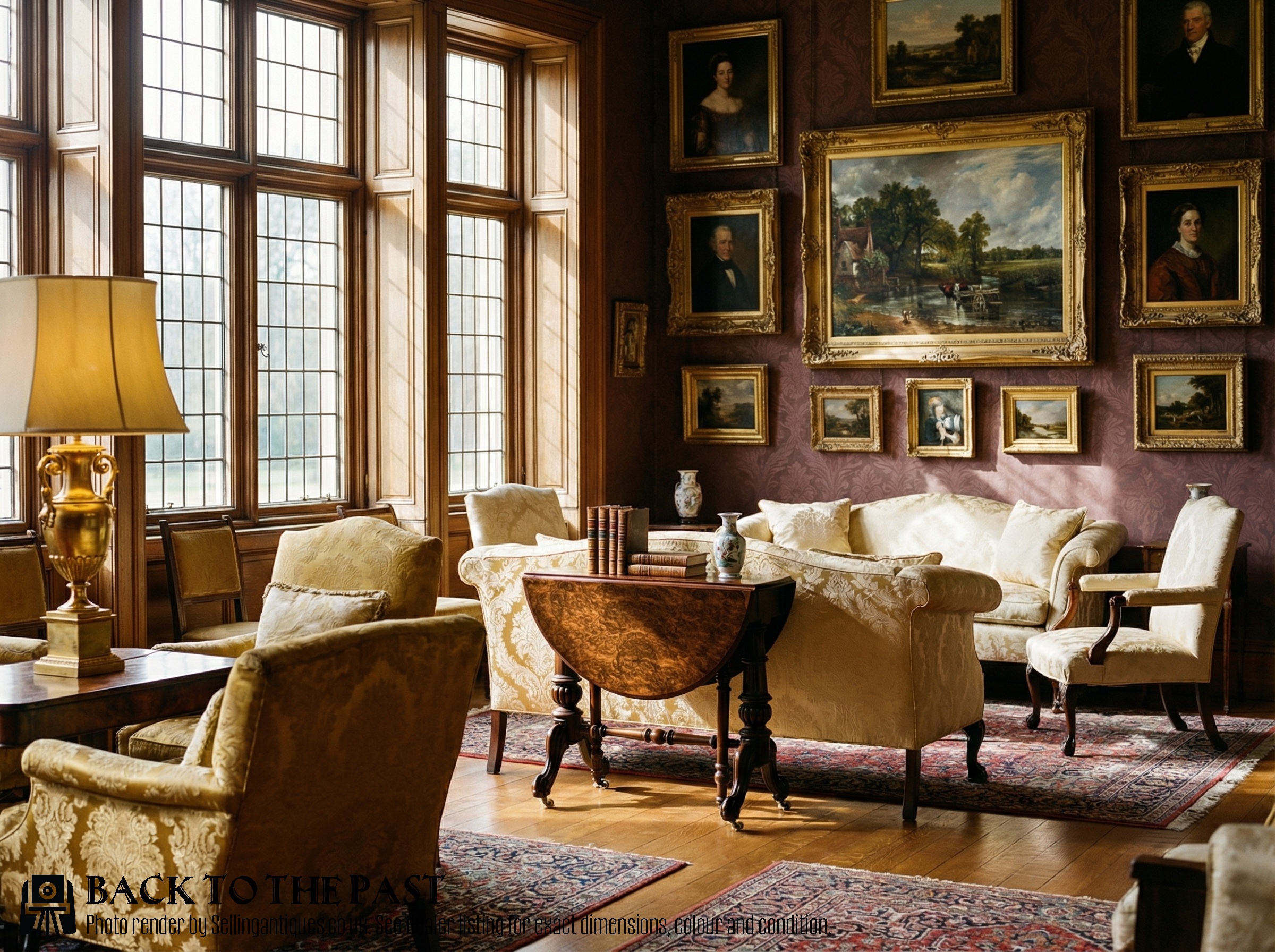
These tables fit well beside sofas or chairs as occasional surfaces for books and lamps. With both leaves folded down, they occupy minimal floor space in hallways or tighter rooms.
Opening one or both leaves allows the table to accommodate afternoon tea or small gatherings before returning to its compact profile.
How do I care for walnut veneer surfaces?
Keep walnut furniture away from direct sunlight and strong heat sources to prevent the timber from drying and the veneer from lifting. Dust regularly with a dry cloth and apply occasional clear wax to maintain the sheen.
Avoid placing wet glasses or hot dishes directly on the polished wood without protective coasters.
How can I tell Victorian pieces from Edwardian ones?
Victorian walnut tables often display heavier proportions, darker finishes, and more ornate turned supports. They frequently date from the era of Queen Victoria's reign up to the close of the nineteenth century.
Edwardian examples tend toward lighter construction, brighter walnut tones, and simpler lines reflecting changing domestic tastes around the turn of the twentieth century.