
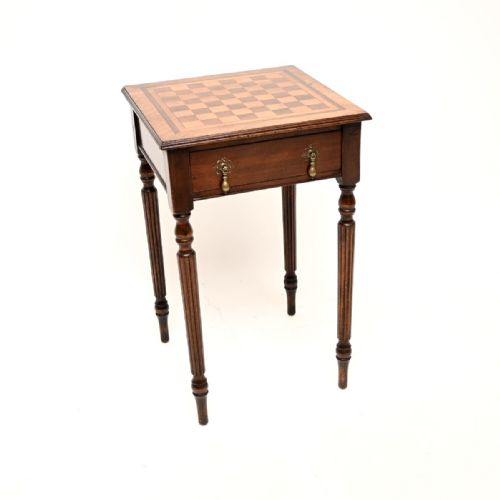
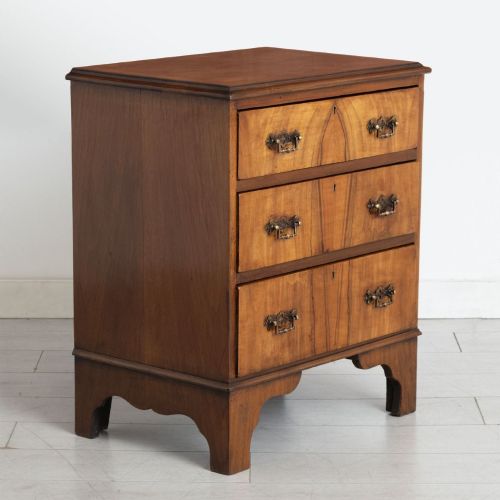
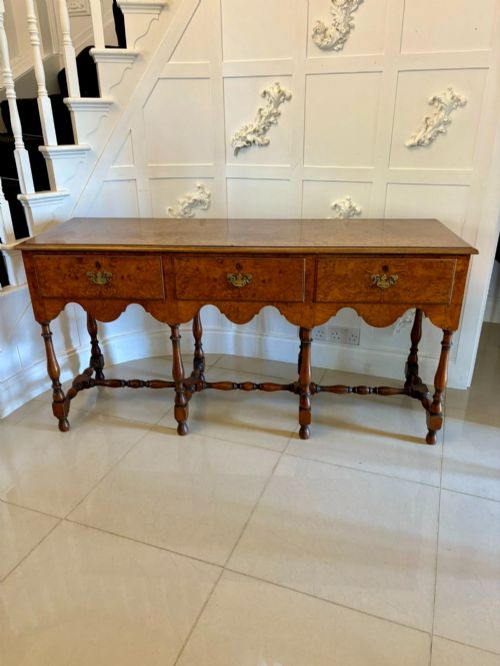
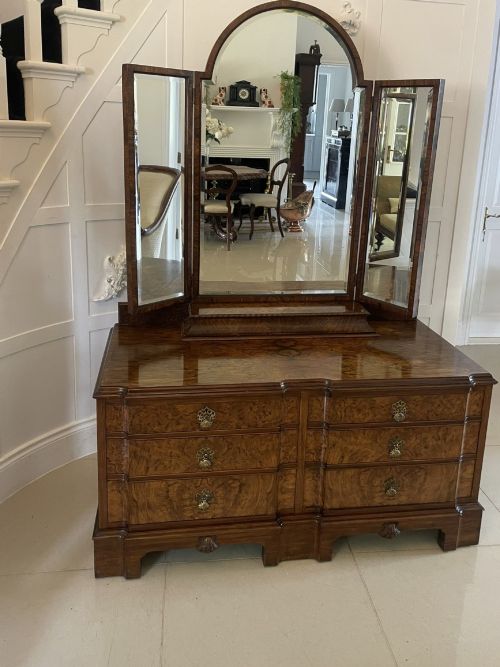
Edwardian Walnut Drawers
When searching for edwardian walnut drawers, buyers encounter practical storage furniture built from richly figured timbers during the early twentieth century.
Edwardian Walnut Drawers
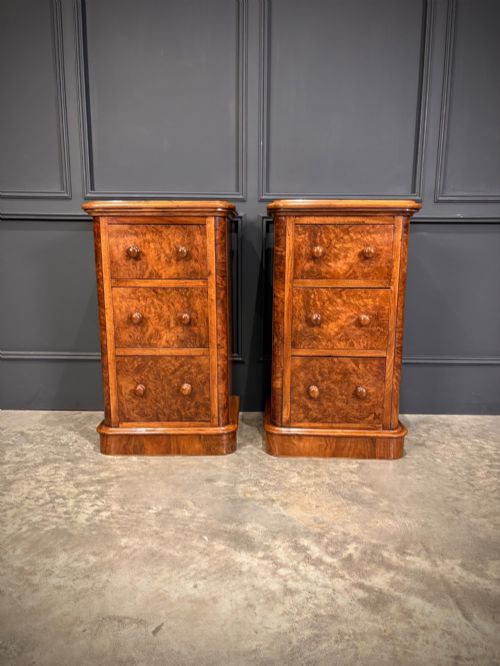
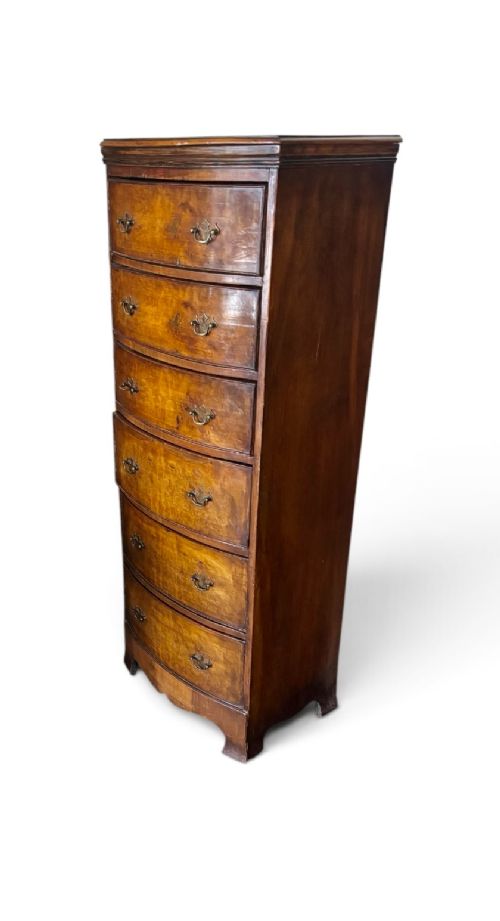
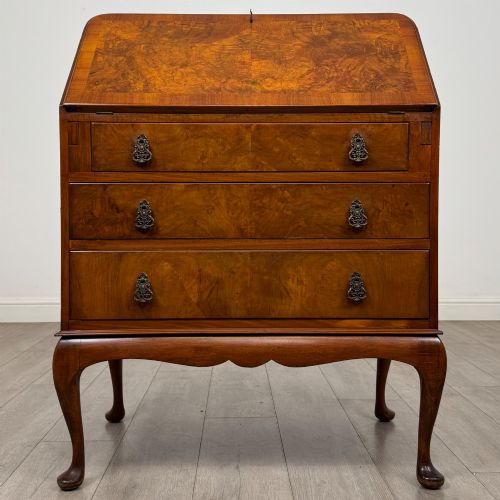
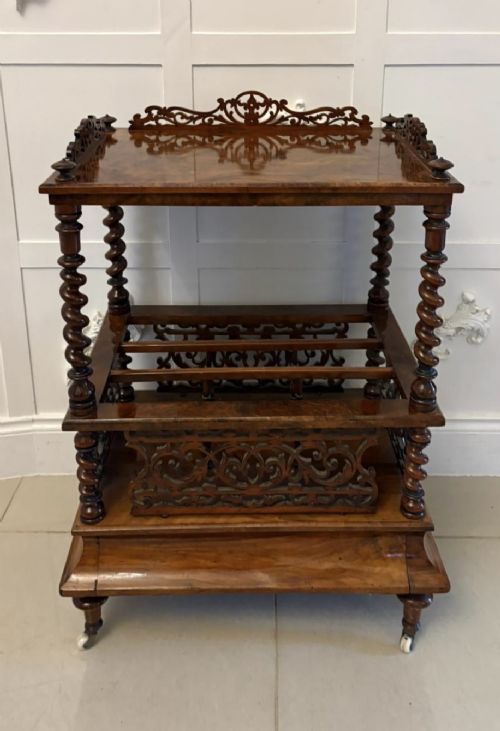
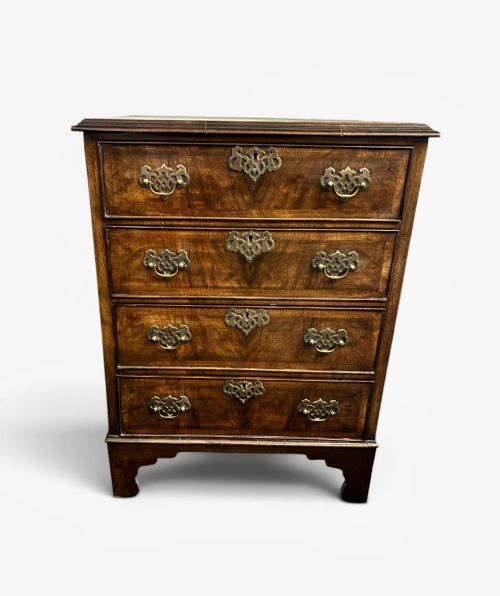
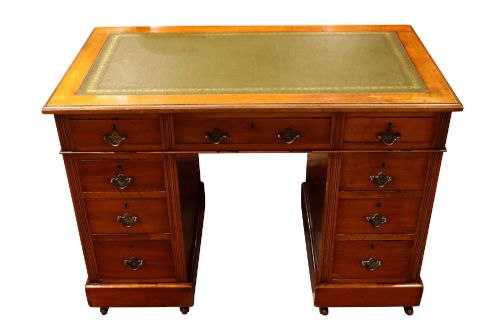
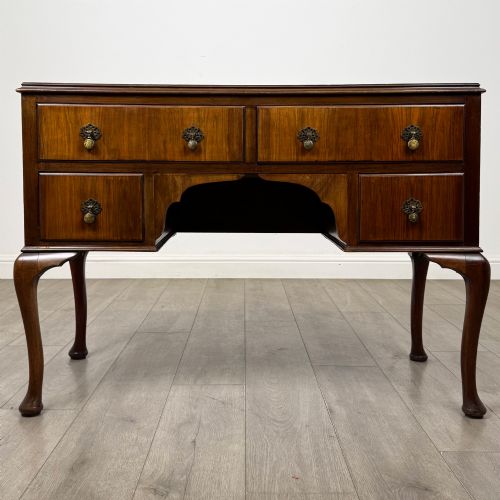
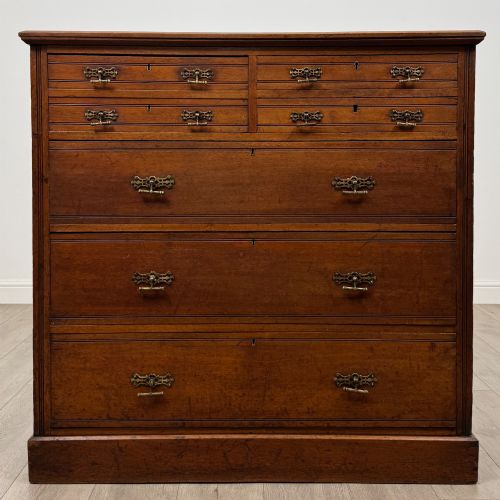
Buyers searching for edwardian walnut drawers encounter a variety of forms designed for domestic storage and writing, ranging from compact bedside chests to tallboys and bureau desks.
The most common formats on this page are chest of drawers configurations, frequently constructed with serpentine fronts, brush slides, or multiple smaller compartments.
Origins span the Edwardian period alongside adjacent Victorian and early twentieth-century eras, reflecting revival styles like Queen Anne and Georgian alongside Arts and Crafts designs.
How they were made
Cabinetmakers utilised solid walnut, satin walnut, and oak frames overlaid with highly decorative burr or figured walnut veneers to create striking patterned surfaces.
Secondary timbers such as ash and elm appear in structural components, while hardware typically incorporates cast brass handles and escutcheons.
Listings feature walnut veneer, burr walnut, satin walnut, oak, and brass across Edwardian and Victorian forms.
What varies in quality
The selection of timber grain largely dictates the visual appeal, with symmetrical burr walnut figures commanding greater attention than plain surfaces.
Construction methods and cabinetmaker execution, from firms like Gill & Reigate or Jas Shoolbred, separate standard production pieces from finer workshop commissions.
Jas Shoolbred·Edwards & Roberts·Gill & Reigate
The Edwardian Walnut Drawers Glossary
- Burr walnut
- A prized veneer sliced from tree growths that produces intricate, swirling grain patterns. It provides a highly decorative surface on drawer fronts and tabletops.
- Serpentine front
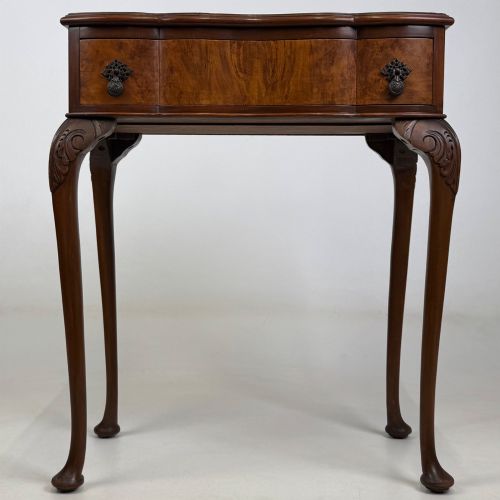
- A curved furniture front featuring a convex centre flanked by concave curves. This shape requires advanced cabinetmaking skill to execute cleanly in walnut veneer.
- Tallboy
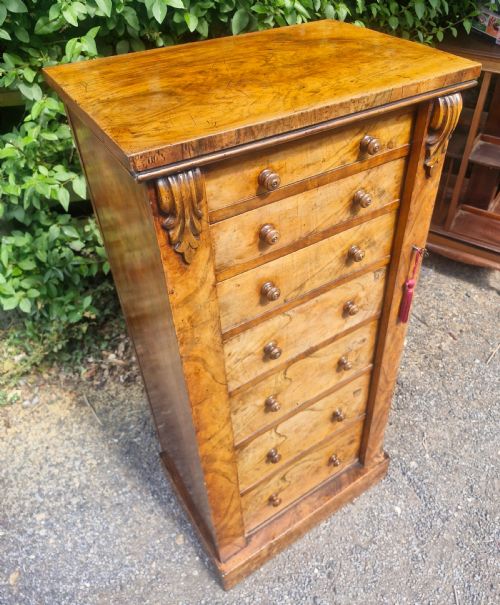
- A tall chest of drawers consisting of one chest stacked upon another or built as a single elongated unit. These maximise vertical storage space in bedrooms.
- Brush slide
- A pull-out shelf located directly beneath the top surface of a chest or bureau. Historically used for dusting clothes or writing correspondence.
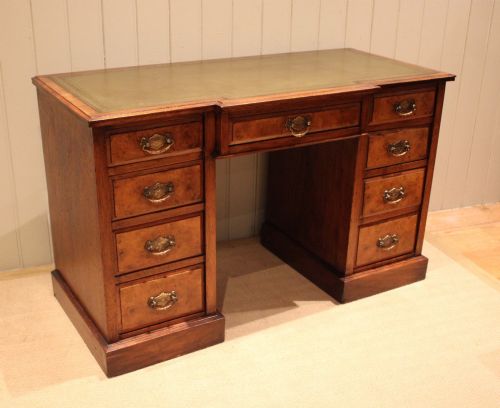
- Pedestal desk
- A flat-topped writing table supported by two vertical banks of drawers. They offer substantial workspace and partitioned storage.
Edwardian Walnut Drawers: Frequently Asked Questions
How do I identify Edwardian walnut furniture?
Edwardian walnut pieces often combine lighter construction methods with revival styles like Queen Anne or Georgian influences. Look closely at the timber figure and secondary woods used inside the drawers.
Many examples feature subtle serpentine fronts or satin walnut linings typical of the period around nineteen hundred.
Where were these chests used originally?
These chests served primarily in domestic bedrooms, dressing rooms, and private studies for storing garments and personal documents. Compact versions also functioned as bedside tables.
Larger configurations provided ample storage in principal chambers of Edwardian homes.
How should I care for walnut veneer?
Walnut veneer benefits from stable room temperatures away from direct sunlight and heat sources to prevent timber splitting or fading. Regular dusting with a soft, dry cloth preserves the polished finish.
Apply occasional traditional wax polish to nourish the wood grain without building up heavy residue.
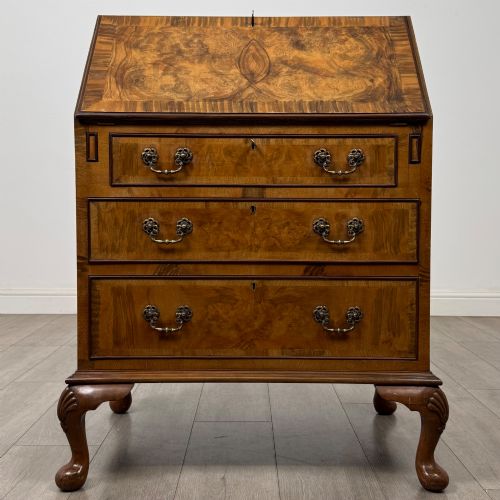
What is a bureau desk?
A bureau desk incorporates a sloping fall-front lid that opens to reveal a writing surface and small pigeonholes. Drawers sit neatly beneath the writing compartment for paperwork storage.
This dual-purpose design was popular for domestic correspondence in the early twentieth century.