
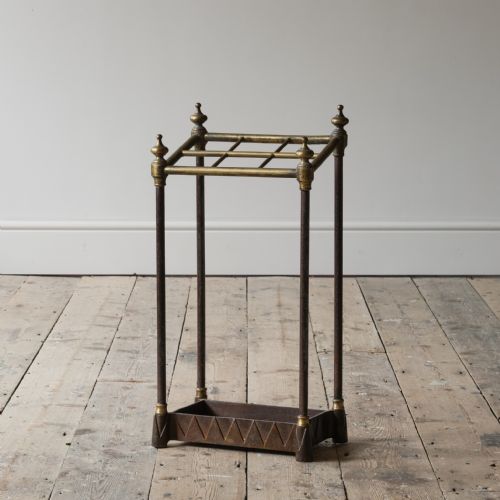
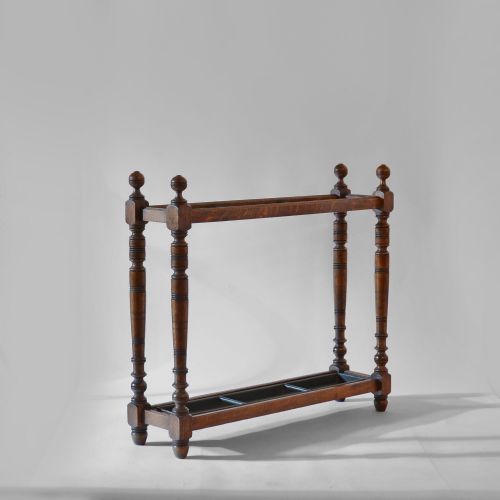
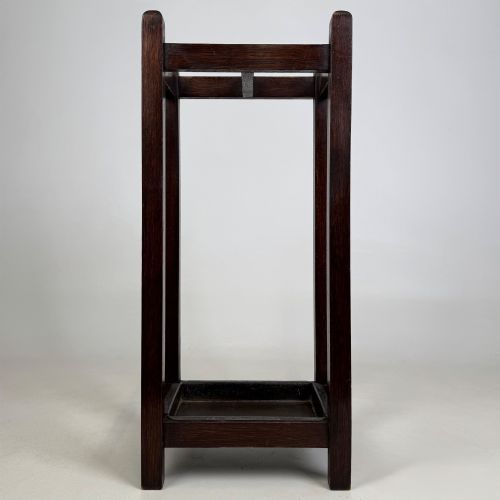
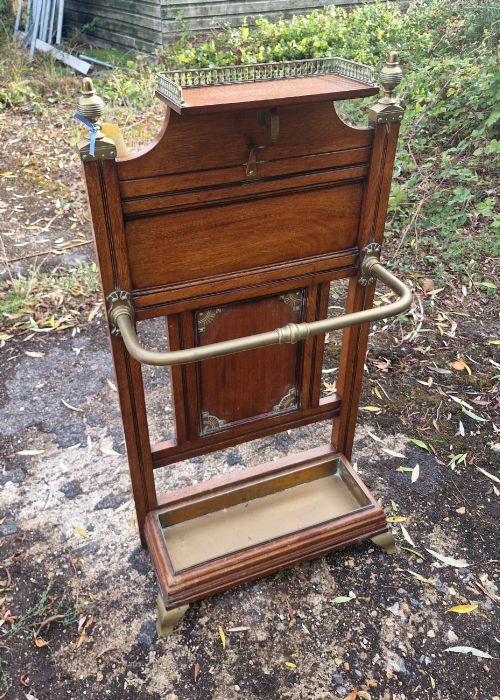
Edwardian Walking Stick Stand
An edwardian walking stick stand organises heavy canes and wet umbrellas in a hallway with period proportion.
Edwardian Walking Stick Stand
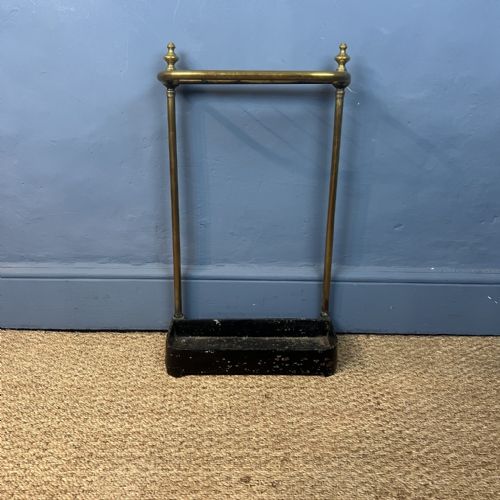
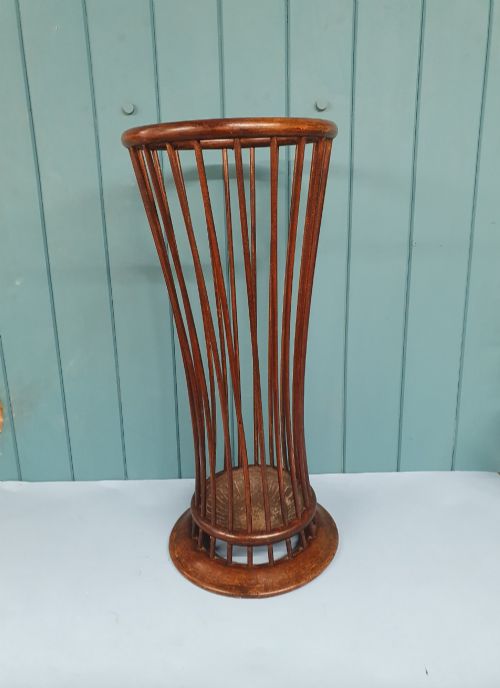
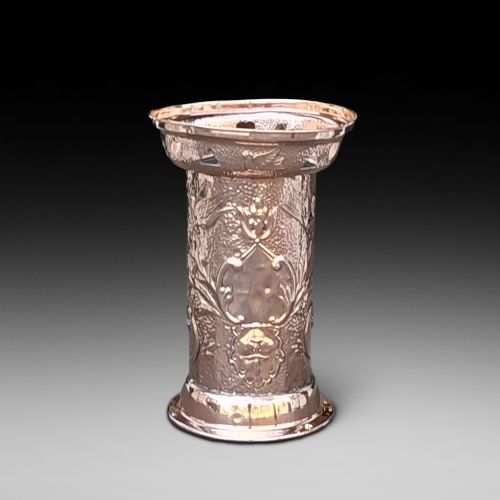
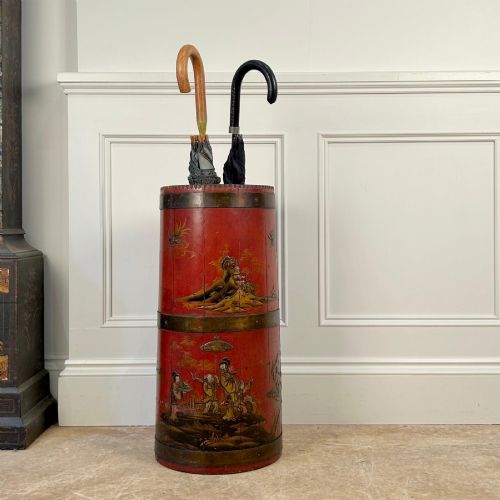
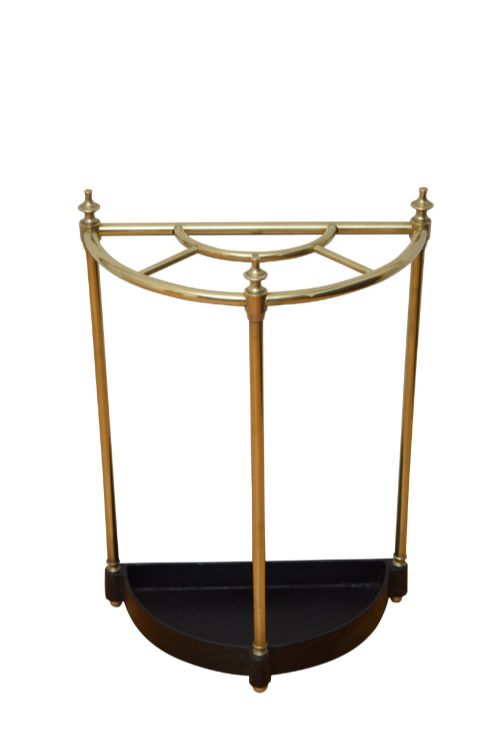
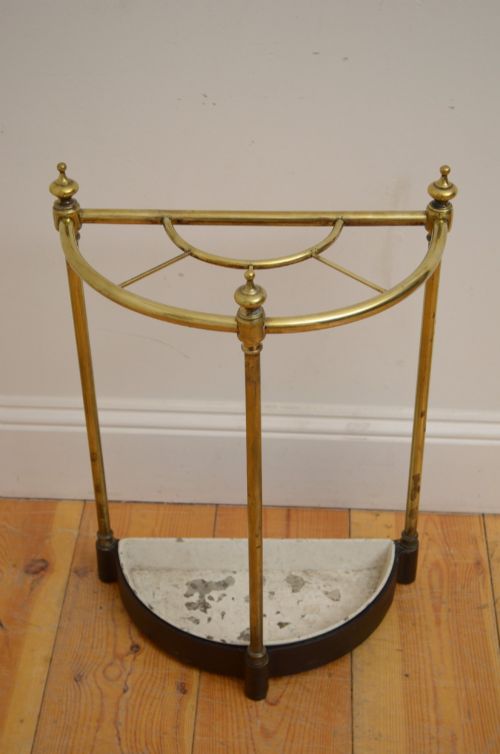
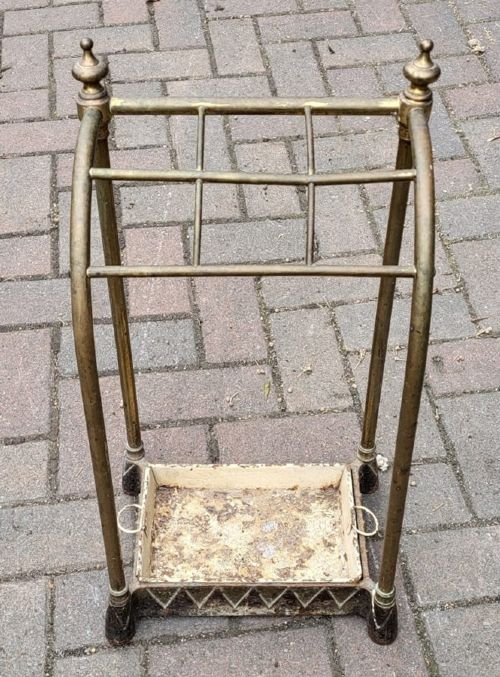
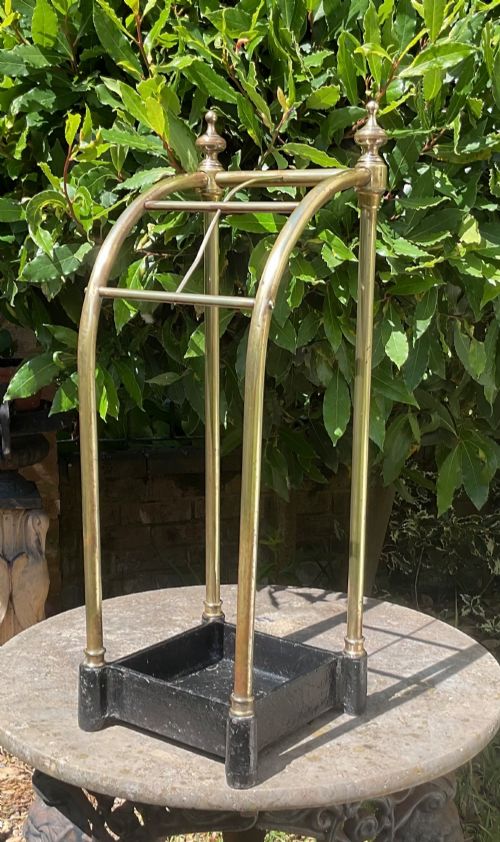
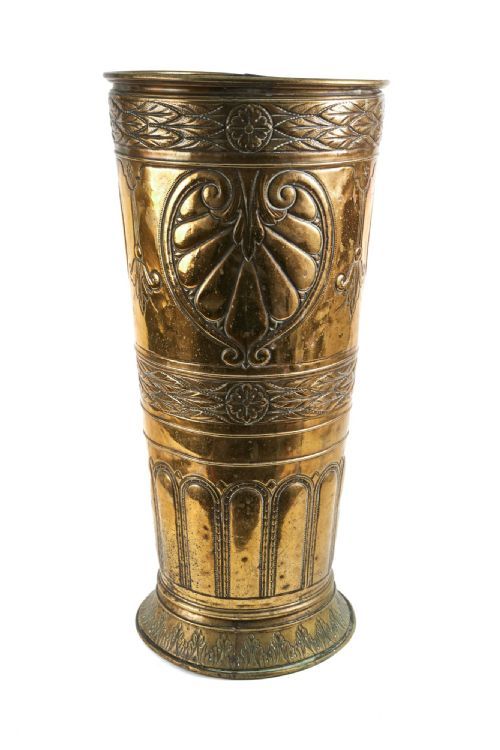
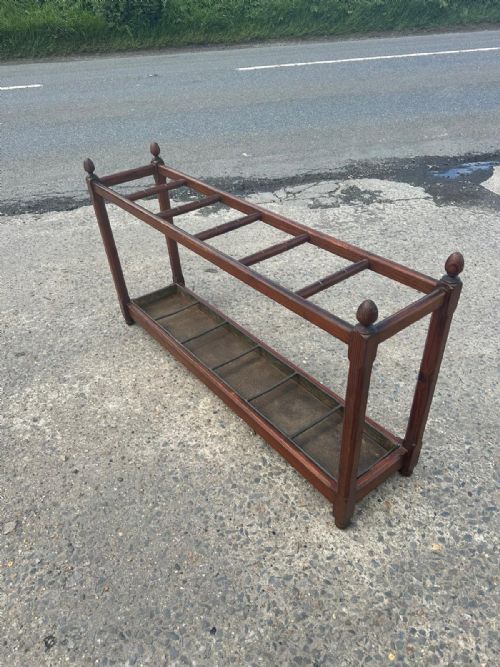
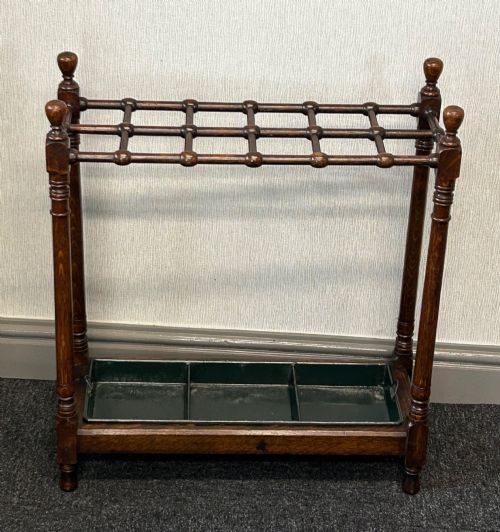
An edwardian walking stick stand provides a dedicated place to store walking canes and umbrellas in entrance halls and reception spaces. The pieces appearing here range from compact demi-lune hall fittings to robust country house designs that accommodate numerous sticks simultaneously. Most examples belong to the Edwardian period or the broader turn of the twentieth century, accompanied by related Victorian and early twentieth-century pieces.
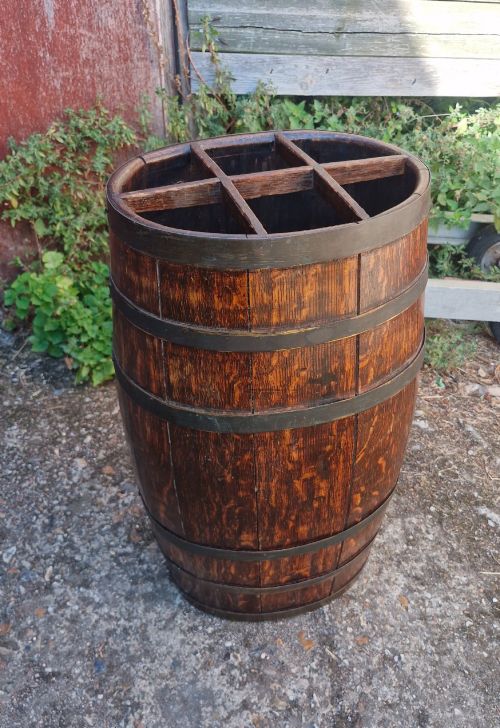
The forms vary between half-moon shapes designed to sit flat against a wall and freestanding barrel or rectangular frames. Many serve a dual purpose for both walking sticks and umbrellas, sharing structural DNA with larger hall stands. Buyers encounter sturdy timber frames alongside open metal loops and decorative cast units.
Construction origins lean heavily toward English craftsmanship, encompassing Arts and Crafts simplicity, Aesthetic Movement detail, and practical country house utility. The surviving inventory bridges practical daily use and decorative entrance furniture, spanning oak, mahogany, brass, and cast iron.
Evaluating quality and execution
Quality rests upon the integrity of the materials and the intentionality of the design, distinguishing standard utility pieces from finer artisan workshop output. Substantial timber selection, precise coopered joining, and heavy-gauge brass or copper elevate a piece above basic production. The presence of original fitted drip trays adds significantly to the completeness and authenticity of a stand.
Proportion and decorative detail separate ordinary hall furniture from sophisticated examples exhibiting Arts and Crafts or Art Nouveau motifs. Finer stands balance structural stability with refined turning, clean metalwork, and harmonious integration of mixed materials without feeling over-ornamented.
Some copper stands bear the quiet dents of damp umbrellas dropped in haste by Victorian visitors rushing inside from the rain.
Heals of London
The Edwardian Walking Stick Stand Glossary
- Demi-lune
- Half-moon shape designed to stand flush against a hallway wall. This configuration saves valuable floor space in narrow corridors.
- Coopered
- Made from wooden staves bound together with metal hoops, following the traditional method of barrel construction. This technique creates curved bodies for oak stick stands.
- Drip tray
- A removable metal basin placed at the base of the stand to catch water from wet umbrellas. Original trays are specific to the individual frame.
- Japanned
- Finished with a hard, glossy black or dark resinous lacquer mimicking Asian export items. This decorative surface appears on select Edwardian hall pieces.
- Barley twist
- A carved spiral wooden column resembling a twisted loaf of bread. This decorative turning style frequently forms the upright supports of country house stands.
Edwardian Walking Stick Stand: Frequently Asked Questions
How do I clean an oak stand?
Wipe timber surfaces gently using a soft, dry cloth to remove dust without stripping the historic patina. Apply a traditional beeswax sparingly if the wood appears dry.
Avoid using modern liquid polishes or soaking the timber in water, as excessive moisture damages aged grain and loosen joints.
Where should I place my stand?
Position the piece in a hallway, entrance lobby, or boot room where guests arrive and outdoor gear collects. Ensure it rests on a dry floor away from direct heat sources.
Keep the stand clear of radiators and intense sunlight to prevent the timber from warping or splitting over time.
Are original drip trays important?
Original metal trays matching the age and dimensions of the frame contribute significantly to the authenticity and completeness of the piece. They were designed specifically to catch water.
Replacements function adequately for daily use, but collectors prefer stands retaining their original zinc, brass, or copper basins.
How do I distinguish Edwardian from Victorian?
Edwardian stands generally feature lighter construction, cleaner lines, and brighter brass work influenced by Arts and Crafts ideals. Victorian examples often display heavier mass, darker timbers, and more exuberant ornamentation.
Overlap remains common around the turn of the twentieth century, blending characteristics from both eras.