


Edwardian Two Seater Couch
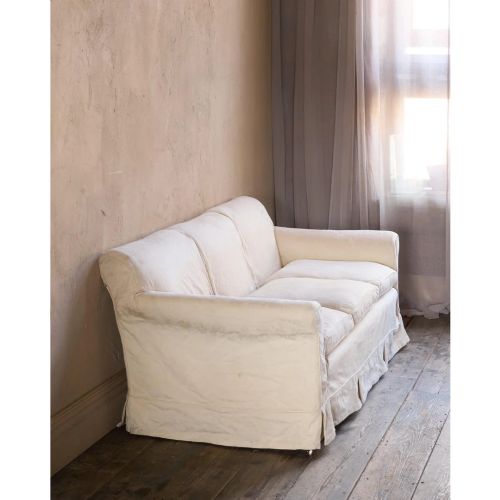
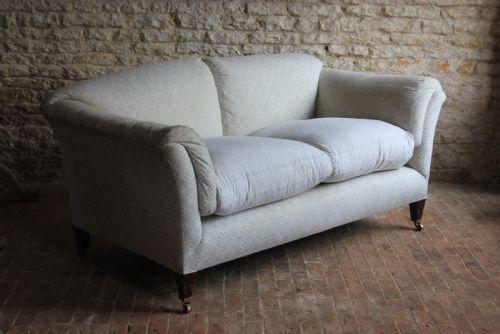
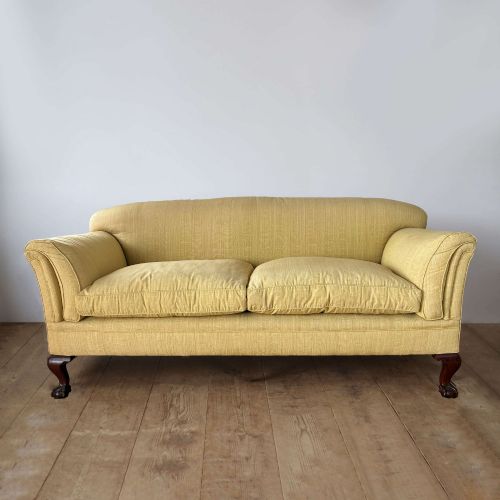
An edwardian two seater couch offers compact seating shaped by the aesthetics of the early twentieth century.
Edwardian Two Seater Couch
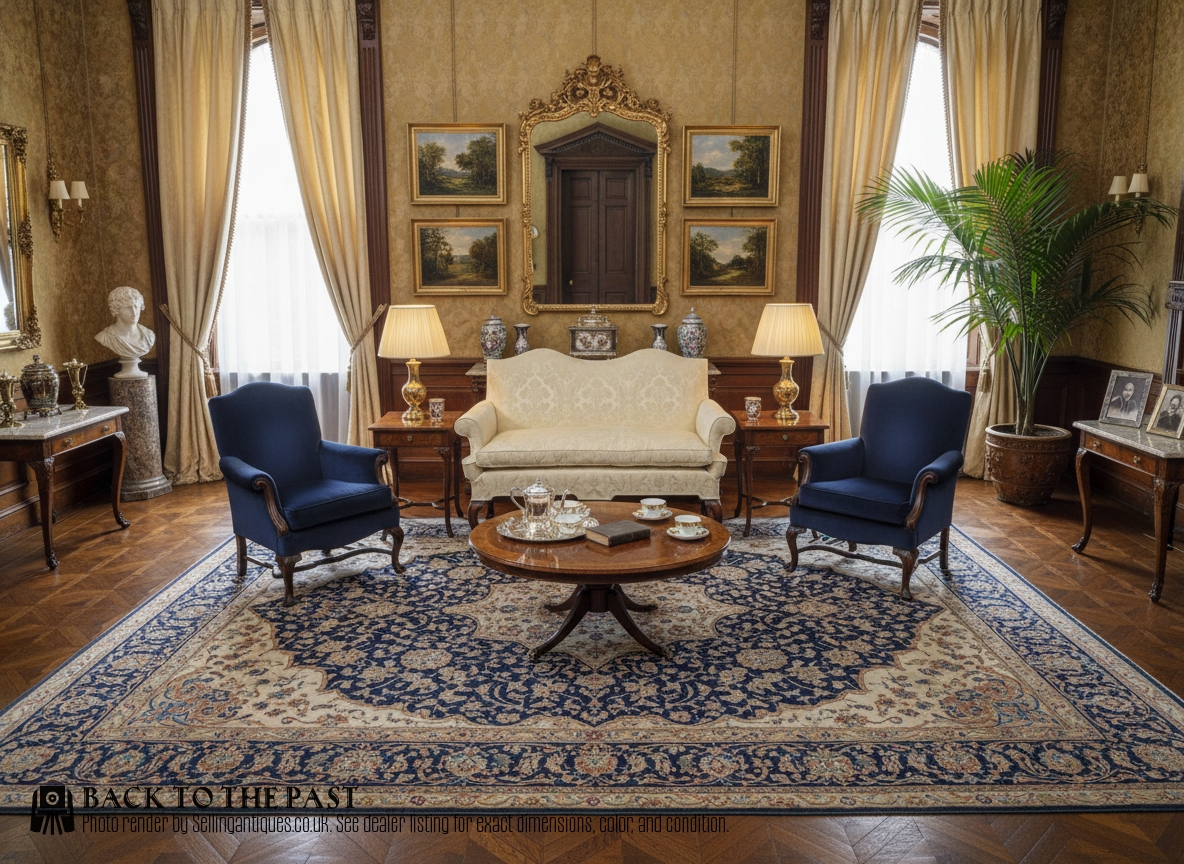
An edwardian two seater couch brings together forms designed for smaller reception spaces and intimate parlours during the early twentieth century. Buyers searching for an edwardian two seater couch typically encounter compact settees, salon seats, and deep-seated country house designs that reflect the period's domestic comfort.
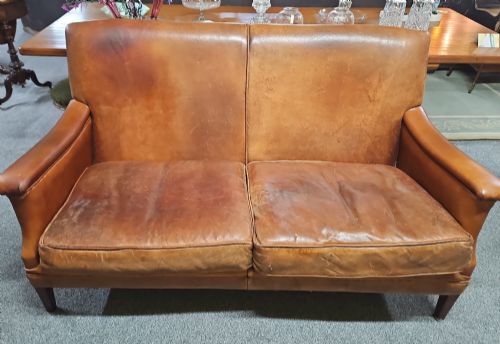
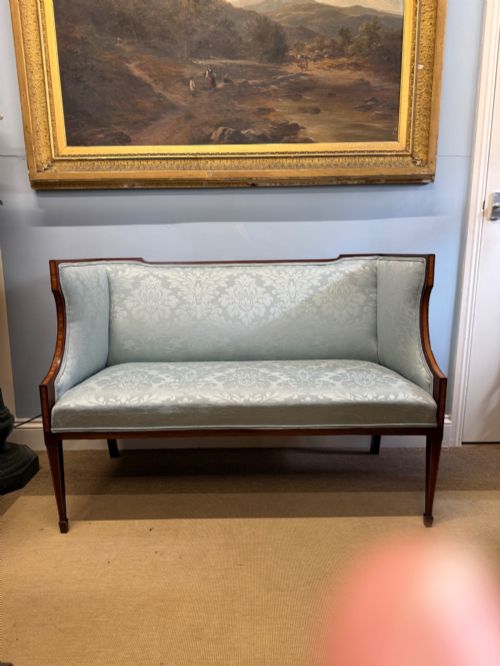
The pieces listed here span the Edwardian era alongside late Victorian and early twentieth-century examples up to the 1930s. Object types range from inlaid mahogany salon settees to robust leather couches and window seats.
Makers and makers' marks occasionally identify distinguished London upholstery firms within this selection, providing documented provenance. Alongside these, vernacular pieces demonstrate the enduring popularity of English country house styles.
How they were made
Workshops shaped these frames using timber such as mahogany, walnut, and various solid hardwoods. Inlaid details in satinwood and structural elements incorporating brass hardware appear across the formal salon pieces.
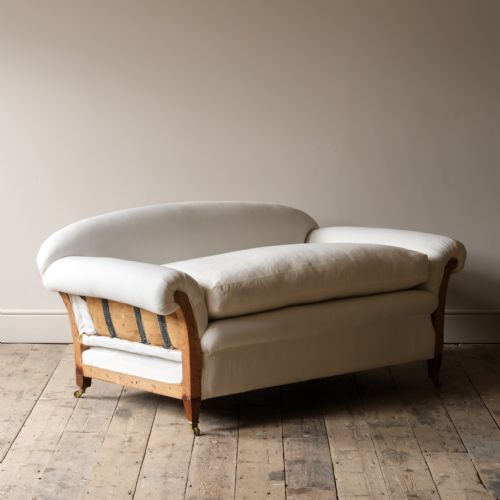
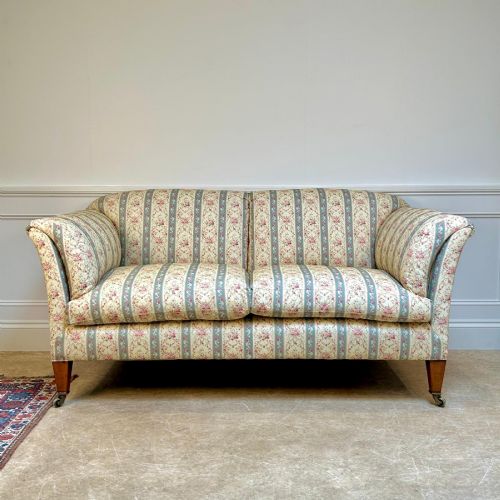
Traditional upholstery methods relied on horse hair fill beneath durable coverings of leather, damask fabric, and patterned textiles. Canework panels also provide lightweight texture on specific frames.
Some couches double as window seats, proving that Edwardians enjoyed watching the street just as much as the fire.
What varies in quality
The refinement of the woodwork dictates much of the distinction between standard production and exceptional examples. Crisp carving, precise satinwood inlay, and balanced proportions elevate certain salon settees above simpler pieces.
Material choice and maker attribution further separate the range. High-grade mahogany and walnut frames combined with documented upholstery work from established London firms command significant attention from collectors.
Howard and Sons
The Edwardian Two Seater Couch Glossary
- Settee
- A long upholstered seat for more than one person, typically featuring a back and arms. These forms function as primary seating in Edwardian drawing rooms.
- Inlay
- A technique where contrasting woods like satinwood are inserted into recesses within the primary mahogany surface to create decorative patterns. This ornamentation is characteristic of refined Edwardian cabinet-making.
- Canework
- Woven rattan or cane panels utilised for backrests or seat frames. This technique provides a lighter visual weight compared to solid upholstered surfaces.
- Drop arm
- A movable armrest mechanism found on certain chaise lounge and sofa designs. It allows the user to lower the side for reclining.
- Chesterfield
- A traditional sofa style distinguished by deep button tufting and rolled arms of equal height to the back. Edwardian iterations adapt this heavy form for domestic comfort.
Edwardian Two Seater Couch: Frequently Asked Questions
What defines an edwardian two seater couch?
An edwardian two seater couch is a compact upholstered seating piece produced around the early twentieth century, combining traditional comfort with period revival styles.
These pieces often feature exposed mahogany or walnut frames, occasional satinwood inlay, and compact proportions suited for smaller reception rooms.
How do I tell an Edwardian sofa from a Victorian one?
Edwardian seating generally displays lighter proportions, brighter mahogany or walnut timbers, and more restrained ornamentation than heavier Victorian pieces.
Many Edwardian designs draw on Neoclassical or Queen Anne revivals, whereas Victorian examples tend towards darker finishes and more robust upholstery.
Were these couches used in country houses?
Country house couches represent a distinct strand of early twentieth-century seating, prioritising deep, comfortable proportions over formal salon display.
These pieces frequently utilise leather or heavy fabric upholstery designed for relaxed everyday living in large English residences.
What materials were used for upholstery?
Original upholstery schemes relied on horse hair fill to maintain structured support within the deep seat frames.
Surfaces were finished in durable leather, patterned damask fabric, or specialised textiles from established design houses of the era.