


Edwardian Carved Walnut Bench
These edwardian carved walnut bench pieces are sturdy seating forms shaped from rich dark timbers and topped with period textiles.
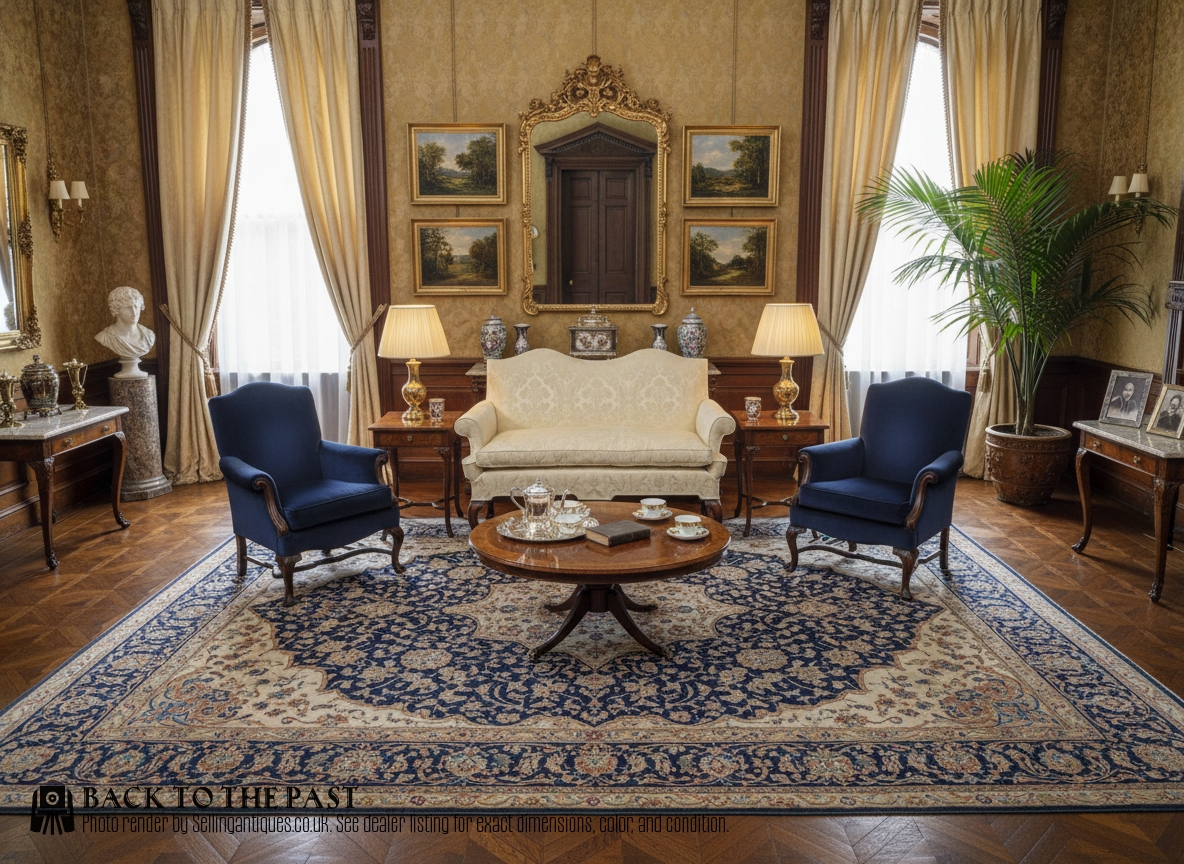
Edwardian Carved Walnut Bench
An edwardian carved walnut bench takes several forms across the inventory, appearing as window seats, salon stools, and long settees. Buyers search for these items to bring substantial timber framing and period seating into a hallway or bedroom.
The selections span multiple decades and stylistic revivals, with Victorian and Edwardian examples sitting alongside Queen Anne and Georgian Revival pieces. Walnut forms the primary structural timber across these listings, often paired with elaborate carved details.
Seating variations range from compact single-person stools to three-seater upholstered benches and caned French settees. Many pieces incorporate low profiles suitable for placement beneath windows or along narrow corridors.
How they were made
Makers shaped these items from solid walnut, utilising dense grain patterns to support structural carved ornamentation on legs and frames. Craftsmen applied revival styles ranging from Queen Anne contours to ornate Victorian and Art Nouveau motifs.
The listings span Victorian, Edwardian, and Art Nouveau styles, constructed primarily from walnut with various textile and cane inserts.
What varies in quality
Quality rests in the depth and crispness of the timber carving across the walnut frame, separating simple turned legs from elaborately sculpted scrollwork. The integration of period-appropriate textiles, whether velvet, tapestry, or new covers, dictates the finish of the seat.
Structural integrity of the underlying walnut timber and the preservation of original caning or upholstery set superior examples apart from standard workshop production.
The Edwardian Carved Walnut Bench Glossary
- Walnut
- A hard, dark timber prized for its rich grain and strength in furniture framing. It accepts detailed carving exceptionally well.
- Bergere
- An enclosed upholstered French armchair or settee with wooden frames and exposed cane panelling. This style adds lightness to heavy timber designs.
- Revival
- A design movement recreating historical periods such as Queen Anne or Georgian aesthetics. These pieces adapt older forms for later domestic interiors.
- Upholstery
- The padded textile covering applied to seats and backs. Materials in this inventory include velvet, tapestry, and patterned fabrics.
- Caning
- Woven rattan or cane material used for seat panels and backs. It provides a flexible yet durable support surface.
Edwardian Carved Walnut Bench: Frequently Asked Questions
Where should I place a walnut bench?
These pieces suit placement beneath large windows, in spacious hallways, or at the foot of a bedroom bed. Their low profiles make them practical for transitional spaces without blocking light.
Larger settee versions also function as secondary seating in living rooms, pairing well with traditional or revival interior schemes.
How do I care for walnut timber?
Maintain the wood by dusting regularly with a dry cloth and avoiding direct sunlight to prevent fading. Occasional application of suitable wax preserves the lustre of the grain.
Keep wooden frames away from direct heat sources to prevent the walnut from drying out or splitting over time.
Are the covers original?
Some pieces retain older textiles such as tapestry or velvet, while others feature newly applied upholstery. Listings specify whether a cover has been recently replaced or restored.
Buyers should check individual descriptions to determine the age and condition of the specific fabric on each seat.
How do I identify an Edwardian piece?
Edwardian items often display lighter proportions and borrow elements from earlier Queen Anne or Georgian revivals. They sit alongside Victorian examples which tend to feature heavier carving and darker finishes.
Construction details and timber patination help distinguish pieces made around nineteen hundred from mid-nineteenth-century items.