
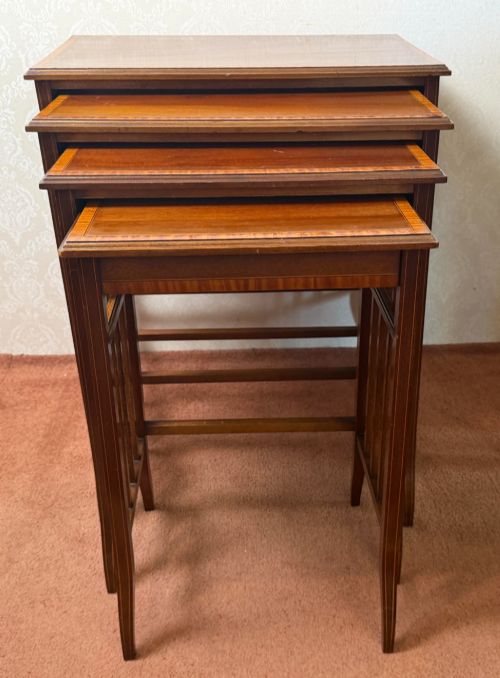
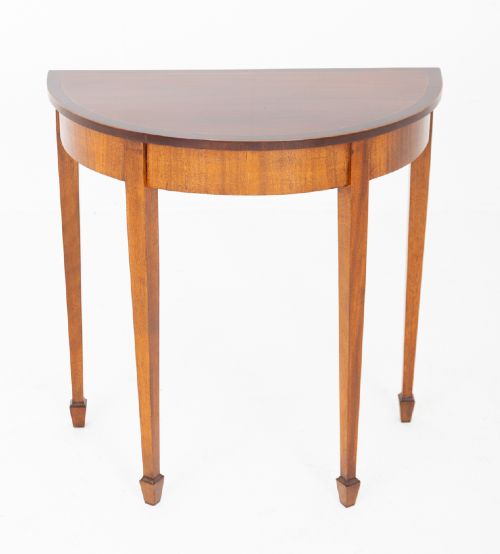
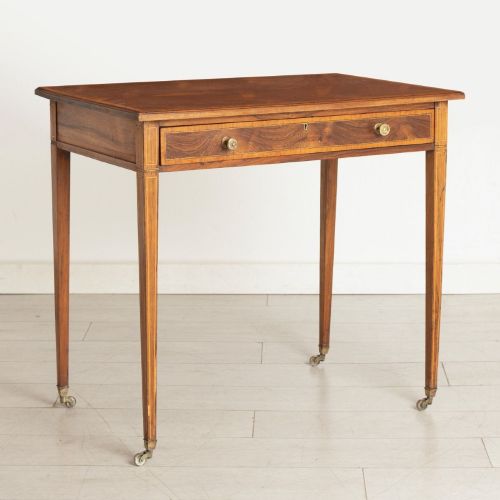
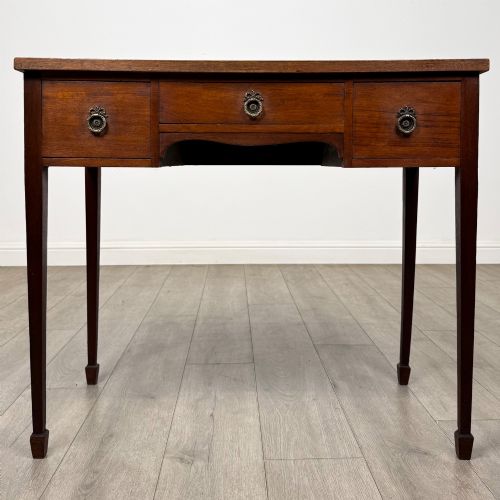


Edwardian Tapered Leg Table
These edwardian tapered leg table pieces offer slim profiles and restrained proportions, making them versatile additions to drawing rooms and studies alike.
Edwardian Tapered Leg Table
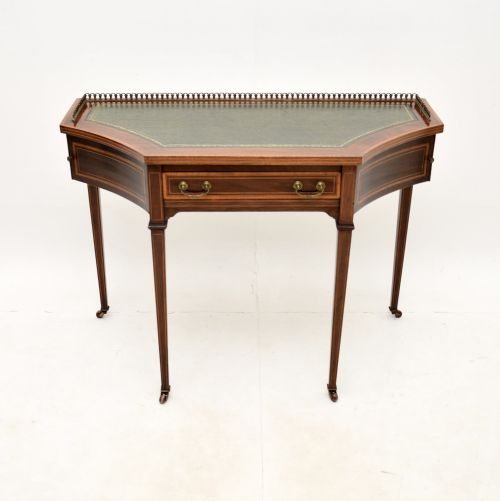
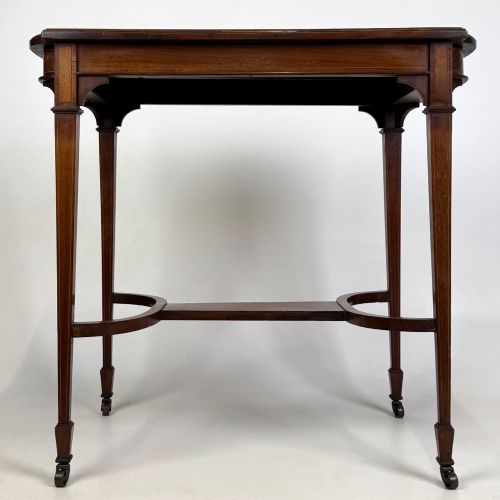
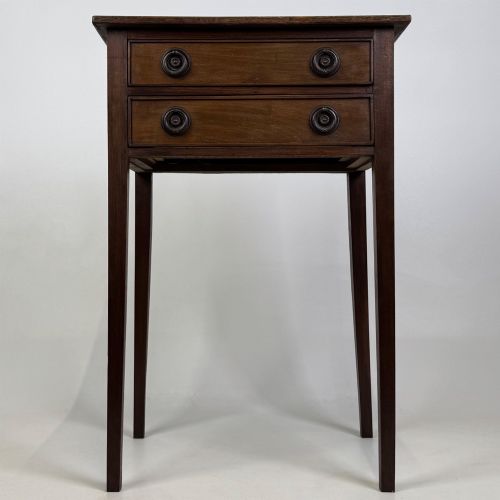
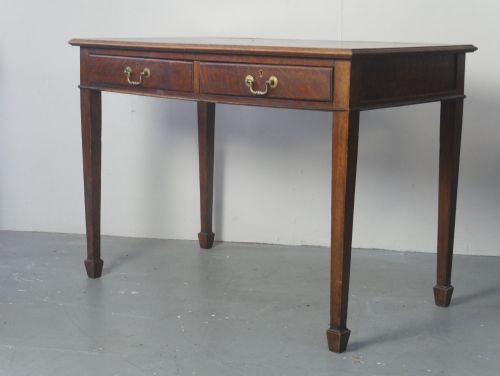
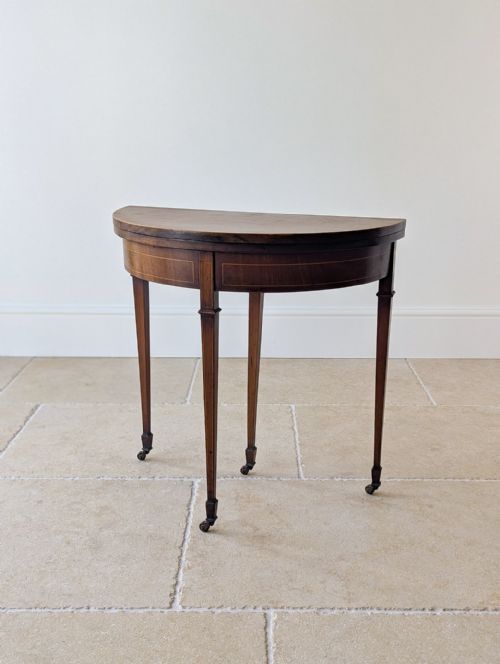
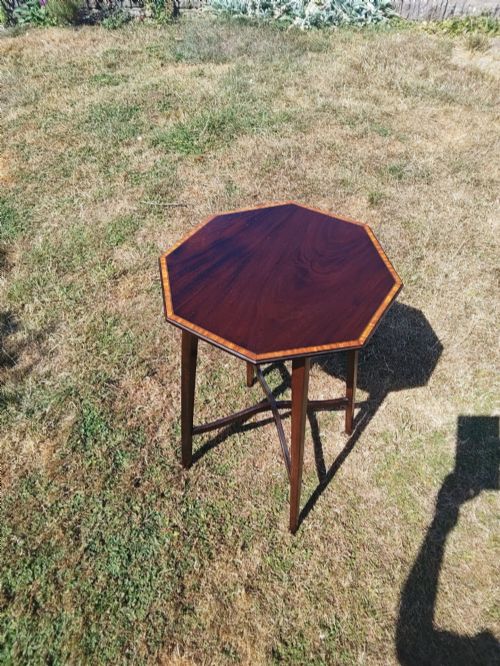
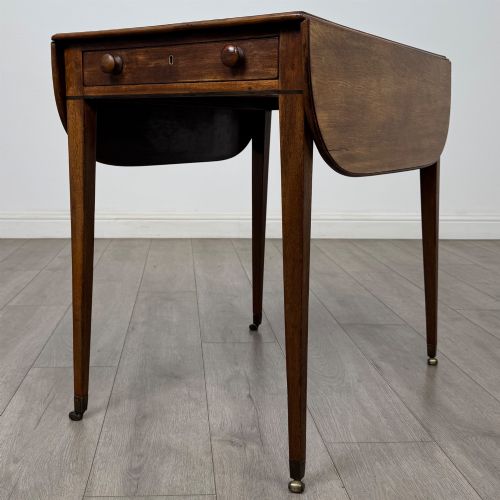
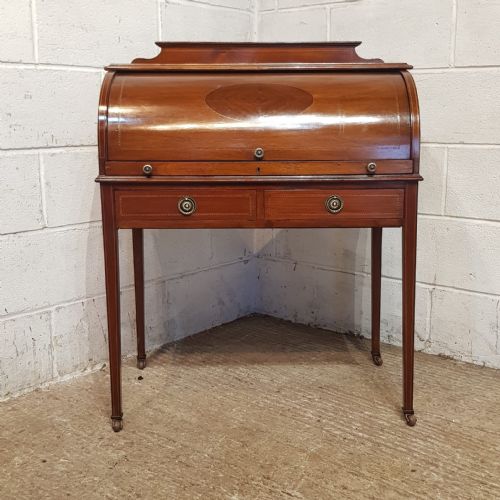
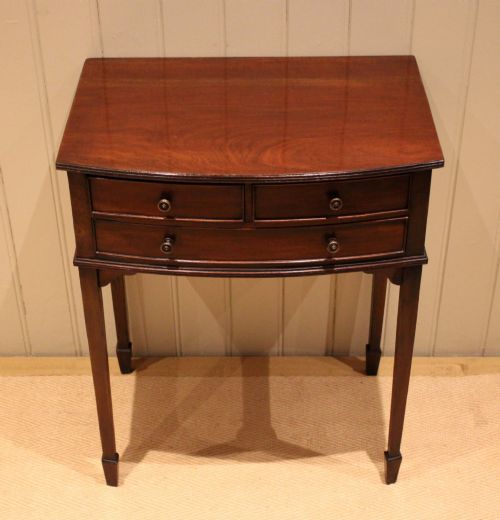
An edwardian tapered leg table brings domestic utility together with the lighter aesthetic favoured at the turn of the twentieth century. These pieces appear primarily as writing tables, side tables, and card tables, drawing on earlier Georgian and Sheraton forms.
The material palette leans heavily towards mahogany, frequently enhanced with satinwood crossbanding and boxwood inlay, alongside occasional examples in rosewood or oak. While the majority belong strictly to the Edwardian era, related items span from the late nineteenth century into the early twentieth century.
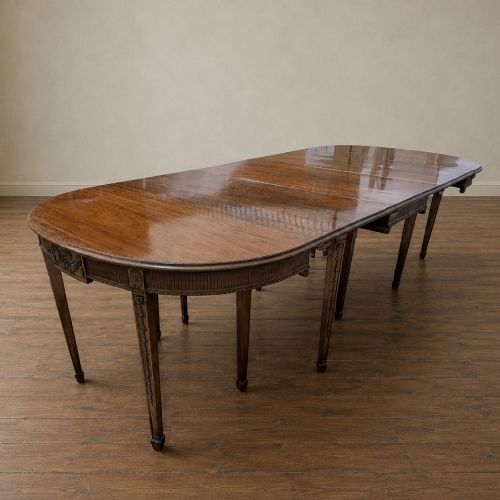
Buyers will encounter various formats on this page, ranging from compact occasional tables to larger writing desks and demilune consoles. The underlying design relies on slender supports that taper towards the floor, often finishing in simple spade feet.
How They Were Made
Cabinet makers constructed these tables using solid timber carcases faced with carefully selected veneers of mahogany, satinwood, and rosewood. Timber choice determined the base colour and grain pattern, providing a smooth canvas for subsequent decorative work.
Inlay and crossbanding required precise hand-cutting of contrasting woods such as boxwood and harewood into recessed channels. Craftsmen then secured these delicate lines and geometric motifs with animal glue before scraping and polishing the surfaces to a sheen.
Listings here feature mahogany, rosewood, and oak alongside satinwood crossbanding and boxwood inlay.
What Varies in Quality
The distinction between standard commercial output and finer workshop production rests upon the crispness of the inlay and the selection of figured timber veneers. Superior examples display perfectly flush stringing and symmetrical grain patterns across the primary surfaces.
Joinery execution at the drawer corners and leg joints dictates structural longevity. Better pieces utilise tight dovetailing and robust internal framing, whereas simpler items rely on basic mechanical fasteners that loosen over decades of use.
The Edwardian Tapered Leg Table Glossary
- Crossbanding
- A border band of veneer laid around the perimeter of a table top with the grain running perpendicular to the central panel. This technique frames the primary timber and adds visual contrast.
- Spade foot
- A rectangular foot that tapers downward towards the base, commonly seen on furniture from the Sheraton and Edwardian periods. It lightens the visual weight of straight or tapered legs.
- Demilune
- A half-moon shape used for console and card tables designed to sit flush against a wall. These tables often feature folding tops supported by a swing leg.
- Marquetry
- Elaborate pictorial or geometric patterns formed by fitting together thin veneers of various coloured woods. It differs from inlay by covering the entire background surface.
- Stringing
- Thin lines of contrasting wood inlay used to outline drawers, legs, and table tops. This linear detail defines edges and highlights structural contours.
Edwardian Tapered Leg Table: Frequently Asked Questions
Where should I place an edwardian tapered leg table?
These pieces suit entrance halls, drawing rooms, or home studies where floor space is limited. Their slender legs prevent rooms from feeling crowded.
Writing tables and side tables function well against plain walls or behind sofas, while card tables can stand folded until needed.
How do I clean mahogany table surfaces?
Dust the wood regularly with a dry, soft lint-free cloth to prevent grit accumulation. Avoid synthetic sprays that leave silicone residues on the polish.
Apply a traditional beeswax polish sparingly once or twice a year to nourish the timber and maintain the sheen.
Can I use an edwardian tapered leg table for writing?
Many examples on this page were built specifically as writing desks or occasional tables with integrated drawers. They provide suitable height and surface area for daily correspondence.
Protect leather or polished wood writing surfaces with a blotter or pad if used intensively with modern fountain pens.
How do I distinguish Edwardian furniture from earlier Georgian pieces?
Edwardian interpretations often reproduce eighteenth-century Sheraton and Hepplewhite styles but utilise machine-sawn veneers and different interior secondary woods like pine or oak. Closer inspection of the construction methods reveals the later manufacturing date.
Original hardware and softer patination help separate genuine Edwardian revival work from later twentieth-century reproductions.