


Edwardian Tabletop Chest
An edwardian tabletop chest is a compact piece designed for keepsakes and specimens, bringing period craftsmanship straight to the desktop.
Edwardian Tabletop Chest
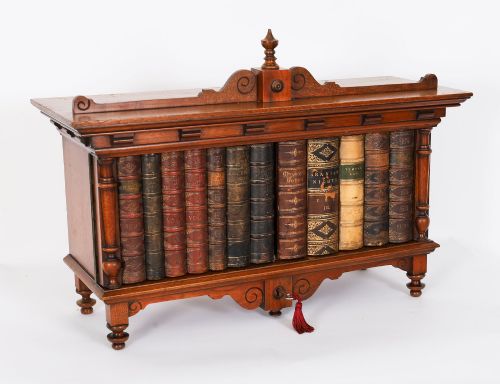
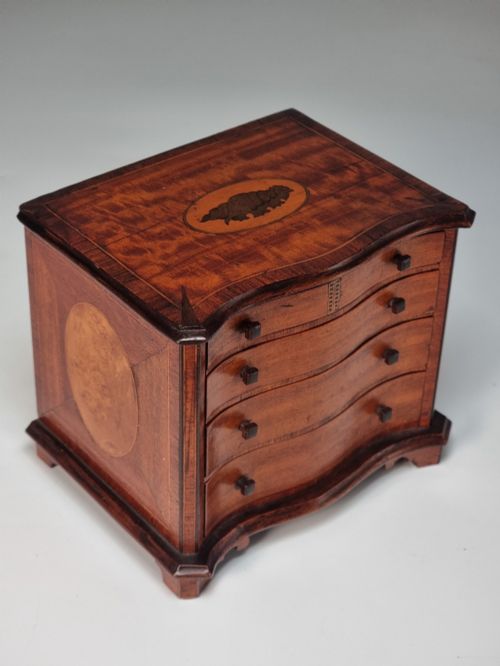
The edwardian tabletop chest encompasses miniature furniture, collectors cabinets, and jewellery chests produced during the early twentieth century and earlier periods. These small pieces serve practical storage roles for specimens, watches, and personal valuables while occupying minimal space.
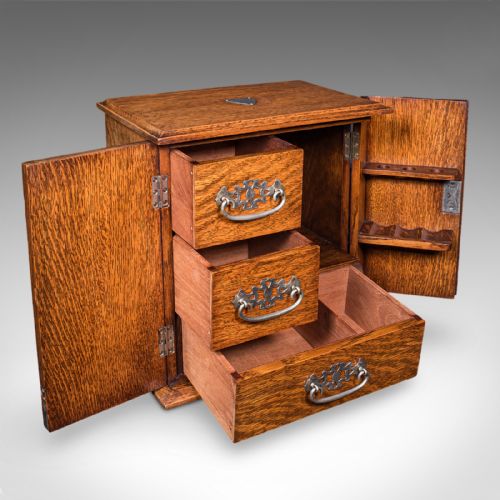
Makers constructed these chests in various forms including multi-drawer specimen cases, smoking cabinets, and miniature chests of drawers. Walnut, mahogany, and satinwood appear frequently across the selection, often complemented by brass handles or glass doors.
Pieces span from Victorian iterations through to the 1930s, reflecting the enduring popularity of desktop storage. The selection bridges formal collector cabinets and domestic miniature wardrobes, each scaled down for table or desktop placement.
Quality and Execution
Cabinetwork varies significantly in the selection of timbers and the precision of drawer construction. Fine examples exhibit figured veneers, tight dovetail joints, and well-fitted internal partitions for specific collections.
Secondary details such as original brass escutcheons, working keys, and intact glass doors separate standard utility boxes from superior pieces. The refinement of the moulding and the integrity of the polished finish define the upper tier of these tabletop items.
One doctor traded stethoscope for smoker's case, leaving behind a dedicated cabinet for pipes and tobacco.
A. F. Lloyd, Bideford·Manoah Rhodes & Sons Ltd
The Edwardian Tabletop Chest Glossary
- Miniature furniture
- Scale models or small-scale versions of larger furniture forms, often made as apprentice pieces or for tabletop use.
- Collectors cabinet
- A multi-drawer case specifically designed to house and display natural history specimens, coins, or small artefacts.
- Specimen cabinet
- A specialised storage unit featuring shallow drawers intended for classifying geological, botanical, or entomological items.
- Dovetail
- A traditional wood joint formed by interlocking wedge-shaped fingers, prized for its tensile strength in drawer construction.
- Escutcheon
- A protective plate surrounding a keyhole, frequently cast in brass and integrated into the drawer front or door.
Edwardian Tabletop Chest: Frequently Asked Questions
What fits inside an edwardian tabletop chest?
These chests accommodate small collections such as coins, stamps, minerals, jewellery, and pocket watches within their fitted drawers.
Larger variations can hold documents, smoking accessories, or vanity items depending on the internal layout of the cabinet.
How do I date an edwardian tabletop chest?
Dating relies on timber choices, construction techniques, and stylistic cues present in the brassware and secondary woods.
Edwardian pieces often display lighter satinwood or inlaid mahogany, whereas Victorian iterations frequently utilise heavier solid walnut or rosewood.
Where should I place a tabletop chest?
These compact pieces sit comfortably on desks, sideboards, chests of drawers, or dedicated tables where their details can be appreciated.
Placement should avoid direct sunlight and major temperature fluctuations to protect the timber, veneers, and internal linings.
Are these chests suitable for daily use?
Most miniature chests and collector cases remain robust enough for regular handling of stored items and daily opening of drawers.
Careful treatment of older finishes, glass doors, and delicate brass handles ensures the mechanism stays functional for years.