
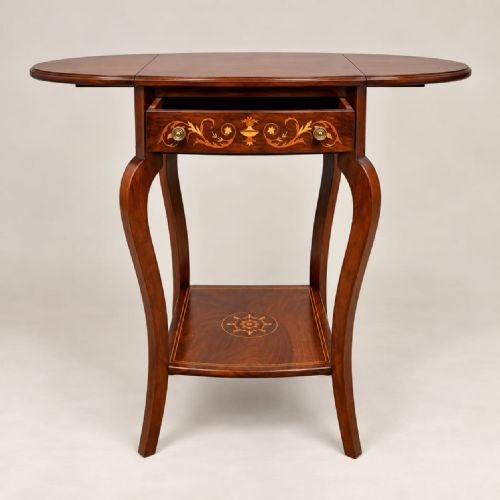
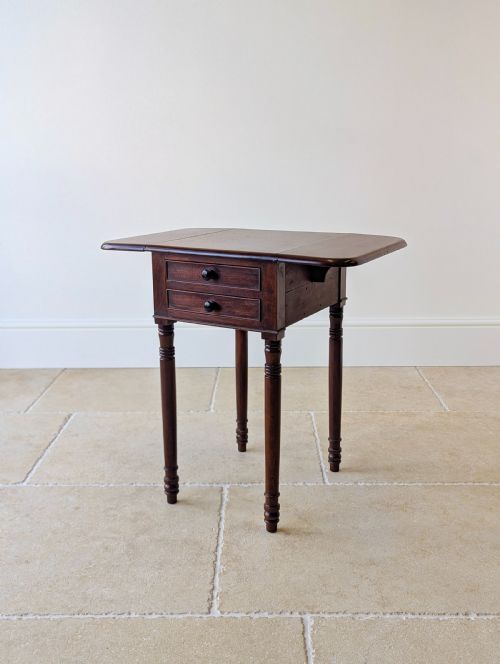


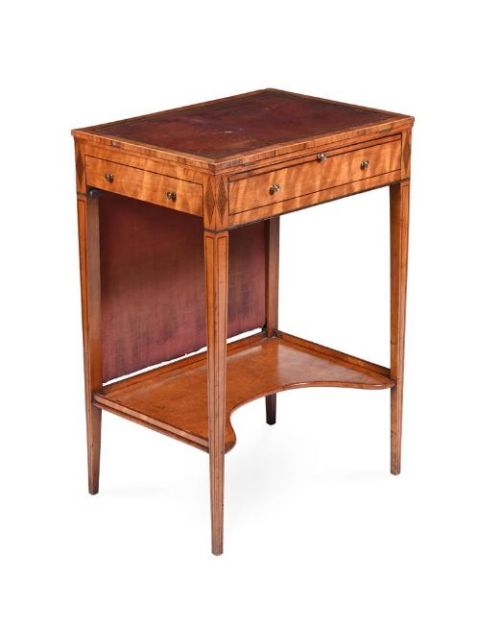

Edwardian Style Work Table
These pieces known as an edwardian style work table bring refined utility to a room, offering clever storage alongside delicate woodwork.
Edwardian Style Work Table
An edwardian style work table bridges the gap between decorative occasional furniture and practical sewing storage. The pieces encountered on this page span several decades, featuring examples from the Victorian, Edwardian, and 18th Century periods.
Makers drew on established design vocabularies, producing forms that encompass Sheraton Revival aesthetics and French Louis XV Revival influences. Alongside standard work tables and sewing tables, buyers frequently encounter side tables, occasional pieces, and specialised workboxes.
How They Were Made
Craftsmen utilised timbers such as mahogany, satinwood, walnut, and rosewood, often pairing them with contrasting boxwood stringing and intricate inlay work. Brass hardware provides functional detailing, while interior compartments frequently retain original fabric linings.
Surface decoration relies heavily on marquetry and painted motifs executed in the neoclassical manner, showcasing the precise cabinetmaking skills of the period.
What Varies in Quality
The degree of refinement in the timber selection and inlay distinguishes standard production from superior examples. Finely figured satinwood and delicate shell marquetry elevate a piece above simpler mahogany or walnut constructions.
Proportion and the integration of functional elements, such as smoothly operating drawers and fitted internal compartments, indicate the care taken by the original maker.
The Edwardian Style Work Table Glossary
- Work table
- A small multifunctional table designed for sewing, needlework, and writing, typically equipped with drawers or a fabric bag beneath.
- Satinwood
- A lustrous, yellow-toned timber prized by cabinetmakers for decorative veneers and inlay work.
- Marquetry
- The art of applying pieces of veneer to a structure to form decorative patterns and pictorial designs.
- Sheraton Revival
- A late 19th-century design movement inspired by the lighter, neoclassical furniture of the late 18th century.
- Boxwood
- A dense, pale wood commonly utilised for contrasting stringing and fine inlay details.
Edwardian Style Work Table: Frequently Asked Questions
What is an edwardian style work table?
These pieces are compact tables designed originally for domestic needlework, writing, and small household tasks. They typically incorporate internal compartments or hanging bags to hold sewing supplies.
Today, they function well as decorative side tables or bedside units in traditional and contemporary interiors alike.
How were work tables used historically?
Ladies utilised these tables in drawing rooms and boudoirs to keep embroidery, thread, and letters close at hand. The fitted interiors kept small tools organised during long periods of handiwork.
Many designs feature hinged lids or pull-out compartments tailored specifically for sewing implements.
How do I care for inlaid wood surfaces?
Protect antique timber and delicate inlay by keeping pieces away from direct sunlight and radiators, which can dry out the wood. Regular dusting with a soft, dry cloth maintains the finish.
Applying a traditional beeswax polish occasionally will nourish the grain without building up heavy residues.
How can I tell different periods apart?
Victorian and Edwardian examples often feature lighter satinwood veneers, painted neoclassical motifs, and Sheraton Revival influences. Earlier 18th-century pieces tend to display heavier architectural proportions and different timber choices.
Examining the construction methods inside drawers and compartments provides further clues to the manufacturing date.