
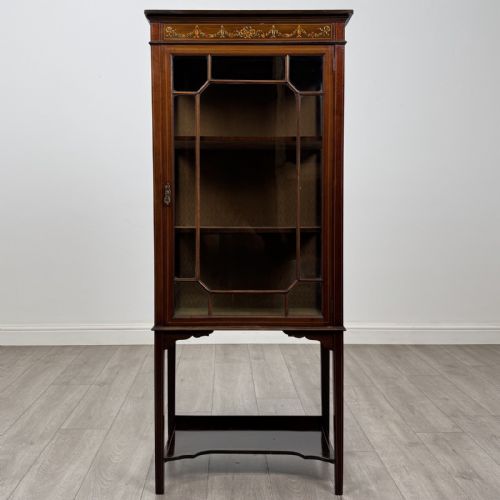
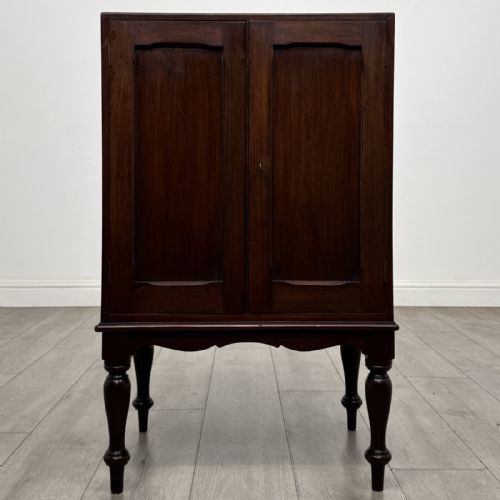
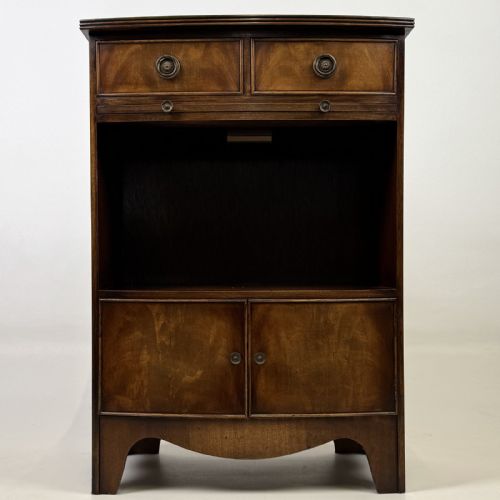
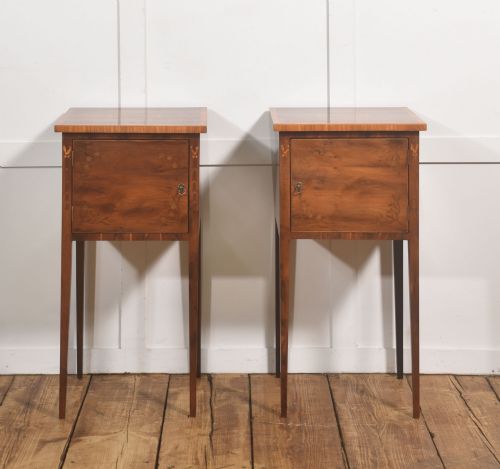
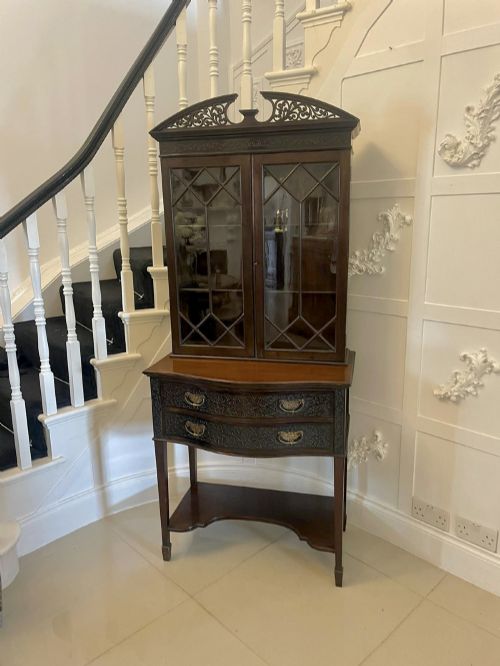
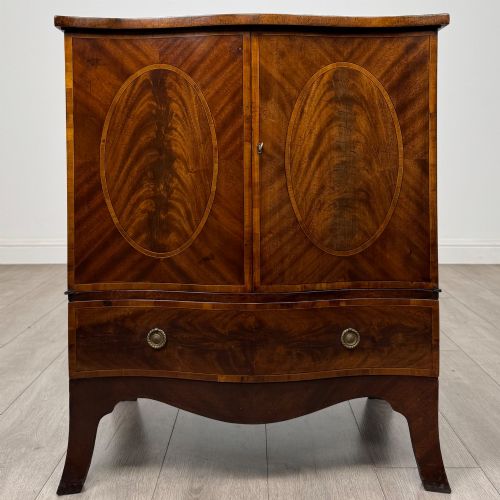
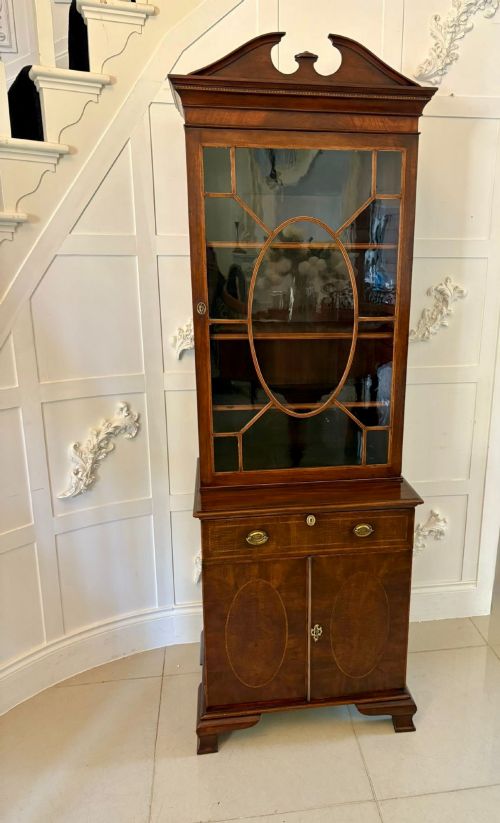
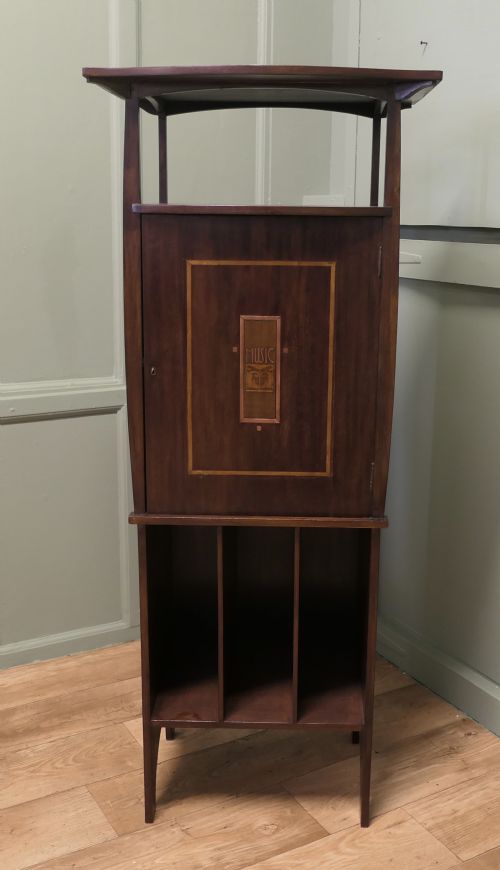
Edwardian Style Mahogany Cupboard
An edwardian style mahogany cupboard brings polished timber and refined inlay into a room, offering practical storage disguised as elegance.
Edwardian Style Mahogany Cupboard
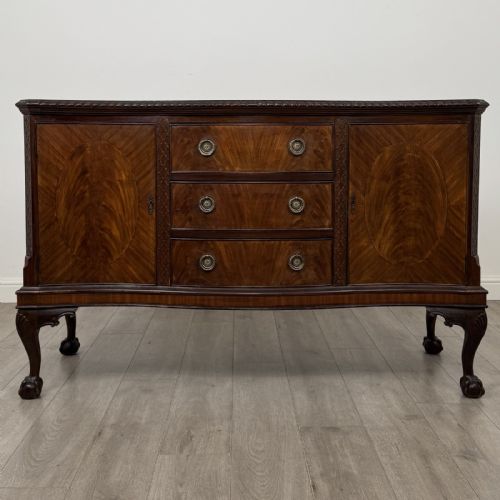
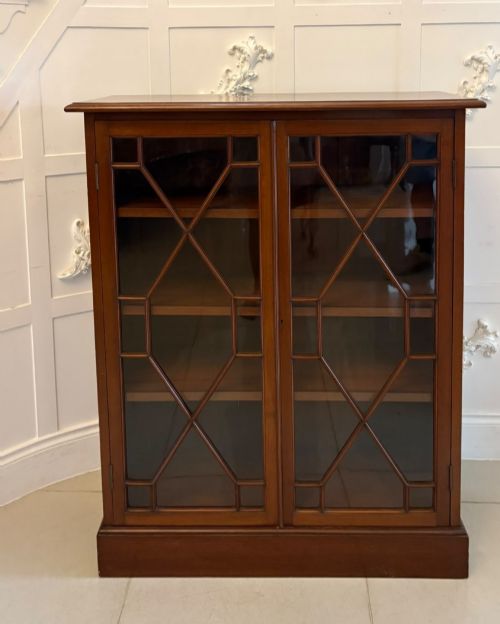
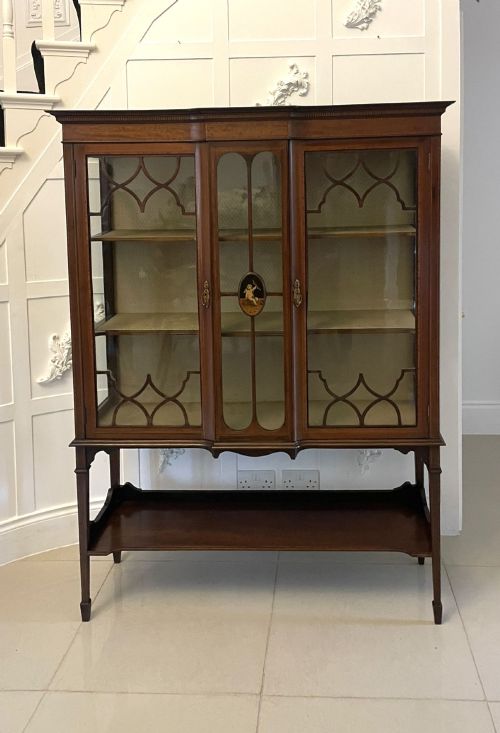
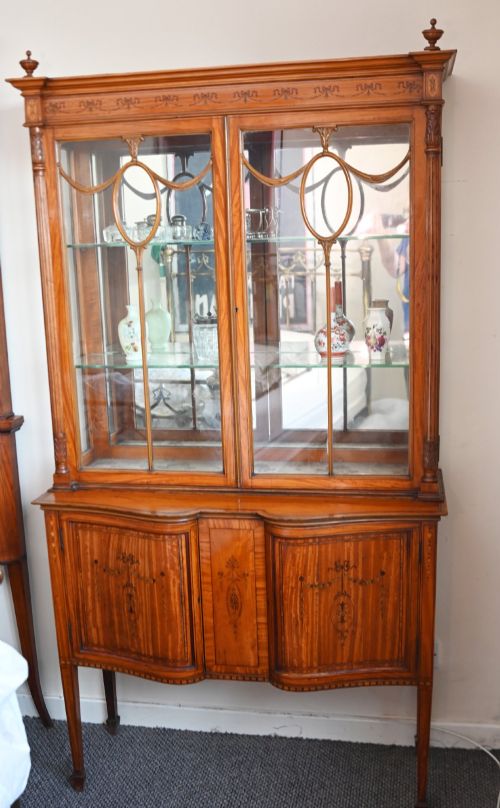
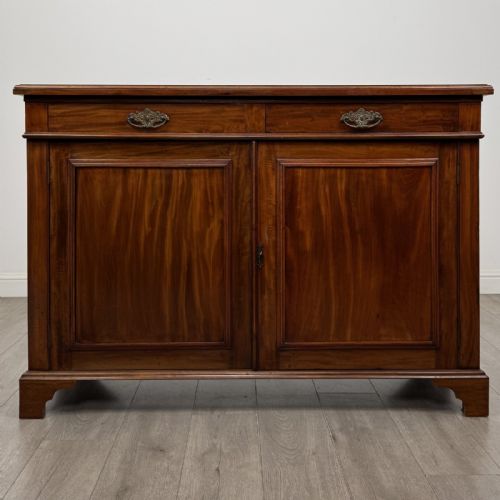
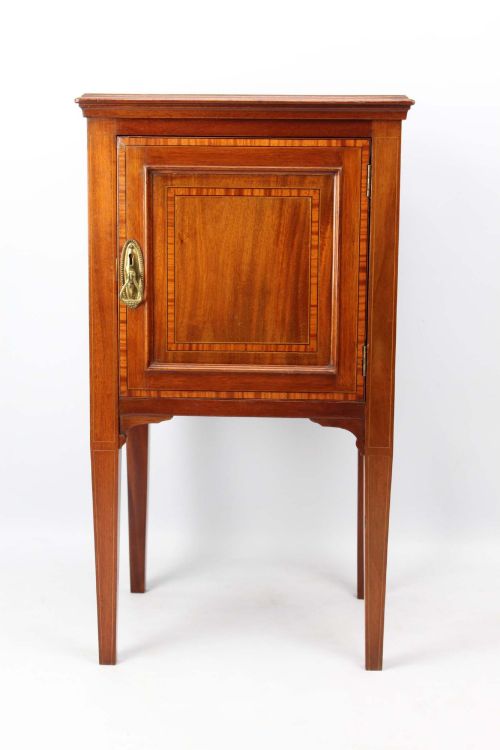
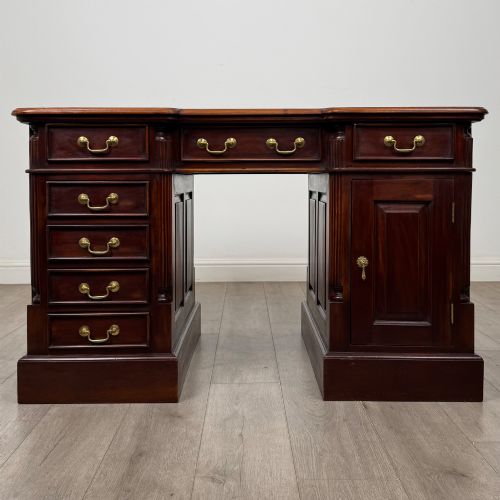
An edwardian style mahogany cupboard spans various forms designed for display and containment, including bedside cabinets, display cabinets, sideboards, wardrobes, and bookcases. The selection leans heavily towards Edwardian and Victorian eras, alongside revivals drawing on Sheraton and Chippendale aesthetics.
Buyers encounter everything from small bedside pieces to large display cabinets and sideboards, created during periods ranging from the late nineteenth century into the early decades of the twentieth century.
How they were made
Craftsmen built these pieces primarily from solid mahogany and flame mahogany veneer, often incorporating contrasting timbers such as satinwood and boxwood for decorative inlay.
Glass panels, brass fittings, and occasional fabric linings complete the construction of the display and storage pieces recorded in the listings.
Several pieces include dedicated spaces for sheet music and stationery, proving that past generations stored their hobbies inside timber as carefully as their clothes.
What varies in quality
The refinement of the decorative inlay and the choice of timber grain, particularly the use of flame mahogany veneer or satinwood, distinguish finer examples from simpler utilitarian storage.
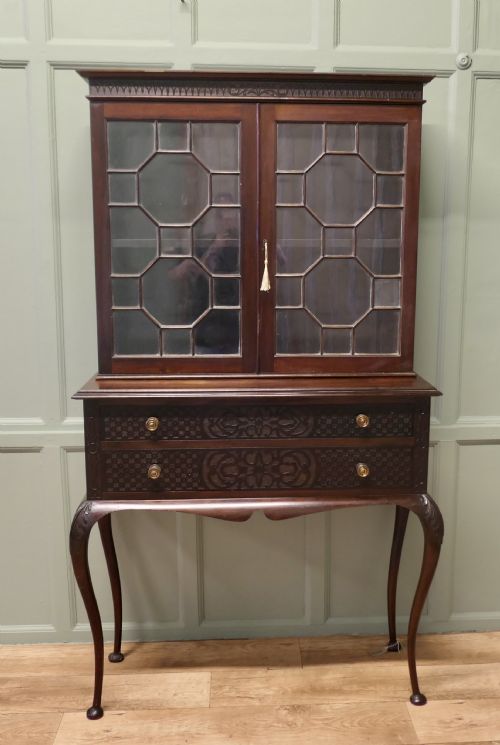
The sophistication of stylistic details, such as carved pillars, bracket feet, cabriole legs, and astral glazing bars, marks the difference between standard production and exceptional craftsmanship.
JS Henry·Druce and Co
The Edwardian Style Mahogany Cupboard Glossary
- Satinwood inlay
- A decorative technique using contrasting light-coloured exotic wood set into the mahogany surface. This method creates delicate geometric or floral patterns.
- Flame mahogany veneer
- A thin slice of timber cut from where a branch joins the trunk, showing a swirling pattern. Cabinet makers applied this to prominent surfaces for visual impact.
- Astral glazing
- Wooden bars dividing glass panes within a cabinet door, often arranged in intricate geometric patterns. These bars support the glass while adding a decorative grid.
- Bracket feet
- Simple architectural feet supporting the base of a cabinet, shaped from small corner brackets. They lift the main body slightly off the floor.
- Cabriole legs
- S-shaped legs curving outward at the knee and inward at the ankle, ending in a simple foot. This design derives from classical furniture forms revived in later periods.
Edwardian Style Mahogany Cupboard: Frequently Asked Questions
What is an edwardian style mahogany cupboard?
These pieces are wooden storage and display furniture produced during the Edwardian era or styled after earlier periods like Sheraton and Chippendale. They range from small bedside cabinets to large wardrobes and sideboards.
Craftsmen utilised mahogany, often embellished with satinwood inlay and brass fixtures, to achieve a polished aesthetic suitable for formal interiors.
How do I tell Edwardian pieces from Victorian ones?
Edwardian furniture generally exhibits lighter proportions and brighter satinwood inlay, influenced by Sheraton revivals. Victorian pieces tend to be heavier in scale with deeper, darker tones.
Examining the secondary timbers inside drawers and the style of brass hardware provides further clues to the manufacturing decade.
Where should I place a display cabinet?
Display cabinets with glass doors and astral glazing suit reception rooms or dining spaces where ceramics and glassware can be shown securely. Placing them away from direct sunlight protects the mahogany finish and any internal fabric.
Ensure the floor is level so the glazed doors hang correctly and swing shut without catching.
How do I care for mahogany surfaces?
Maintain the timber by dusting regularly with a soft, dry cloth and applying natural beeswax sparingly when the wood appears dry. Avoid modern silicone sprays that build up residue over time.
Keep these cabinets away from direct heat sources and damp environments to prevent the veneer from lifting.