






Edwardian Style Fireplace Mirror
An edwardian style fireplace mirror brings scale and reflected light to a room, designed to sit directly above the mantelpiece.
Edwardian Style Fireplace Mirror
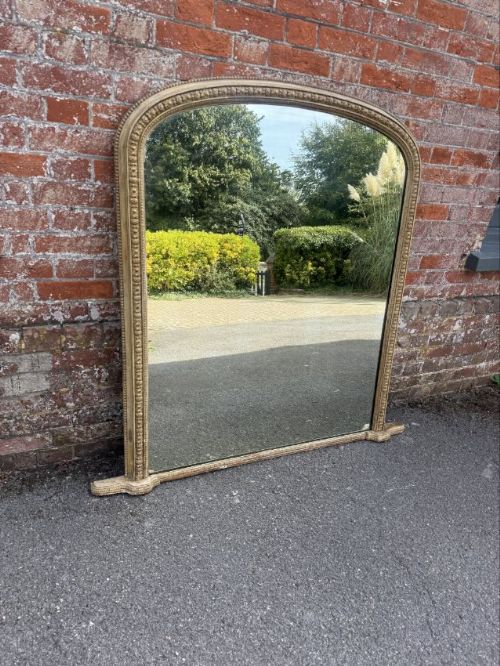
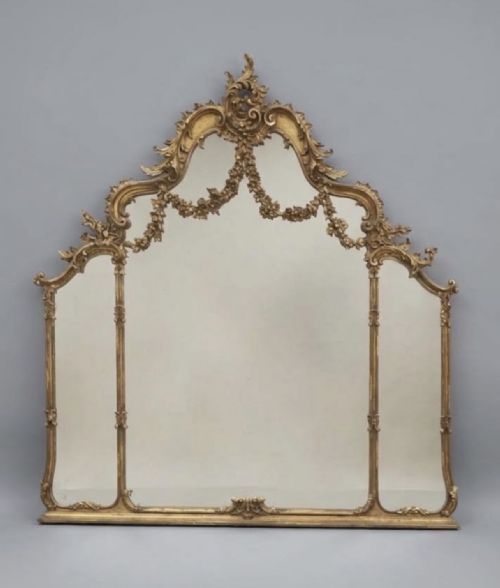
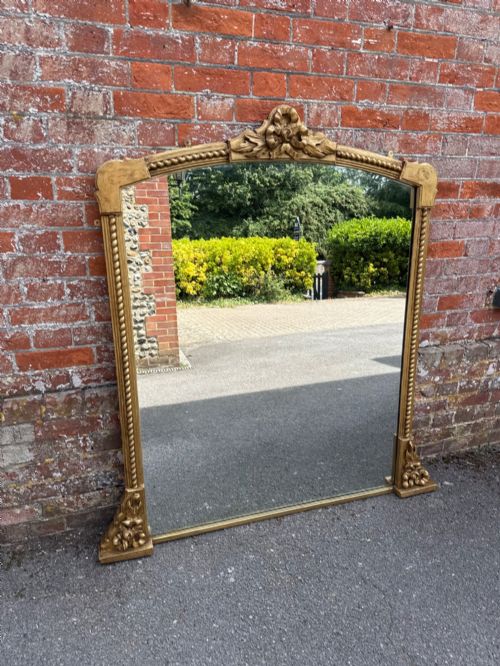
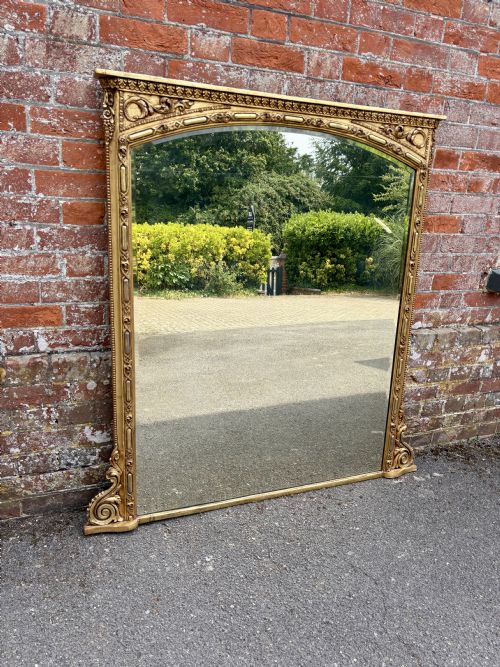
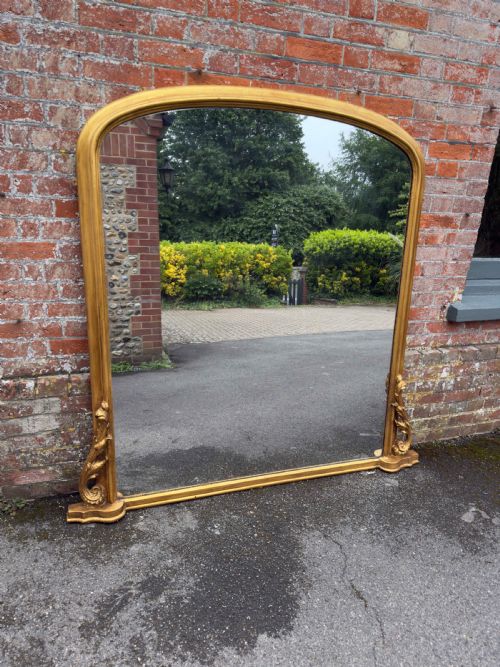
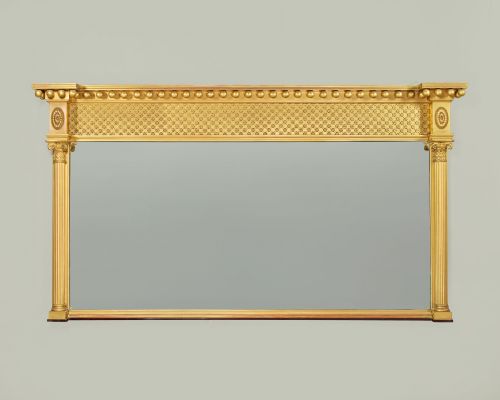
An edwardian style fireplace mirror encompasses large overmantle mirrors and wall mirrors originating from periods including the nineteenth century, Victorian era, and early twentieth century. These substantial pieces typically measure large in scale, designed specifically to dominate the chimney breast and draw light across the room.
The selection on this page leans heavily toward nineteenth-century English craftsmanship, alongside Victorian and Edwardian examples. Buyers frequently encounter arched tops, shaped tops, and classical frames finished in gold leaf, giltwood, or paint.
Materials and construction
Carved wood provides the structural foundation for these frames, often enhanced with moulded gesso and composition ornament to build up relief details like laurel leaves and ornate scrolls. Artisans applied gold leaf or gilding over the prepared surfaces to achieve a luminous metallic finish.
Alternative frames incorporate oak, mahogany, or pine, sometimes painted or parcel-gilt rather than fully gilded. Mirror glass is set within these robust wooden and gesso armatures, supported by heavy backing structures designed to bear the weight of large overmantles.
Some overmantle frames feature secret wooden ledges sturdy enough to collect stray mantelpiece dust for over a century.
Distinctions in quality
The crispness of the carved wood and the depth of the gesso moulding separate ordinary examples from finer works. Hand-carved botanical motifs and sharply defined relief work require greater artisanal skill than mass-produced composition moulds.
The integrity of the original gilding and the quality of the glass plate also define the upper tier of these pieces. Original mirror glass with subtle foxing sits alongside deeply layered gold leaf surfaces that retain their warmth over generations.
The Edwardian Style Fireplace Mirror Glossary
- Overmantle mirror
- A large mirror designed to hang or stand upon the mantelpiece above a fireplace. These pieces traditionally reflect light from the hearth and fill the vertical space of the chimney breast.
- Gesso
- A plaster-like mixture applied to wood frames and carved or moulded into decorative reliefs before gilding. This technique allows for intricate surface ornamentation.
- Giltwood
- Timber that has been coated with gold leaf or gold paint. It creates a rich, reflective surface characteristic of formal period frames.
- Composition
- A moulded mixture of whiting, resin, glue, and linseed oil pressed into decorative shapes. It provides an efficient method for creating repeated ornamentation on picture and mirror frames.
- Pier mirror
- A tall mirror specifically designed to hang on the wall between two windows, often placed above a pier table.
Edwardian Style Fireplace Mirror: Frequently Asked Questions
Where should an overmantle mirror be placed?
These mirrors rest directly on the mantelpiece shelf or secure to the wall immediately above the fireplace opening. Their proportions are engineered to anchor the visual weight of the hearth.
Positioning the glass at this height captures and multiplies natural light from windows across the living space.
How do I identify a Victorian mirror?
Victorian examples frequently display heavy giltwood frames with arched tops, incorporating Rococo revival or classical architectural motifs. The timber backboards and mounting hardware often provide clues to nineteenth-century origin.
Makers from this era favored elaborate gesso decorations and substantial overall dimensions.
Can these mirrors be hung without a fireplace?
While designed for the mantel, many large wall mirrors function effectively on any expansive wall space. They serve as primary focal points in hallways or reception rooms.
Appropriate wall fixings are essential given the heavy timber and glass construction of these pieces.
What defines Edwardian mirror design?
Edwardian interpretations often favor lighter painted finishes, simpler lines, or refined neoclassical details compared to heavy Victorian predecessors. White, light grey, and subtle gilt accents appear frequently in this period.
The overall aesthetic shifts toward restrained elegance while retaining substantial proportions.