


Edwardian Style Corner Cabinet
An edwardian style corner cabinet turns neglected room angles into functional display space with classic mahogany and inlaid timber.
Edwardian Style Corner Cabinet
An edwardian style corner cabinet comprises fitted timber furniture designed specifically to slot into domestic room angles. These pieces utilise vertical space efficiently while displaying porcelain, books or glassware.
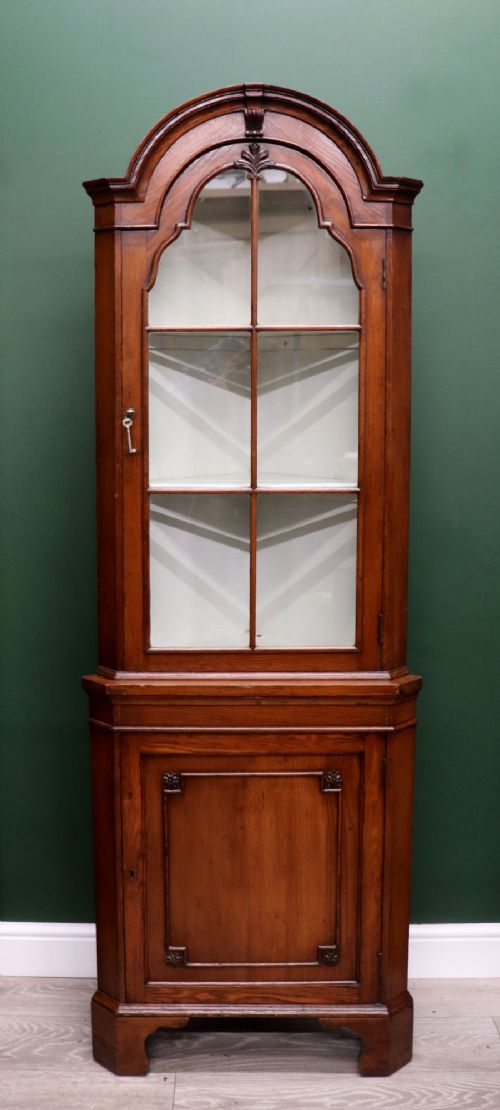
The selections available here span hanging wall cupboards, floor standing units and bow front display cabinets. Most examples date from the Edwardian period or draw heavily upon earlier Georgian and Sheraton Revival designs.
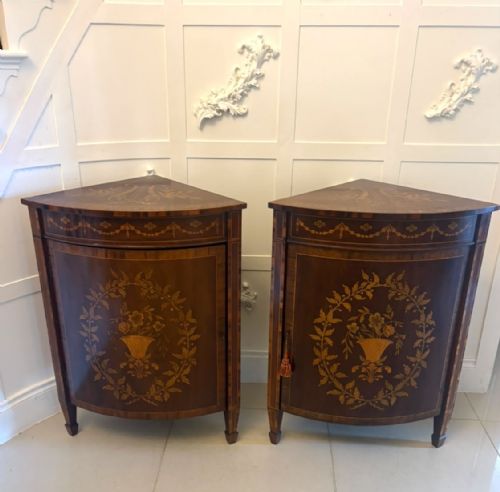
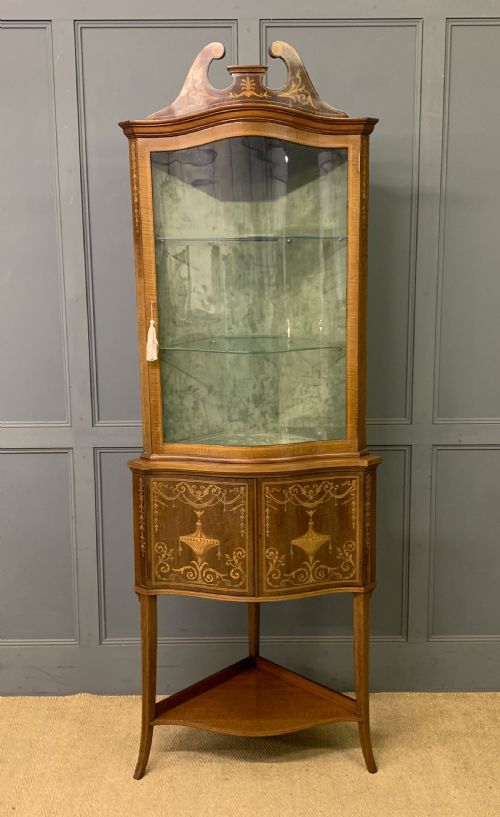
Makers utilised mahogany as the primary timber, frequently embellished with satinwood and fruitwood inlay. Alongside traditional wood finishes, rarer variants feature chinoiserie lacquer or marble tops.
How They Were Made
Cabinet makers constructed these units predominantly from solid mahogany and oak, often applying fine mahogany veneers to structural carcases. Satinwood and fruitwood inlay formed delicate contrasting borders, floral motifs or classical swags across the doors.
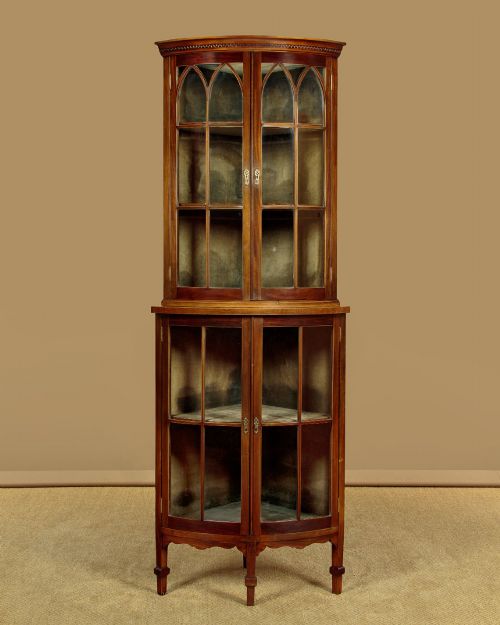
Glazing bars divided glass panel doors into geometric or astragal configurations on display variants. Brass hardware including hinges, escutcheons and keyplates provided functional and decorative accents.
Edwardian Style Corner Cabinet Retail Price Guide 2026
Typical asking prices for edwardian style corner cabinet among the pieces listed under this phrase on Sellingantiques today, from the lower quarter to the upper quarter. They describe what is for sale here now, not the wider market.
One unexpected variant swaps traditional timber shelving for a marble top, ready for pouring afternoon drinks.
What Varies in Quality
Quality rests upon the crispness of the cabinet work and the precision of the marquetry inlay. Superior examples display tightly fitted door joints, substantial timber thickness and well-figured mahogany grain.
Simpler workshop output relies on plain timber surfaces without inlay or delicate astragal glazing bars. The presence of specialised decorative techniques such as hand-painted Chinoiserie lacquer elevates individual pieces significantly.
The Edwardian Style Corner Cabinet Glossary
- Marquetry
- Decorative veneer work forming pictures or patterns by assembling thin pieces of wood, shell or ivory. Craftsmen used contrasting timbers like satinwood to create detailed floral panels on cabinet doors.
- Bow Front
- A convex curved cabinet front that projects outward in a smooth arc. This curved profile softens room angles and appeared frequently on display cabinets from the Georgian and Edwardian eras.
- Astragal
- A small convex moulding attached to or shaped into edges, commonly used to divide panes of glass in cabinet doors. Fine astragal bars denote lighter, more refined proportions.
- Chinoiserie
- European imitation and interpretation of Chinese and East Asian artistic traditions, typically featuring painted lacquer scenes. These dark lacquered surfaces provide a dramatic contrast to standard mahogany furniture.
- Sheraton Revival
- A late nineteenth and early twentieth century design movement that reinterpreted the elegant neoclassical furniture of designer Thomas Sheraton. Pieces in this style utilise delicate satinwood inlay and tapered legs.
Edwardian Style Corner Cabinet: Frequently Asked Questions
Where should I place a corner cabinet?
These units fit directly into empty ninety-degree room intersections to utilise awkward dead space.
Floor standing versions anchor a room corner, while hanging models release valuable floor space beneath them.
How do I identify Edwardian inlay?
Edwardian cabinet makers favored light contrasting woods such as satinwood and fruitwood set into dark mahogany.
Look for delicate floral swags, symmetrical ribbon motifs, or fine geometric stringing lines defining the door panels.
Are these cabinets suitable for small rooms?
Triangular footprints allow corner furniture to project minimally into living areas compared to rectangular cupboards.
Glazed display variants further open up a compact room by reflecting natural light off stored glassware.
What is the difference between hanging and floor standing models?
Hanging corner cabinets mount directly to wall studs via internal brackets, creating an elevated display.
Floor standing or two-part units rest firmly on the ground, offering greater interior storage capacity across multiple shelves.