




Edwardian Stacked Side Tables
Edwardian stacked side tables offer a practical set of nested surfaces designed to slide neatly together when floor space matters.

Edwardian Stacked Side Tables
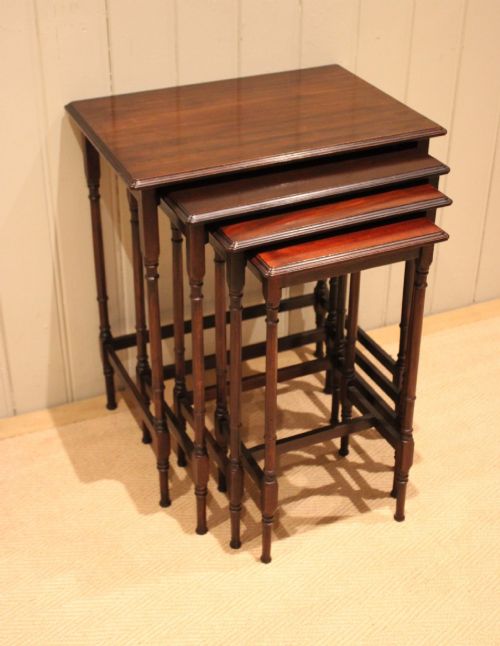
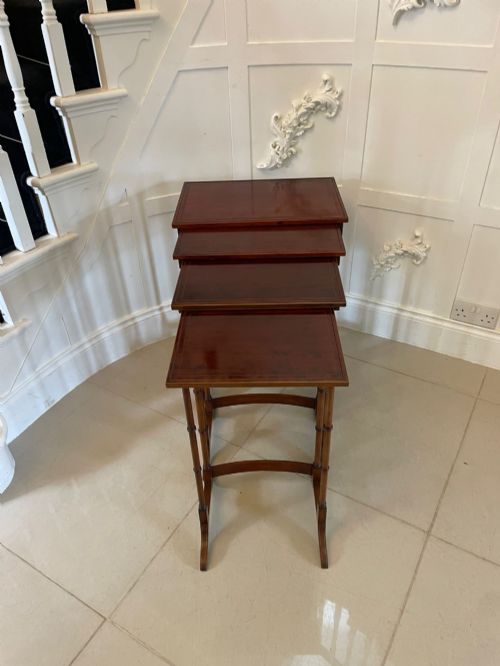
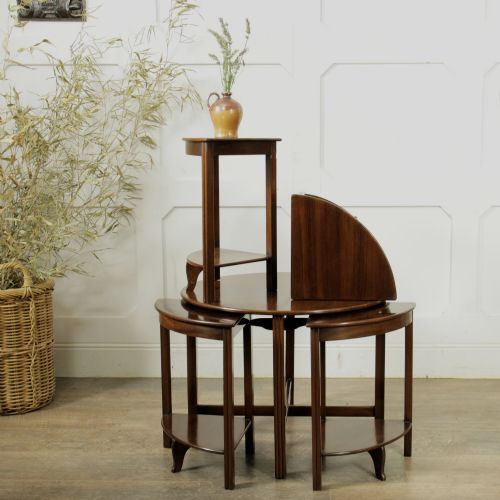
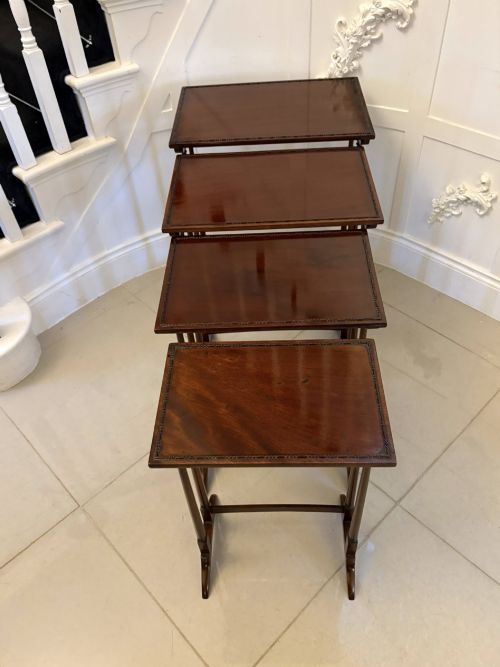
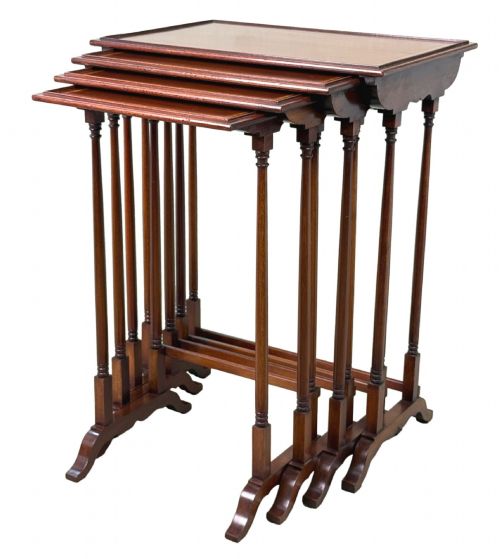
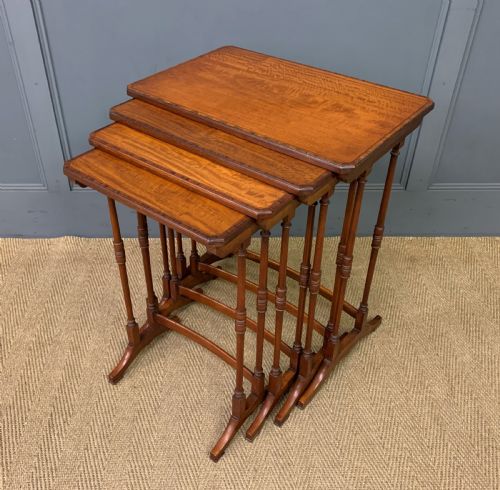
Edwardian stacked side tables appear most frequently as nests of three or four occasional tables, often referred to historically as quartetto sets. These pieces are designed to slide one beneath another into a single compact footprint until individual surfaces are needed for tea or writing.
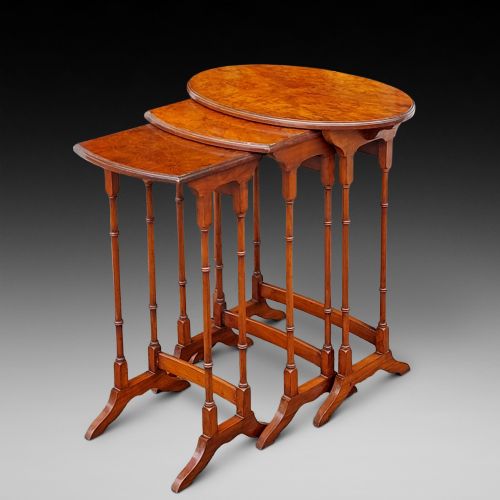
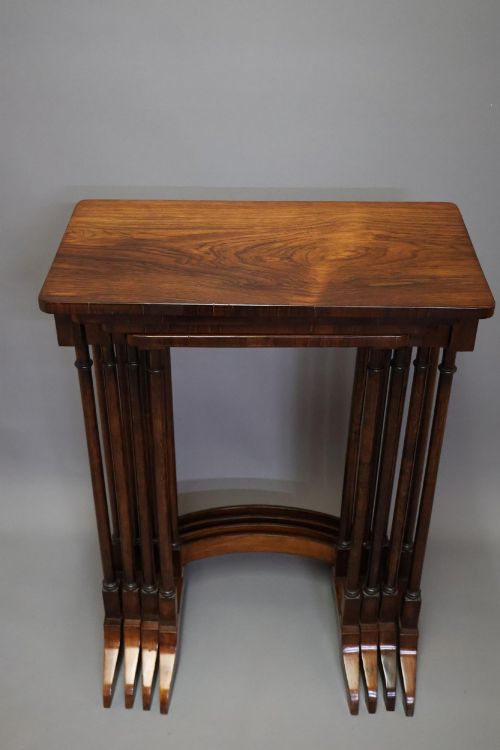
The materials and forms span the Edwardian era alongside nineteenth-century Victorian and Regency examples, reflecting a continuous domestic demand for flexible furniture. Most items encountered on this page use mahogany, satinwood, or walnut, shaped into rectangular, circular, or oval tops.
Makers and workshops produced these tables with varying capacities, ranging from simple three-tier sets to more complex quartetto arrangements of four or five graduating tables. Buyers select them for their combination of functional adaptability and refined cabinetmaking.
How they were made
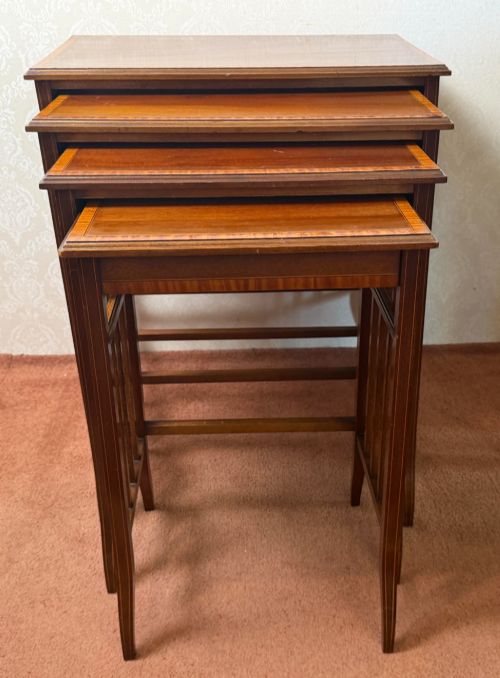
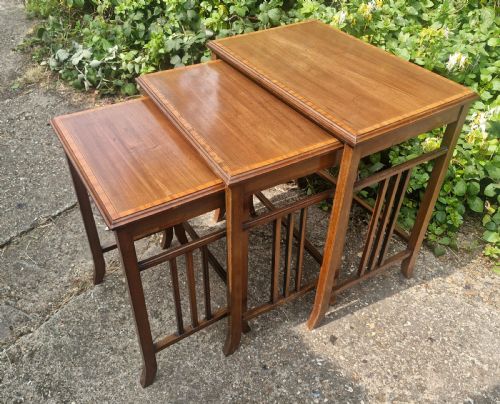
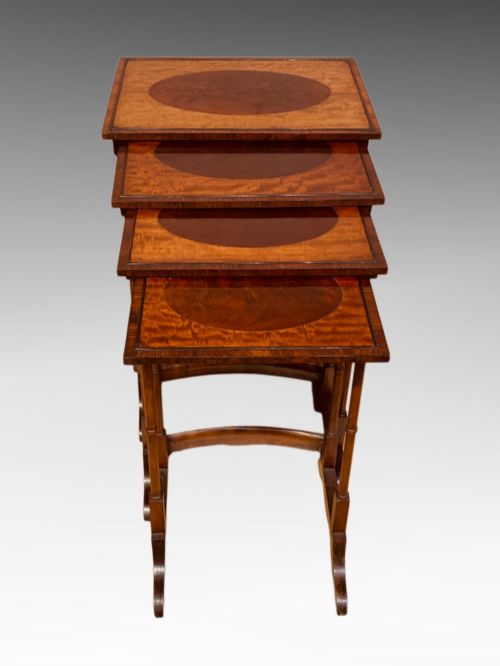
Cabinetmakers utilised solid timbers and selected veneers, notably mahogany, satinwood, walnut, and burr walnut, applied over sturdy carcases to achieve durable yet lightweight frames. Tables frequently feature boxwood stringing, satinwood crossbanding, and decorative inlay work.
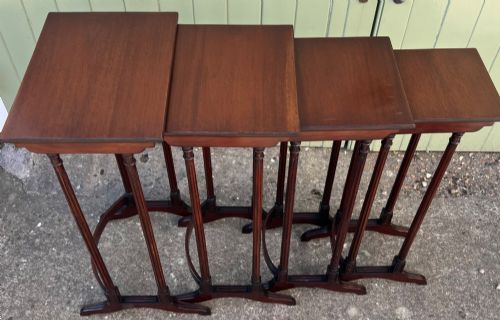
Structural integrity relied on precise joinery, particularly square tapered legs and turned supports that allow each smaller table to clear the frame of the one above it. Surface decoration includes specialised techniques such as lacquer work and embossed leather inserts set into the timber tops.
The listings show mahogany as the predominant timber, frequently paired with satinwood crossbanding and boxwood stringing across Edwardian and nineteenth-century periods.
What varies in quality
Quality in these nesting sets is defined by the crispness of the inlay, the uniformity of the timber selection across all graduating tiers, and the precision with which the smaller tables slide into the main frame. Superior examples display balanced proportions, fine satinwood crossbanding, and unwarped tops that sit level.
Lower tiers often reveal whether corners were cut during manufacture, as lesser pieces suffer from mismatched veneer grains or loose joints caused by frequent movement. The presence of delicate details like serpentine forms or specialised Chinoiserie decoration elevates certain pieces above standard utility furniture.
The Edwardian Stacked Side Tables Glossary
- Quartetto
- A matched set of four graduating tables designed to nest together. This term appears frequently in historical descriptions of nesting tables.
- Crossbanding
- A narrow strip of veneer applied to the border of a tabletop with the grain running perpendicular to the centre panel. It frames the primary wood.
- Stringing
- Thin inlay lines of a contrasting timber, such as boxwood, embedded into the surface of furniture to create decorative borders. It defines the edges of table tops and legs.
- Chinoiserie
- European decorative style employing Chinese motifs and lacquer techniques. Examples on this page show painted or lacquered surfaces.
- Satinwood
- A durable hardwood with a natural golden sheen and smooth grain. It is often utilised for decorative banding and fine inlay work.
Edwardian Stacked Side Tables: Frequently Asked Questions
What is a quartetto nest of tables?
A quartetto nest consists of four tables of graduating size built to slide completely under one another. This arrangement allows multiple surfaces to occupy the floor space of a single small table.
Cabinetmakers designed these sets for entertaining guests in drawing rooms where space was at a premium during afternoon tea.
How do I care for inlaid wooden tables?
Keep wooden tables away from direct sunlight and heat sources to prevent the veneers and delicate stringing from drying out or lifting. Regular dusting with a dry, soft cloth maintains the finish without needing harsh polishes.
Avoid placing damp items directly onto antique surfaces by using coasters to protect the polish and inlay work.
Are these tables sturdy enough for daily use?
These tables were built to support light items like books, teacups, and writing materials rather than heavy loads. The smaller tiers feature slender legs that require careful handling when sliding them in and out.
With gentle placement, they handle everyday domestic service reliably while maintaining their structural balance.
How do I distinguish Edwardian pieces from earlier styles?
Edwardian versions often combine lighter satinwood details with traditional mahogany frames, showing influences from earlier Regency and Sheraton designs. Construction methods and timber choices align with the early twentieth century alongside surviving nineteenth-century examples.
Examining the underside and interior joints helps confirm the period of manufacture.