


Edwardian Specimen Drawers
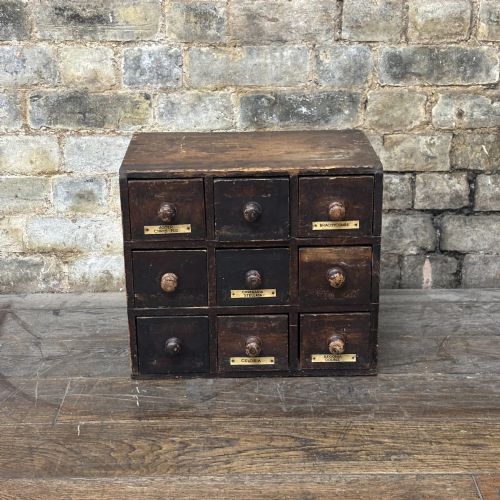
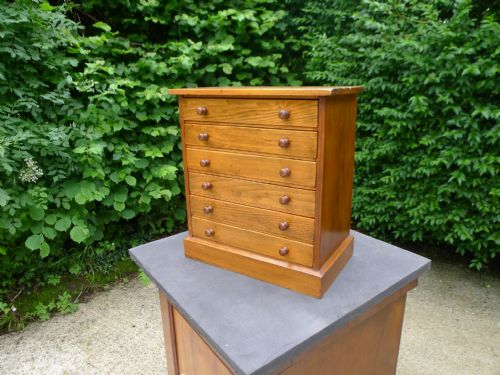
Edwardian specimen drawers are tightly built storage pieces designed for sorting natural history items, offering collectors neat rows of shallow compartmentalised storage.
What edwardian specimen drawers are
Edwardian specimen drawers appear as small medical carrying chests, artist's cases, campaign cutlery canteens, and shop cabinets. These forms serve various sorting and storage needs across different households and professions.
The material record includes mahogany, flame mahogany, oak, pine, brass, steel, and boxwood inlay. Cabinets and chests form the primary object types available to collectors on this page.
Pieces span periods from the Victorian era through the nineteen-twenties, encompassing larger chests and small medical carrying cases. Buyers encounter diverse scales suited for both desktop display and floor placement.
How they were made
Carpenters construct the carcases and drawers using solid timbers such as oak, mahogany, and pine, frequently highlighting the natural grain with flame mahogany veneers. Boxwood inlay provides delicate contrasting decoration on selected surfaces.
Makers integrate functional hardware in brass and steel to secure lids, doors, and multiple small drawers. These metal components ensure secure closure for transport and daily handling.
Retail Price Guide 2026
Typical UK retail prices for edwardian specimen drawers, calculated from the Sellingantiques database of over a million retail prices indexed since 2003. This retail price guide relies exclusively on Sellingantiques data; no external sources or auction records are used, so the figures do not describe the wider market.
Periods represented span from Victorian items through to nineteen-twenty medical carrying chests.
What varies in quality
Superior examples demonstrate meticulous timber selection, using figured flame mahogany or quarter-sawn oak with precise boxwood inlay. Lesser pieces rely on plain pine or basic secondary woods without decorative enhancements.
Refinement in hardware and drawer construction separates standard storage boxes from master cabinet work. Tight joints and well-fitted brass pulls indicate higher workshop standards.
The Edwardian Specimen Drawers Glossary
- Collectors Cabinet
- A specialised piece of furniture containing numerous shallow drawers for organising natural history specimens or small artefacts. These cabinets protect delicate items from dust and light.
- Flame Mahogany
- A wood veneer cut from the branch junction of the mahogany tree, producing a distinctive flickering flame pattern. Cabinet makers prize this figure for statement panels.
- Boxwood Inlay
- Narrow strips of pale boxwood embedded into contrasting darker timber to form geometric or linear borders. This technique highlights edges and panel frames.
- Campaign Cutlery Canteen
- A portable storage chest originally designed for military officers to transport tableware safely on expeditions. These fitted boxes often share construction methods with specimen chests.
- Specimen Chest
- A freestanding or tabletop case housing multiple small drawers for scientific or botanical collections. They often feature robust brass carrying handles.
Frequently Asked Questions
What were edwardian specimen drawers used for?
These cabinets and chests served naturalists, collectors, and professionals for organising small items like botanical specimens, insects, or medical tools. The shallow drawers kept delicate objects separated and protected.
Over time, owners adapted these compartmentalised pieces for storing jewellery, sewing accessories, or office stationery. Their sturdy construction made them suitable for both stationary display and travel.
How do I care for mahogany specimen cabinets?
Keep wooden cabinets away from direct sunlight and strong heat sources to prevent the mahogany and veneers from drying out or splitting. Dust regularly with a dry, soft cloth.
Apply a traditional wax polish sparingly to maintain the sheen on the timber surfaces. Avoid using liquid cleaners or silicone sprays that can damage the antique finish.
Are these drawers suitable for modern jewellery storage?
The shallow compartments within these chests provide an ideal layout for organising rings, earrings, and watches. The enclosed drawers protect precious items from dust.
Many collectors line the timber bases with acid-free tissue or velvet to cushion delicate pieces. This practical adaptation preserves both the jewellery and the interior wood.
What woods appear most frequently in these cabinets?
Oak and mahogany dominate the construction of these pieces, providing a strong, stable carcase for multiple small drawers. Flame mahogany and boxwood inlay frequently adorn the primary display surfaces.
Pine and secondary softwoods often appear inside drawer linings and back panels. Brass and steel components provide structural reinforcement and functional handles.