
Edwardian Solid Oak Table
When you search for an edwardian solid oak table, you enter a world of heavy refectory boards, golden side pieces and honest farmhouse forms.
Edwardian Solid Oak Table
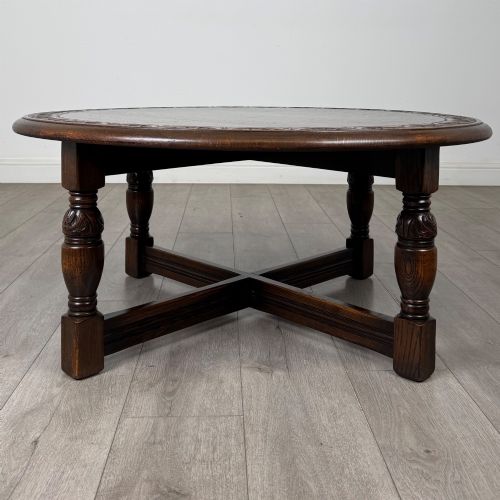
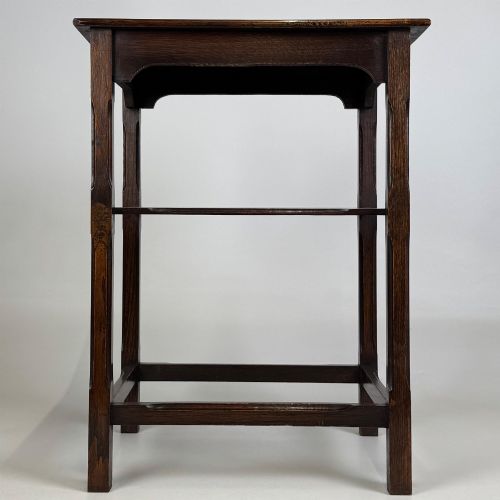
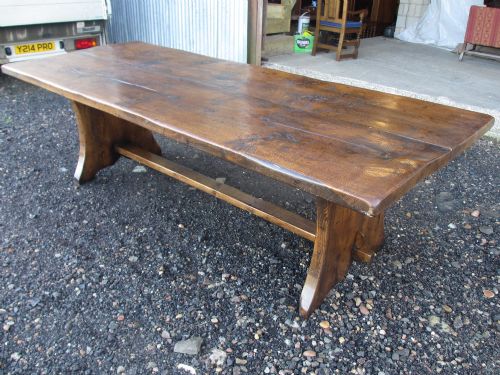
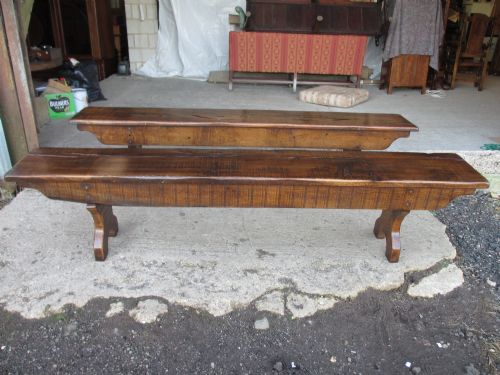
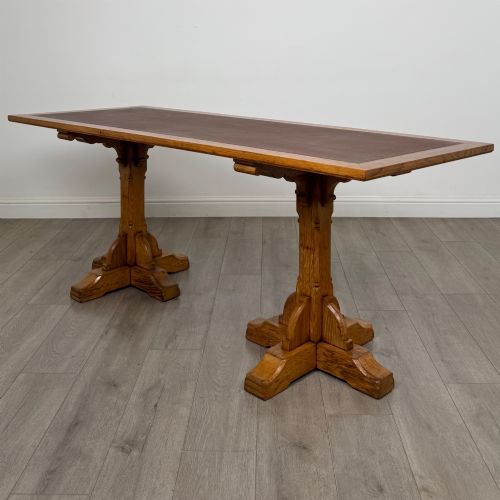
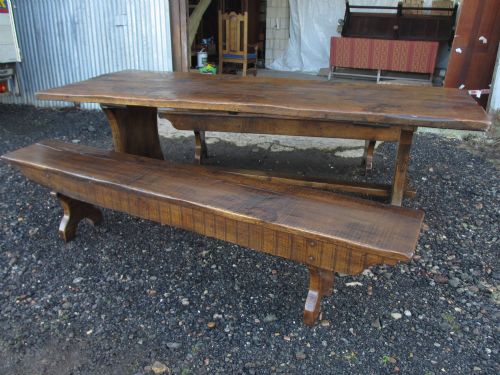
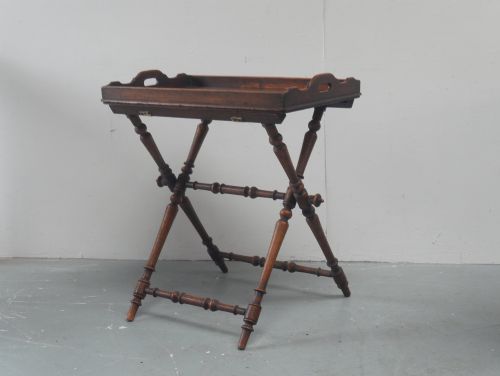
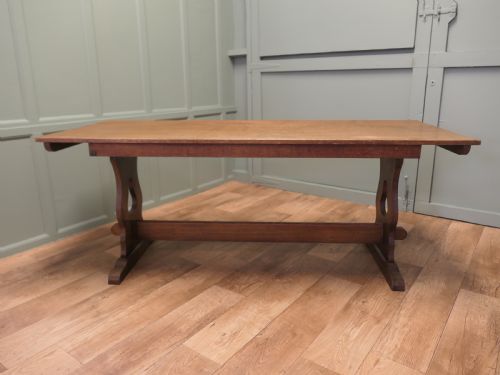
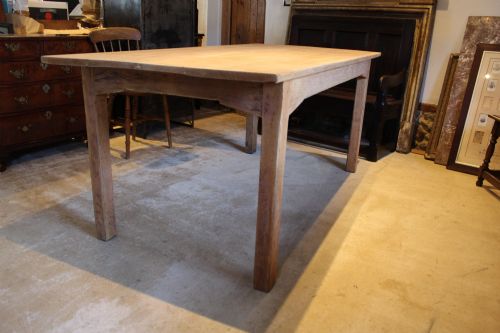
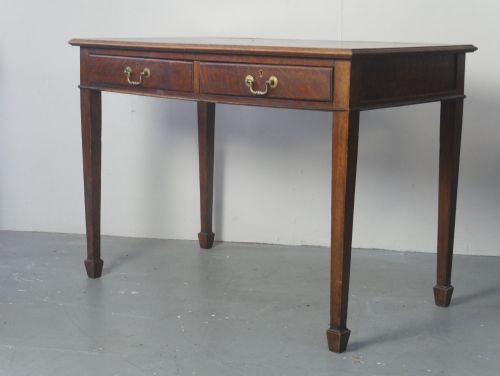
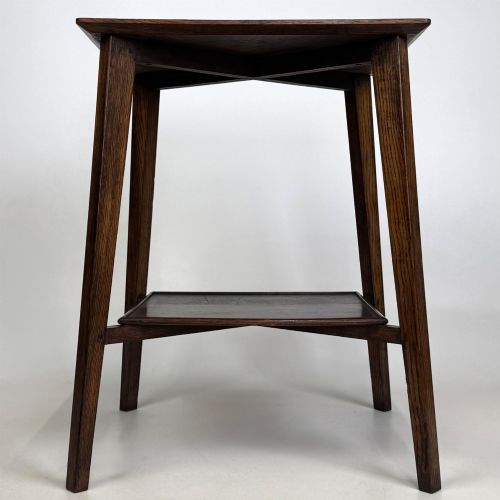
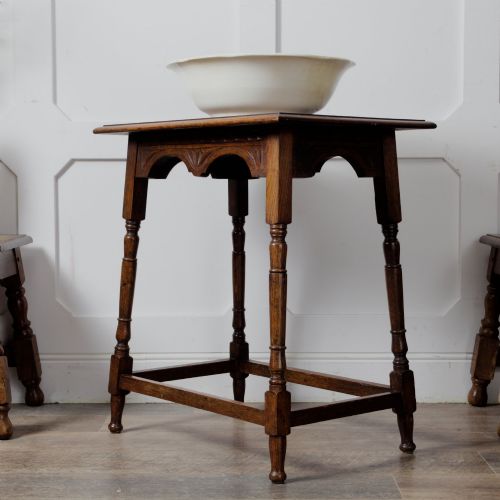
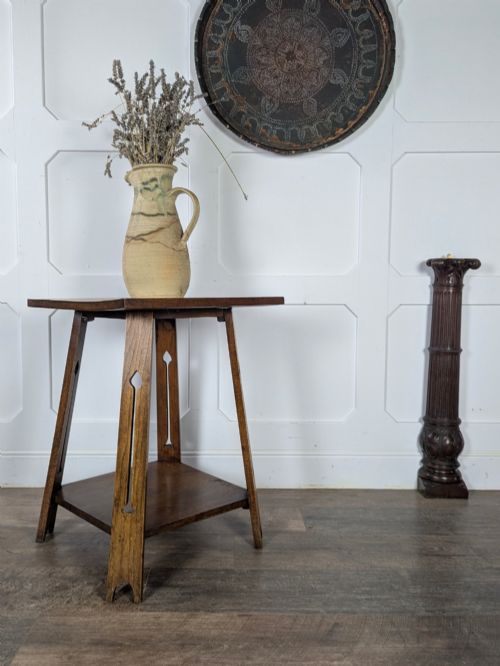
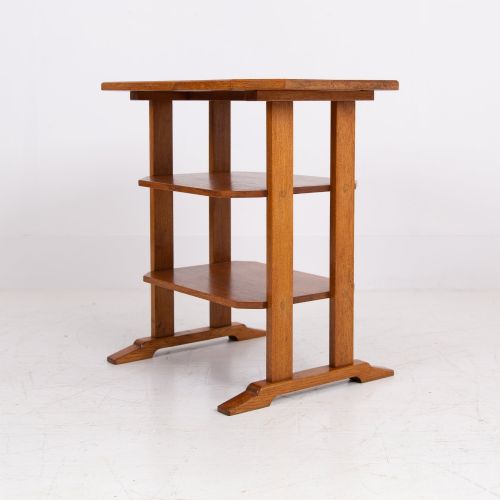
An edwardian solid oak table encompasses a broad family of dining boards, writing desks, library pieces and smaller side supports made primarily around the turn of the twentieth century. The examples found here range from robust refectory tables with shaped trestle ends to gateleg variants and compact occasional pieces.
The aesthetic leans heavily into Arts and Crafts principles, rustic farmhouse utility and Jacobean revival motifs. Golden oak tones dominate the selection, often presenting visible timber grain and sturdy structural joints designed for everyday domestic life.
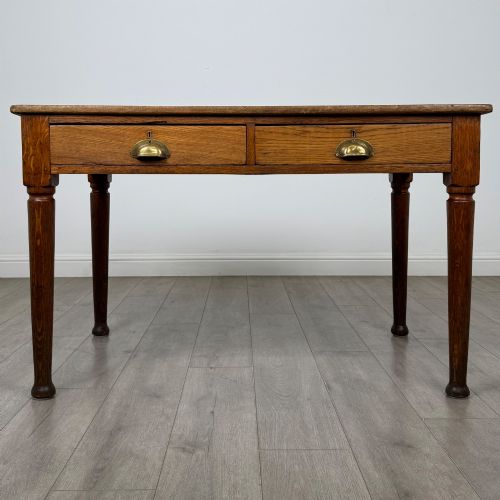
Dining and refectory formats appear frequently alongside library and centre tables suited for communal spaces. Buyers regularly encounter side tables and writing desks that bring utilitarian charm into modern hallways and studies.
How they were made
Master cabinetmakers utilised solid oak boards joined with traditional pegged mortise and tenon construction to ensure lasting rigidity. Metal hardware such as brass handles and iron fittings appear on drawers and extendable mechanisms, while glass and leather inserts occasionally accent writing surfaces.
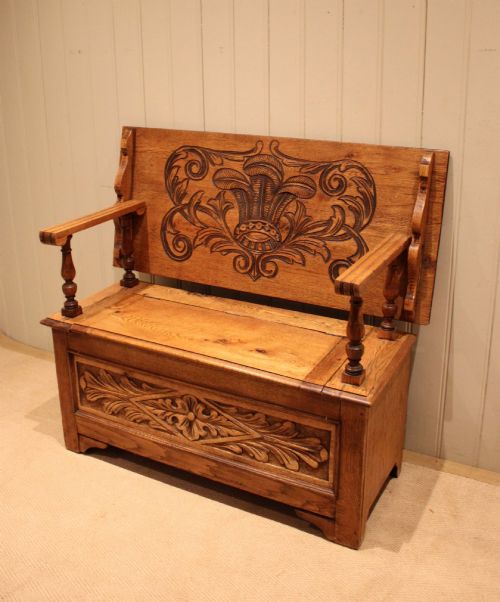
Surfaces were frequently finished to highlight the natural golden colour and figuring of the timber rather than hidden beneath heavy paints. Carved baluster legs, shaped trestles and subtle carved motifs display the hand of the maker without relying on excessive ornamentation.
What varies in quality
The distinction between standard utility furniture and superior pieces rests upon the selection of timber and the depth of hand-carved detailing. Finer examples exhibit carefully matched golden oak grain across expansive table tops and refined joinery that remains tight after a century of use.
Proportion and architectural presence separate ordinary production items from exceptional workshop creations inspired by the Cotswold or Glasgow schools. Well-balanced refectory proportions and thoughtful edge moulding elevate an everyday table into a piece of notable character.
The Edwardian Solid Oak Table Glossary
- Refectory table
- A long dining table traditionally used in communal halls and adapted for domestic dining during the late nineteenth and early twentieth centuries. These pieces typically feature sturdy stretcher bases and generous plank tops.
- Arts and Crafts
- A design movement prioritising traditional craftsmanship, visible construction methods and honest materials over mass-produced ornamentation. It heavily influenced the simple lines seen in domestic oak furniture.
- Draw leaf
- An extending table mechanism where two hidden leaves slide out from beneath the main top to increase surface area. This design allows smaller tables to expand efficiently for larger gatherings.
- Trestle ends
- Support structures placed at either end of a long table, connected by a central horizontal stretcher. They provide robust stability without restricting legroom for seated diners.
- Golden oak
- A specific warm honey-toned finish applied to oak timber that became particularly fashionable during the Edwardian period. It enhances the natural medullary rays visible in quarter-sawn boards.
Edwardian Solid Oak Table: Frequently Asked Questions
How do I care for solid oak?
Keep wooden surfaces away from direct heat sources and sudden humidity shifts to prevent natural movement in the timber. Regular dusting and occasional treatment with suitable natural waxes will maintain the deep golden lustre.
Avoid harsh chemical cleaning products that can strip the historic finish. Using coasters and mats protects the grain from moisture rings and daily wear.
Can I use these for daily dining?
These sturdy tables were built for robust domestic use and handle daily family meals with ease. Solid timber construction provides the durability required for active dining rooms and kitchens.
Many formats offer ample seating space for modern households. Their resilient construction ensures they withstand regular gathering without losing structural integrity.
How do I spot Arts and Crafts influence?
Look for unpretentious forms that celebrate the natural grain of the timber rather than hiding it behind heavy veneers. Visible peg joints and hand-planed surfaces often signal this artisan approach.
Decorative elements tend to be structural, such as chamfered edges and shaped trestles. The overall aesthetic prioritises utility and honest construction over superfluous surface carving.
Are these tables easy to dismantle?
Many refectory and dining designs utilise pegged joints or bolted rails that allow the base to be separated from the top. This traditional construction method assists with moving heavy furniture through narrow doorways.
Checking the underframe reveals how the top secures to the legs. Dismantling requires basic tools and care to protect the historic wooden threads and pegs.