

Edwardian Sofa Side Table
When searching for an edwardian sofa side table, you encounter compact occasional furniture designed to sit neatly beside seating in period interiors.
Edwardian Sofa Side Table
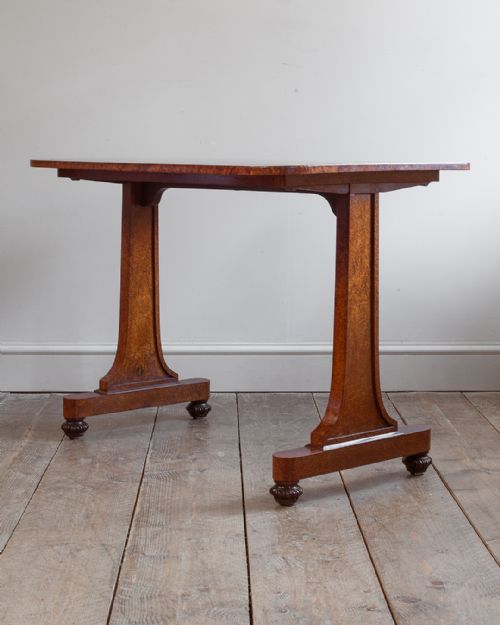
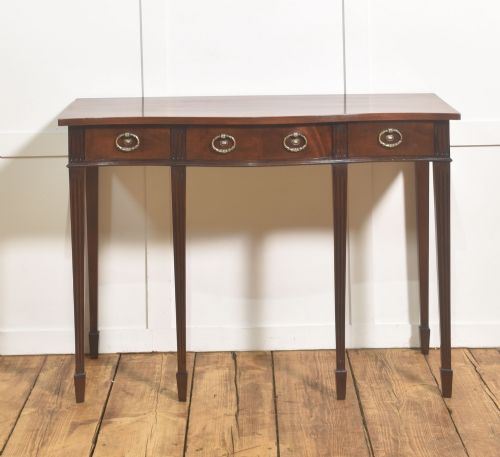
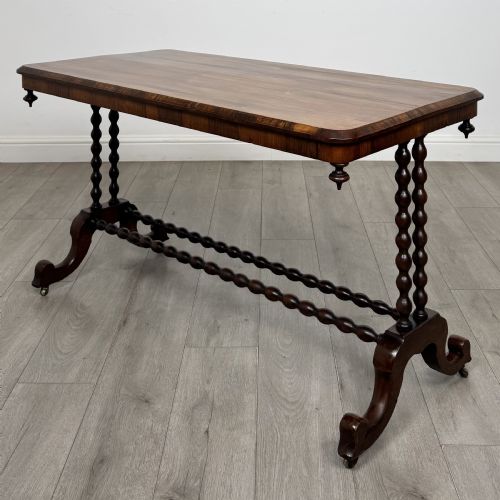
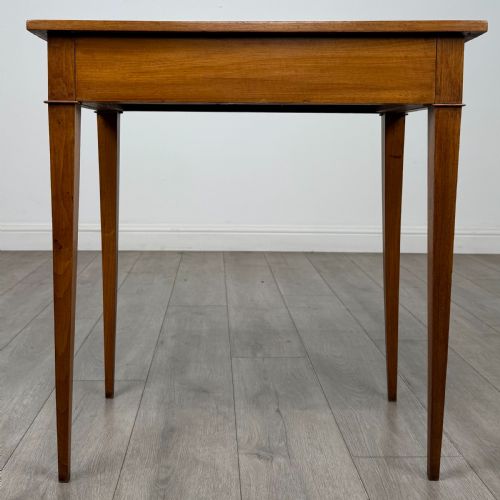
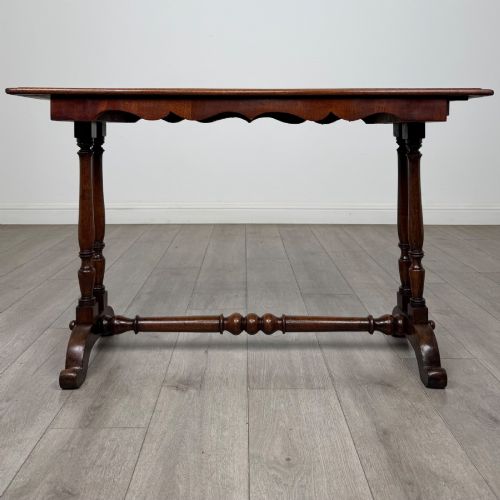
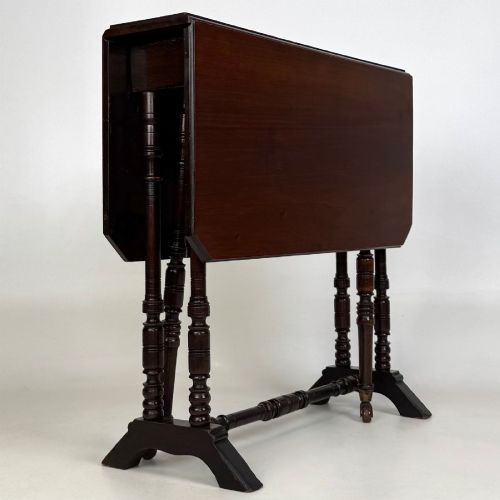
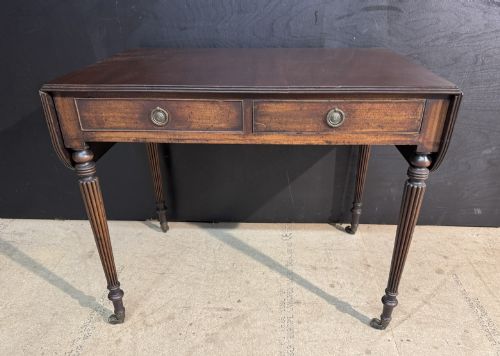
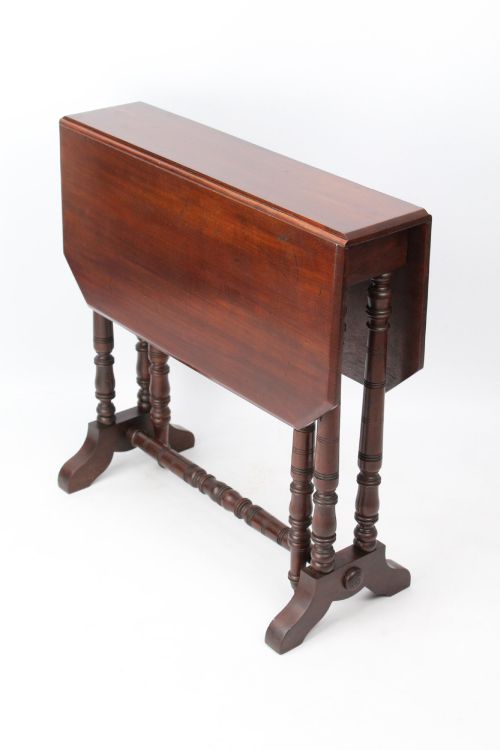
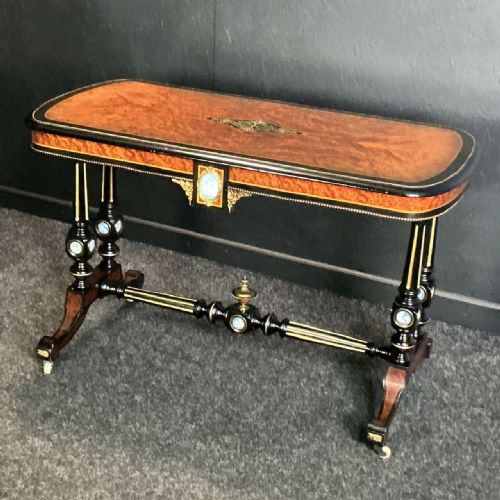
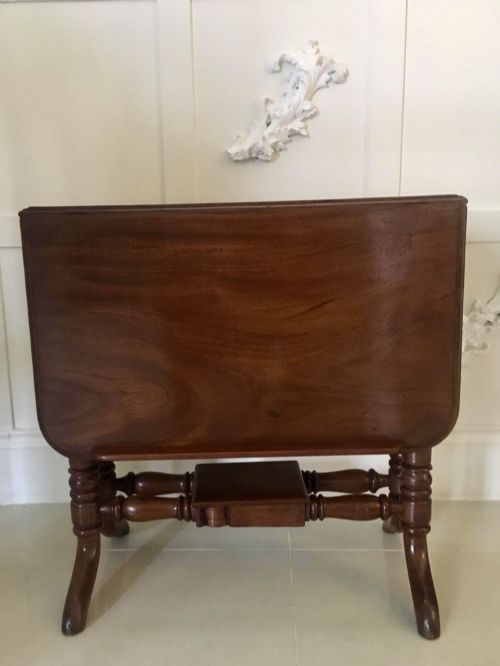
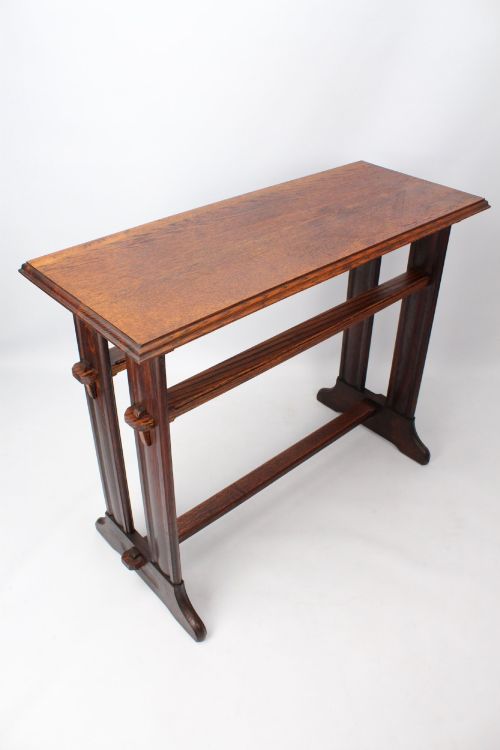
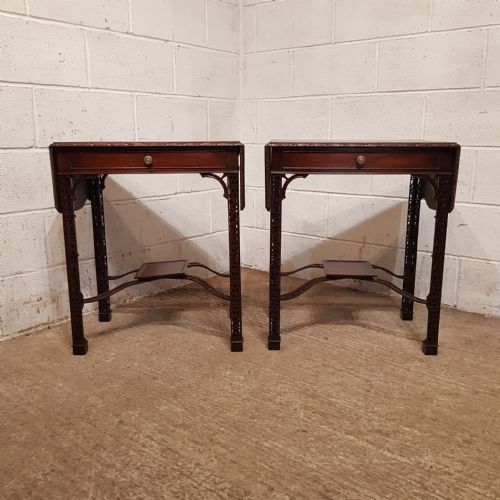
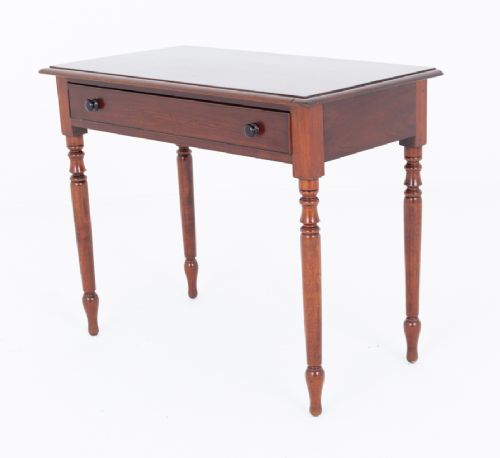
An edwardian sofa side table encompasses various compact wooden forms designed for placement adjacent to seating within domestic interiors. These tables emerge primarily from the Edwardian period and the broader nineteenth century, frequently adopting drop-leaf, Sutherland, or freestanding configurations.
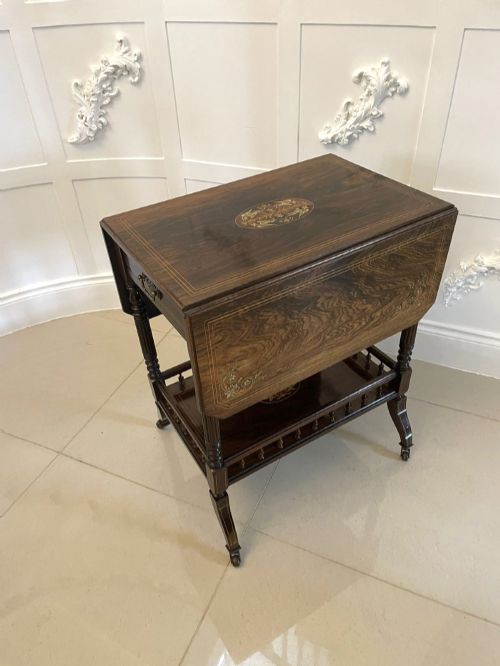
The versions most commonly met on this page include mahogany and walnut drop-leaf occasional tables alongside inlaid satinwood and oak examples. Makers of the period adapted earlier Regency and Sheraton forms into smaller, versatile tables suitable for narrower spaces beside a sofa.
How they were made
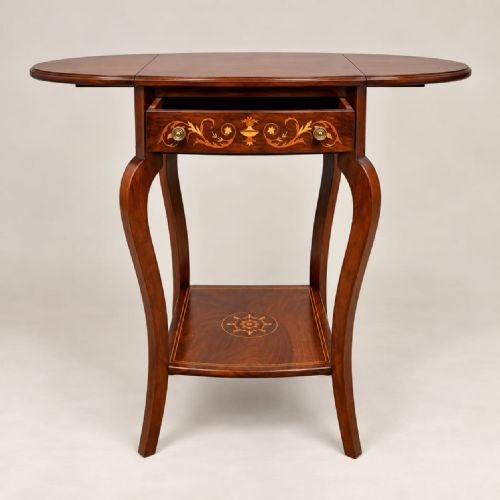
Cabinet makers utilised solid timbers such as mahogany, oak, and walnut for the structural frames, often applying figured veneers and satinwood or boxwood inlay to the top surfaces. Brass fittings appear on castors and drop handles, while turned legs provide support.
Construction techniques include drop leaves supported by swing legs or gates, dovetailed drawers, and marquetry decoration embedded directly into the timber surface.
Listings feature woods including mahogany, walnut, satinwood, and burr walnut across Edwardian and nineteenth-century periods.
What varies in quality
The distinction between standard and superior pieces rests on the choice of timber and the precision of the cabinetwork. Figured mahogany or burr walnut veneers paired with detailed boxwood inlay indicate a higher grade of manufacture.
Structural integrity, smooth operation of drop leaves and drawers, and the retention of original brass hardware elevate certain examples above plainer utilitarian counterparts.
Edward s And Robert s·Andrew Thomson And Sons
The Edwardian Sofa Side Table Glossary
- Drop leaf
- A table with hinged flaps on one or both sides that can be folded down to save space or raised to increase surface area.
- Sutherland table
- A narrow table featuring particularly wide drop leaves supported by a pivoting gate-leg frame when raised.
- Marquetry
- Decorative patterns formed by inserting thin veneers of different coloured woods into a prepared surface.
- Satinwood
- A durable, yellow-toned timber frequently utilised for contrasting inlay work and decorative banding on Edwardian furniture.
- Occasional table
- A small, movable table intended for specific, intermittent use within a room rather than a fixed dining or writing purpose.
Edwardian Sofa Side Table: Frequently Asked Questions
Where were these tables placed?
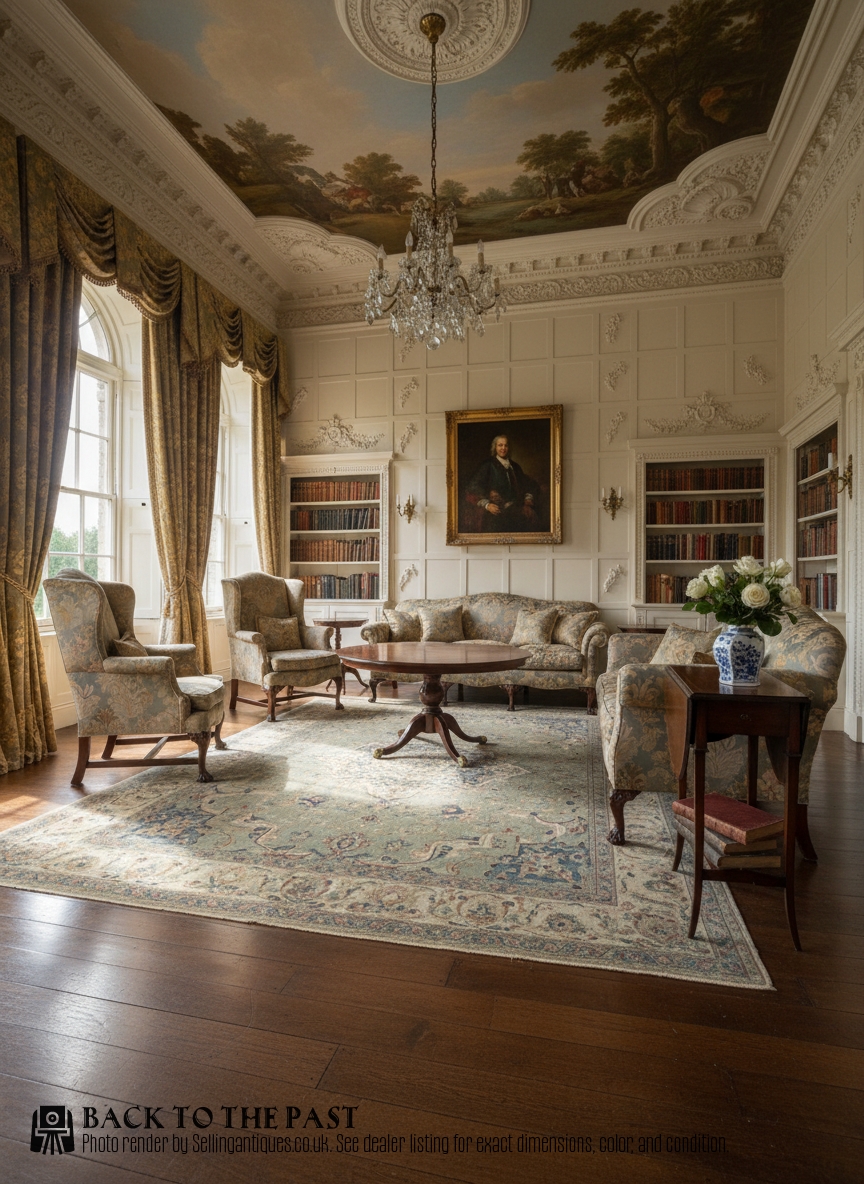
These pieces sat beside sofas, armchairs, or against walls in drawing rooms and halls to hold lamps, books, or tea.
Their compact footprints allowed them to be moved easily around the room as domestic requirements shifted throughout the day.
How do I spot an Edwardian piece?
Edwardian examples often feature lighter timbers, delicate satinwood or boxwood inlay, and refined proportions influenced by Sheraton revival styles.
They tend to appear brighter and less heavy than their Victorian predecessors while maintaining traditional joinery methods.
Can I use a drop leaf daily?
The hinged leaves function reliably for daily use provided the gate legs or support arms are handled with care.
Dropping the leaves when not needed saves space while keeping the table versatile for entertaining.
What is figured mahogany?
Figured mahogany refers to timber displaying natural, rippled grain patterns that create a mottled or flame-like visual effect.
Cabinet makers reserved these premium cuts for the top surfaces of finer tables to catch the light.