
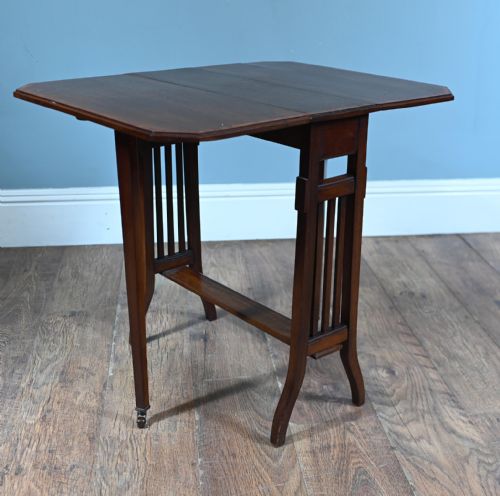

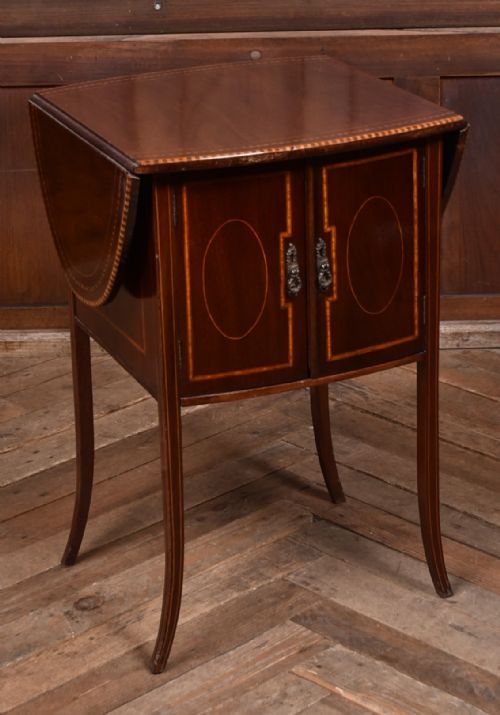


Edwardian Small Flap Table
An edwardian small flap table brings compact elegance to a room, offering a folding surface that expands when required.

Edwardian Small Flap Table
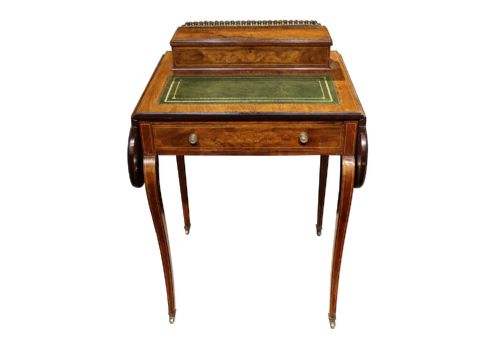
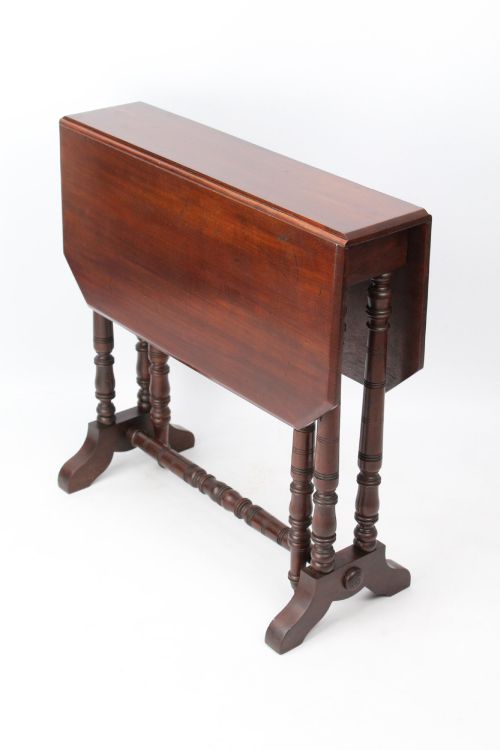
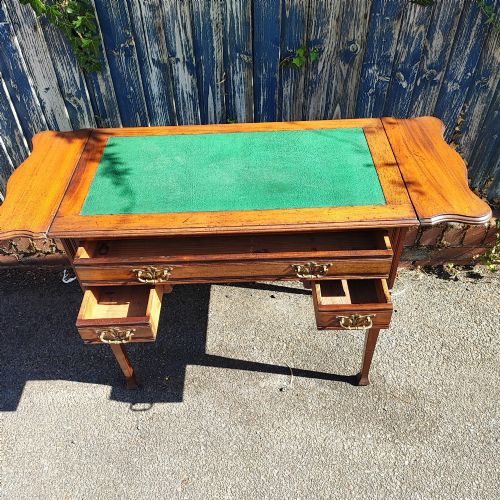
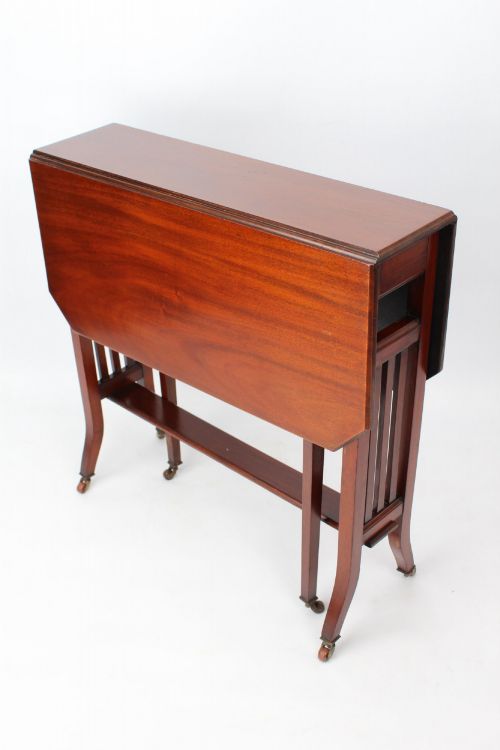
An edwardian small flap table is a space-saving piece designed with hinged leaves that drop down when not in use. The selections here include Sutherland tables, Pembroke tables, lamp tables, and occasional tables from the period.
Most examples date from the Edwardian era and the late Victorian period, constructed primarily as occasional or tea tables. They sit easily beside seating or in smaller corners, adapting quickly to the room.
The forms range from slender occasional tables with satinwood inlay to sturdy oak gateleg designs and narrow Sutherland tables. Each piece serves a dual purpose of display and utility without dominating the floor space.
What varies in quality
The standard of timber selection and inlay work separates standard utility pieces from finer examples. Finely figured mahogany, burr walnut, and crisp satinwood stringing indicate careful workshop production.
The smoothness of the drop leaf mechanism and the stability of the folding supports determine everyday usability. Original brass hardware and well-fitted drawers add to the character of the piece.
Some small tables feature butterfly-shaped tops that make the folded flaps look like folded wings.
Liberty & Co.
The Edwardian Small Flap Table Glossary
- Sutherland table
- A narrow drop-leaf table where the leaves fold down almost vertically, supported by swing legs. This design keeps the footprint remarkably small when closed.
- Pembroke table
- A rectangular table with two drop leaves on opposing sides and frequently a single drawer. It originated in the eighteenth century and continued through the Victorian and Edwardian periods.
- Gateleg table
- A table with legs hinged to swing outward like a gate, providing direct support for the drop-down leaves. They appear in oak and mahogany across multiple decades.
- Inlay
- A technique where pieces of contrasting wood, such as satinwood, are inserted into recesses in the primary surface to form patterns. It defines much of the Edwardian aesthetic on these tables.
- Drop flap
- A hinged section of a tabletop that can be lowered or raised to alter the surface area. It allows the table to fit snugly against a wall.
Edwardian Small Flap Table: Frequently Asked Questions
How do you use a drop flap table daily?
Keep the flaps folded down against the sides when floor space is tight, raising them only when you need a surface for books, lamps, or tea.
Position the table beside a sofa or in a hallway so the moving leaves have clear clearance to rise and lower without striking walls.
What is a Sutherland table?
A Sutherland table is a narrow drop-leaf table characterised by particularly slender legs and leaves that drop nearly all the way to the floor.
When folded, it occupies very little depth, making it suitable for smaller Victorian and Edwardian sitting rooms.
How do I date an Edwardian table?
Examine the timber, secondary woods, and decorative elements such as satinwood inlay, which frequently indicate the transition from late Victorian styles into the Edwardian era.
Construction methods like machine-cut screws or specific brass hinge types also help narrow down the decade of manufacture around nineteen hundred.
Are these tables sturdy enough for regular use?
Solid mahogany and oak versions with gateleg or swing-bracket supports provide reliable stability for everyday items like lamps and drinks.
Care should be taken not to lean heavy weight directly onto the unsupported edges of the hinged flaps.