

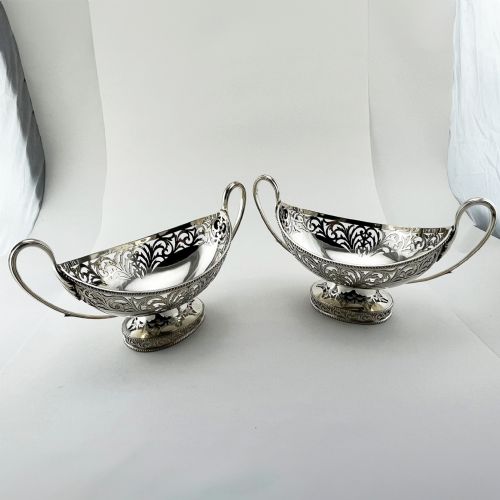


Edwardian Silver Fruit Basket
An edwardian silver fruit basket brings open-work grace and polished weight to a dining table.
Edwardian Silver Fruit Basket
When you search for an edwardian silver fruit basket, you encounter open serving forms designed for display and dining. The versions most commonly met on this page span the Edwardian period, George V years, and Victorian eras, often taking the shape of handled bowls, cake baskets, and centrepieces.
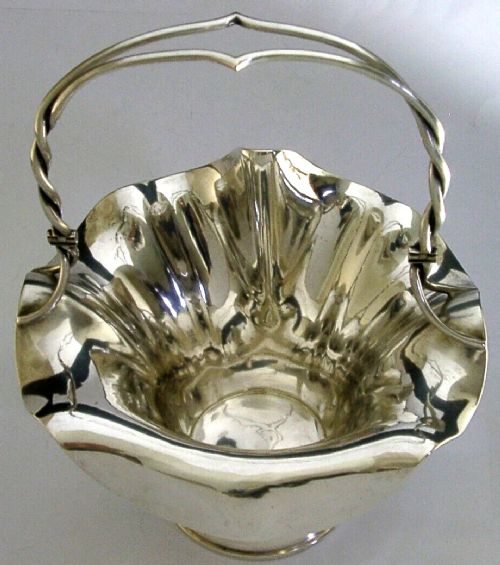
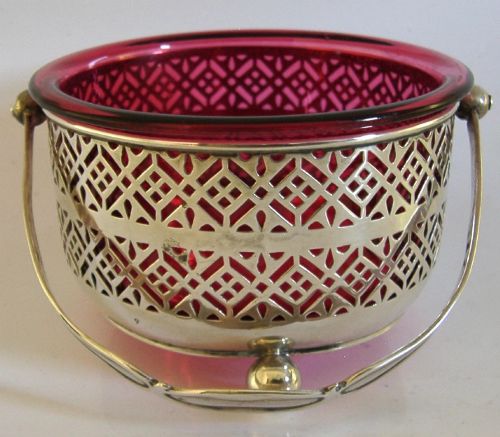
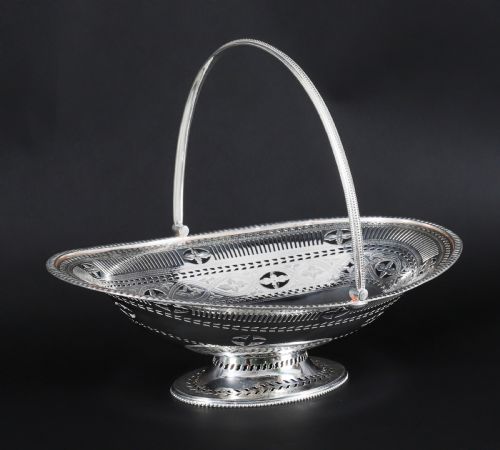
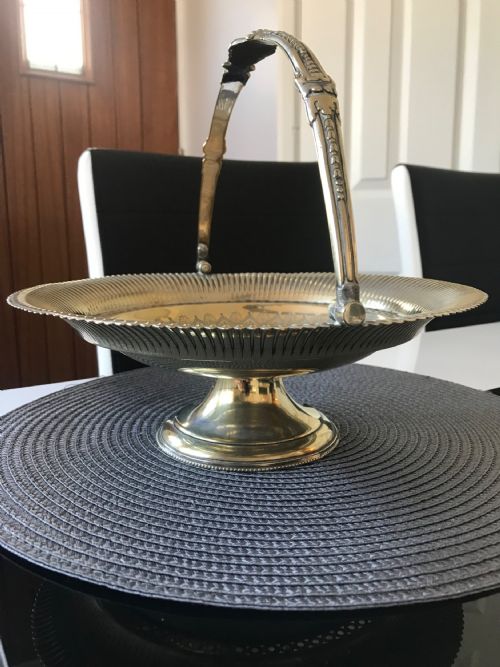
The objects serve as decorative centrepieces or serving dishes, frequently featuring swing handles and pierced lattice walls. Makers fashioned these pieces from solid sterling silver or silver plate over a base metal, sometimes incorporating coloured glass liners.
Beyond the strict Edwardian years, the selection includes pieces dated from the nineteenth century into the early twentieth century. These items manifest stylistic influences ranging from Art Nouveau curves to Neoclassical symmetry.
Materials and construction
Silversmiths constructed these pieces using sterling silver or electroplated nickel silver, commonly known as EPNS. Solid silver items bear hallmarks denoting the assay office and date, while plated wares employ a heavy silver coating over a base metal.
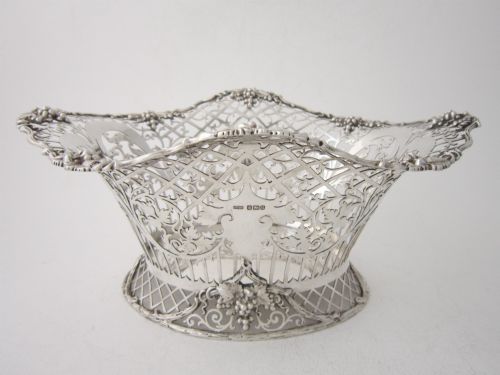
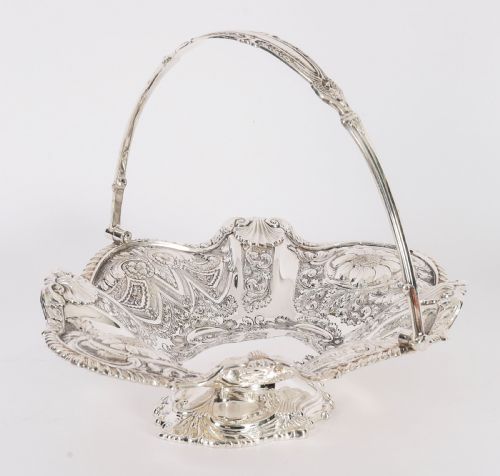
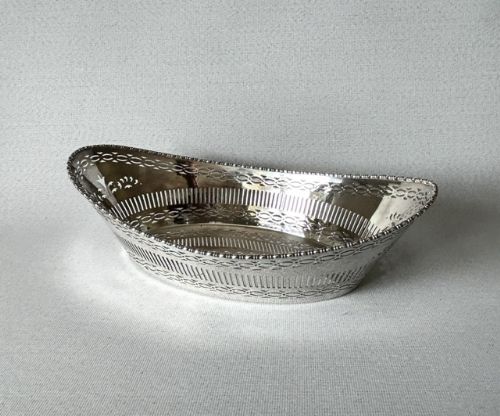
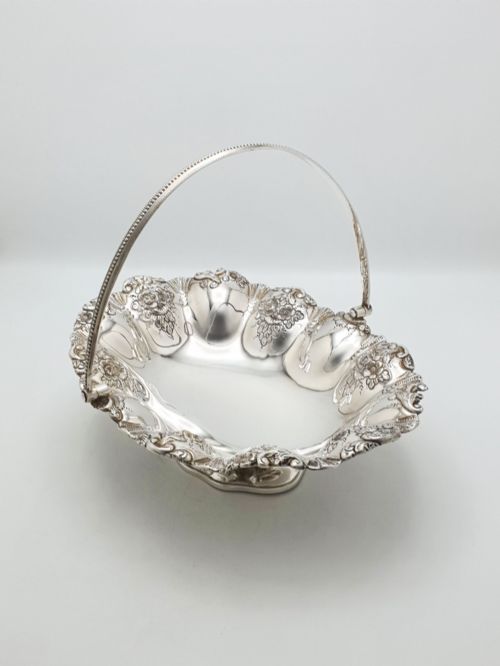
Craftsmen shaped the metal through piercing, fretwork, and lattice cutting to create intricate open-work galleries. Repoussé hammering and embossed floral rims appear alongside swing handles and reeded mounts, occasionally paired with cranberry glass or cut crystal inserts.
Listings feature items in Sterling Silver, Silver Plate, EPNS, Cranberry Glass, and Brass across Edwardian, Victorian, and Art Nouveau styles.
Distinctions in standard and execution
The distinction between tiers rests on the weight of the metal and the crispness of the piercing. Substantial gauge silver and deep, hand-punched fretwork denote heavier, more substantial examples.
Execution of decorative detail separates standard production from finer work. Crisp floral repoussé, well-balanced swing handles, and integrated glass liners indicate higher workshop standards.
George W. Scott & Sons Ltd·Mappin & Webb·Thomas Bradbury·Joseph Rodgers·Hammond, Creake & Co·William Hutton & Sons·Elkington & Co·Jay Richard Attenborough
The Edwardian Silver Fruit Basket Glossary
- Sterling silver
- An alloy containing ninety-two point five percent silver by mass, with the remainder being copper. This standard composition provides the necessary durability for functional serving items.
- Electroplated nickel silver
- A base metal alloy of copper, nickel, and zinc coated with a layer of silver through electrolysis. This method offered a bright finish at a lower cost than solid metal.
- Repoussé
- A metalworking technique where the artisan hammers the design from the reverse side to form raised relief patterns on the front. This creates tactile surface decoration along rims and bowls.
- Piercing
- The practice of cutting intricate patterns through the sheet metal to create light, open-work lattices. It defines the decorative walls of many baskets and fruit dishes.
- Swing handle
- A movable arched handle attached to the rim by pivots, allowing it to drop to the sides. It facilitates serving and storage on the table.
Edwardian Silver Fruit Basket: Frequently Asked Questions
How do I distinguish solid silver from silver plate?
Solid sterling silver pieces carry official hallmarks stamped into the metal, indicating the standard, city of assay, and date letter. Silver plated items lack these sterling marks and rely on manufacturer initials for identification.
Examining the rim or wear points can also reveal the base metal showing beneath a worn silver layer.
How were these baskets used originally?
Households placed them in the centre of the dining table or on sideboards to present fresh fruit, pastries, or bread during meals. The swing handle allowed guests to pass the vessel easily.
They also functioned as decorative centrepieces when empty, showcasing the silversmith's skill in piercing and repoussé.
How should I care for silver and plated baskets?
Clean the metal gently using a specialised silver cloth or mild polish to remove tarnish without stripping thin plating. Avoid abrasive pads that scratch the surface or damage delicate fretwork.
Store them in a dry environment to slow down the natural oxidation process of the metal.