

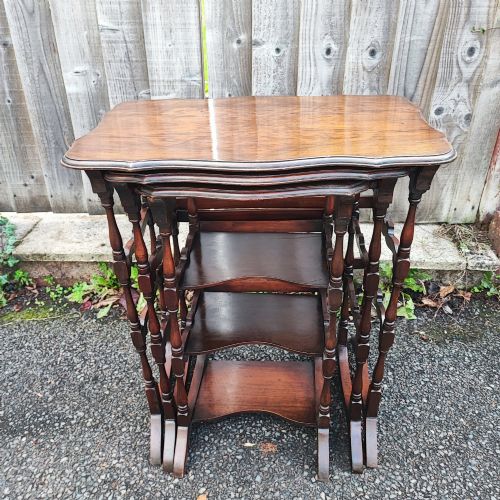
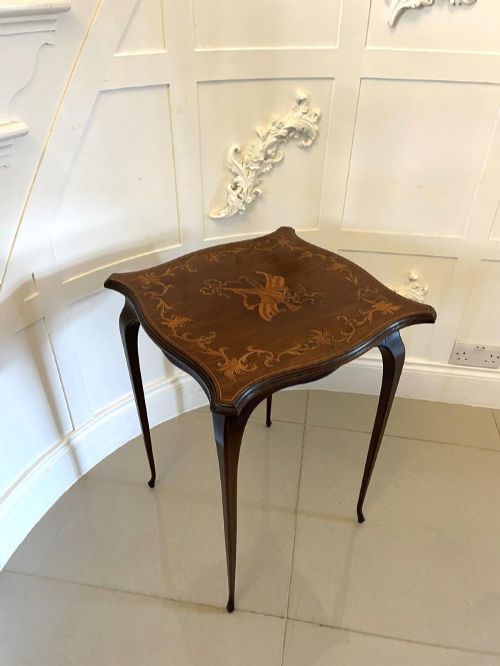
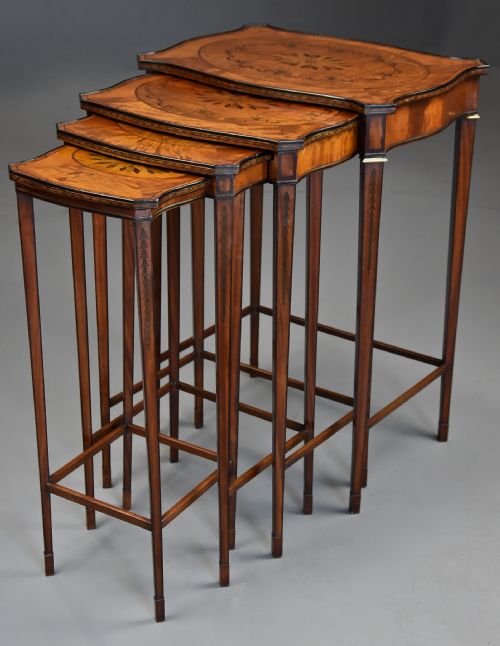
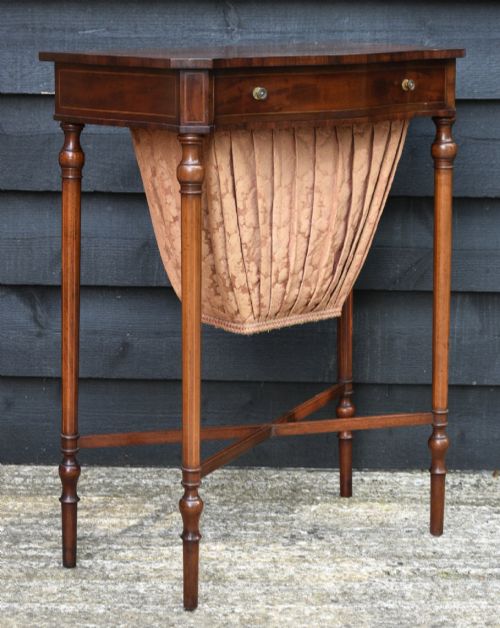


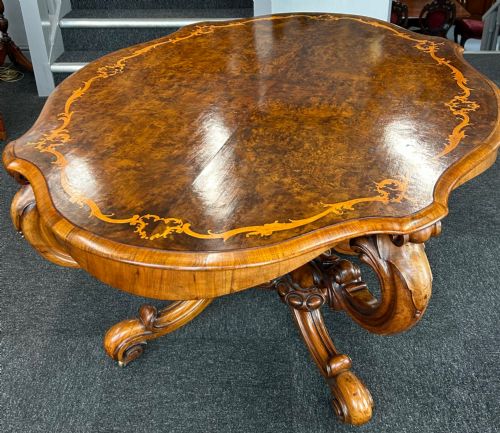

Edwardian Serpentine Side Table
An Edwardian serpentine side table brings flowing lines and timber figuring into a room, offering a surface that is both practical and decorative.
Edwardian Serpentine Side Table
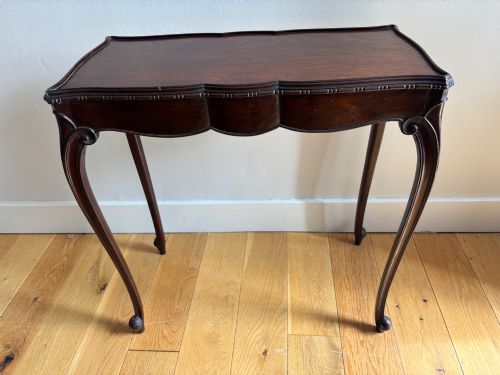
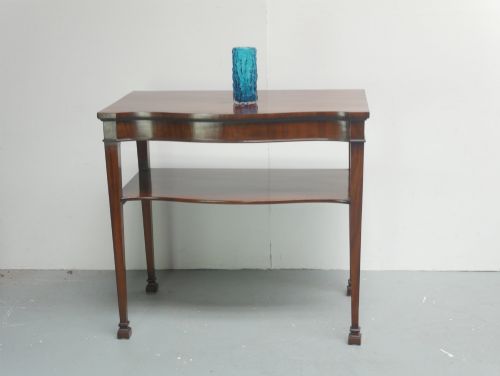
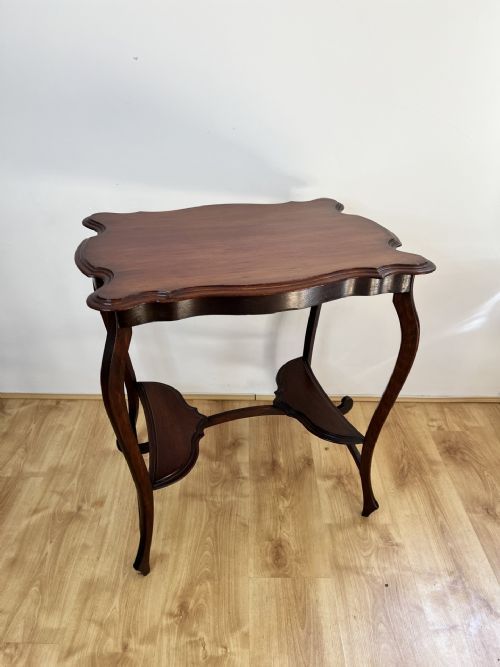
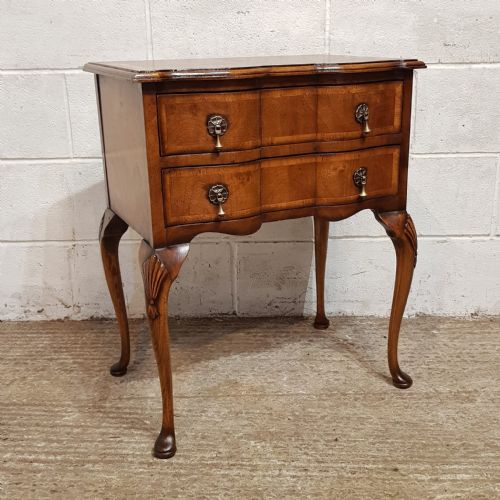
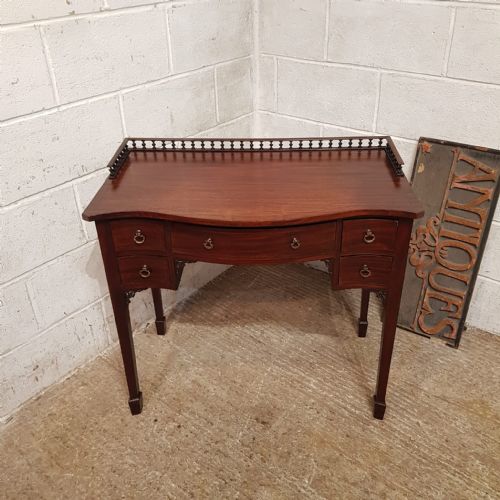
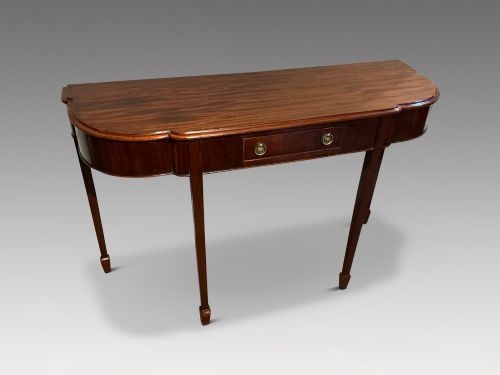
When you search for an edwardian serpentine side table, you are looking at small tables featuring a gently undulating front edge that curves inward and outward. These pieces emerged during the Edwardian period, often drawing on earlier Georgian or Sheraton design motifs.
The version you are most likely to meet on this page is constructed from mahogany, sometimes finished with delicate boxwood stringing, satinwood banding, or marquetry inlay. They serve as compact display or writing surfaces in hallways, drawing rooms, and studies.
The form prioritises proportion and craftsmanship, combining useful surface area with a graceful silhouette that softens the corners of a room.
How they were made
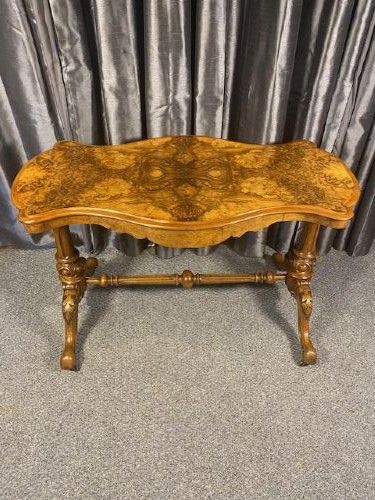
Cabinet makers constructed these tables primarily using solid mahogany and walnut, frequently selecting figured veneers such as burr walnut to create patterned tabletops. Timber inlay, including satinwood and boxwood, was meticulously cut and fitted into the primary wood to form geometric or floral motifs.
The characteristic serpentine curve of the front rail required precise carpentry to shape the timber without compromising structural integrity. Brass handles, edgings, and castors were often incorporated on pieces intended for writing or sewing.
Surface finishing relied on hand-applied polishes that highlighted the natural grain and colour variations of the wood.
Edwardian Serpentine Side Table Retail Price Guide 2026
Typical asking prices for edwardian serpentine side table among the pieces listed under this phrase on Sellingantiques today, from the lower quarter to the upper quarter. They describe what is for sale here now, not the wider market.
Several sewing and work tables in the archive conceal fitted compartments for needles and threads beneath their curving serpentine tops.
What varies in quality
The standard of a piece rests upon the crispness of its timber inlay and the selection of figured veneers. Superior examples display tightly balanced grain patterns and cleanly cut marquetry without lifting or gaps.
Construction methods also separate the range, visible in the dovetailing of drawers and the smooth sweep of the curved wooden apron. Subtle hand-painted decoration or finely chased brass mounts indicate workshop production of a higher order.
Edwards and Roberts
The Edwardian Serpentine Side Table Glossary
- Serpentine
- A curved furniture front shaped with a convex centre flanked by concave ends, mimicking the undulating motion of a snake.
- Marquetry inlay
- Decorative patterns formed by fitting contrasting pieces of wood veneer into a prepared wooden surface.
- Satinwood
- A durable, yellowish-brown timber from tropical trees, prized for its lustrous grain and used extensively for banding and stringing.
- Etagere
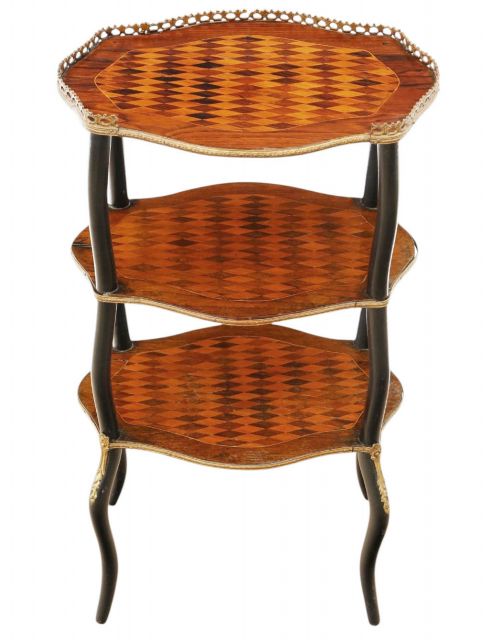
- A set of open display shelves supported by slender columns, designed to hold ornaments.
- Stringing
- Thin lines of contrasting wood inlaid into the surface of a piece to outline drawers, tops, or legs.
Edwardian Serpentine Side Table: Frequently Asked Questions
Where should I place an edwardian serpentine side table?
These tables suit narrow hallways, drawing rooms, or landings where a shallow depth is required. Their finished backs and compact proportions allow them to stand independently against a wall or beside seating.
Because the front edge curves outward, they occupy slightly less floor space in the centre while providing a functional surface for lamps, books, or small decorative objects.
How do I care for inlaid mahogany wood?
Maintain the timber by keeping it away from direct sunlight and heat sources, which can dry out the veneer and cause splitting. Apply a suitable beeswax periodically to nourish the polished surface.
Avoid using modern liquid polishes or silicone sprays, as these build up and attract dust, eventually dulling the natural lustre of the mahogany and its inlay.
What is the difference between a side table and a writing table?
Side tables are primarily designed for display and support surfaces along a wall. Writing tables incorporate functional drawers beneath the top and occasionally feature a leather or cloth insert on the surface.
While both share the curved front profile, writing tables are built with slightly deeper proportions to accommodate stationery and seated work.
How can I tell an Edwardian table from a Victorian one?
Edwardian tables generally display lighter proportions, brighter wood tones, and delicate neoclassical revival details such as satinwood banding and stringing. Victorian examples tend to be heavier in construction with darker, deeply stained mahogany or walnut.
The Edwardian period favoured refined elegance and restraint, whereas Victorian pieces often emphasised robust forms and heavier carvings.