

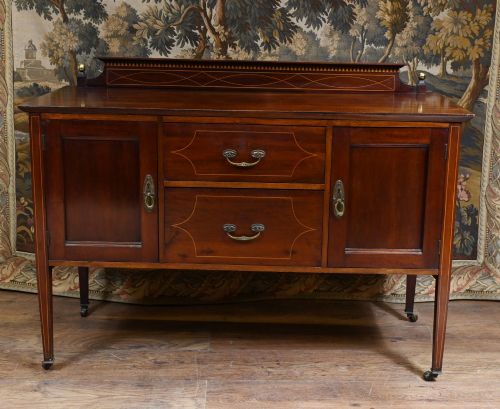


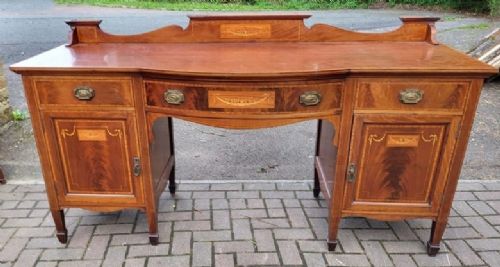
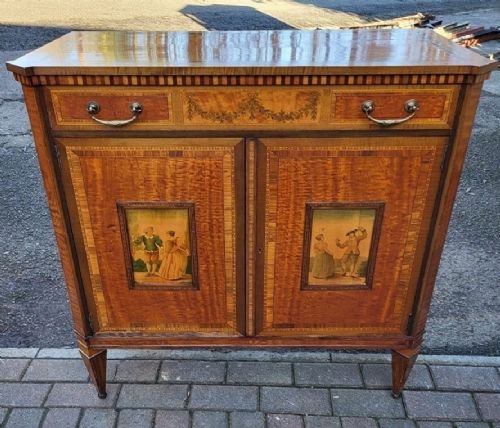


Edwardian Satinwood Sideboard
An edwardian satinwood sideboard brings luminous timber and classical ornament to a dining room or hall, offering substantial storage with refined proportion.
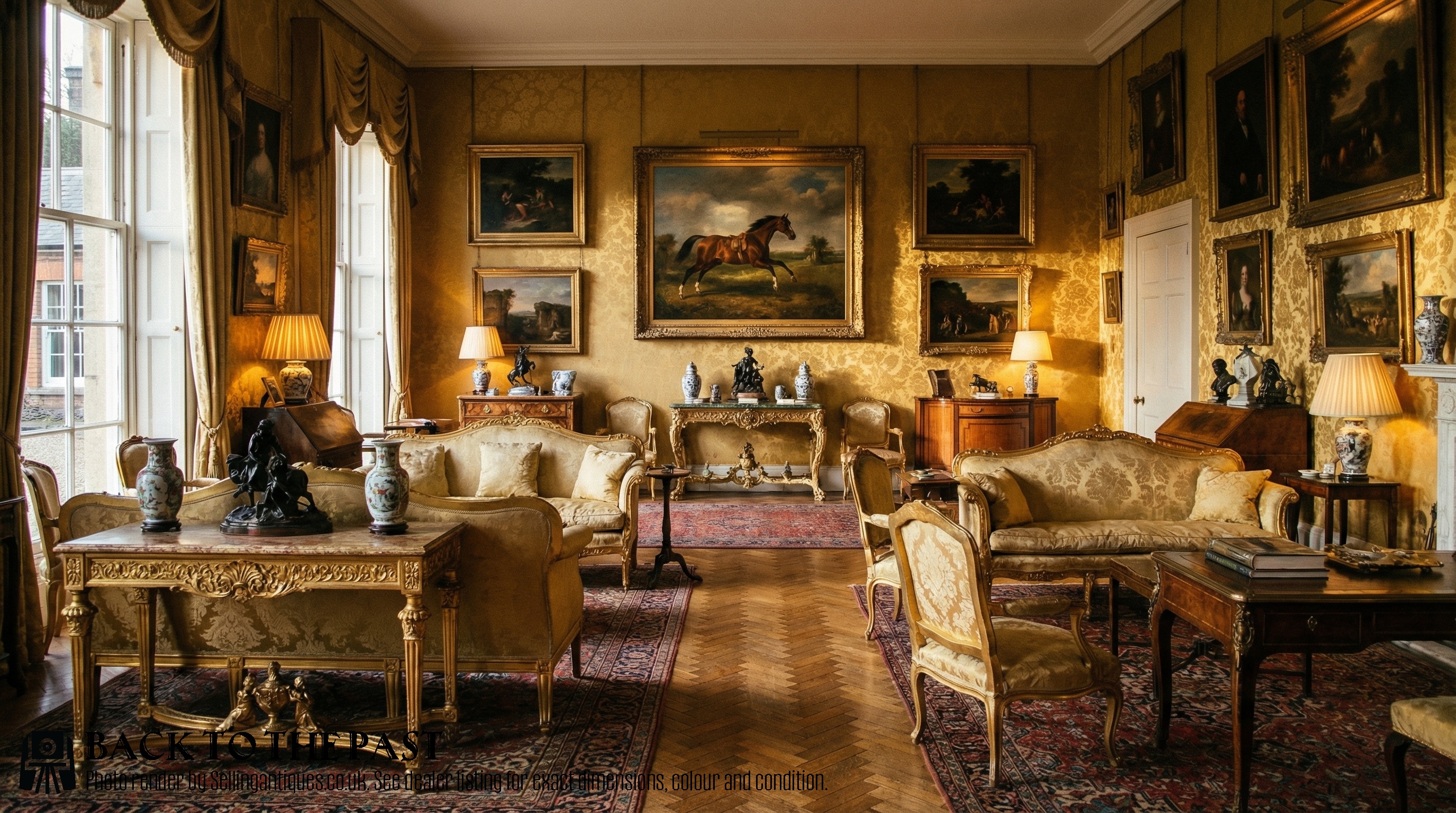
Edwardian Satinwood Sideboard
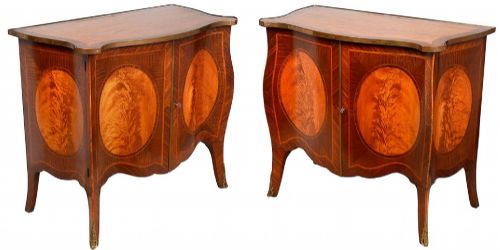
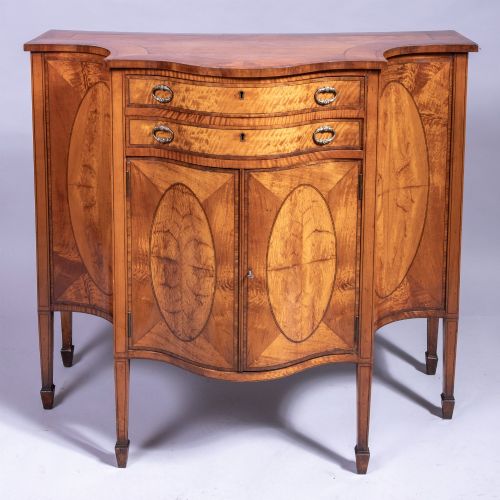
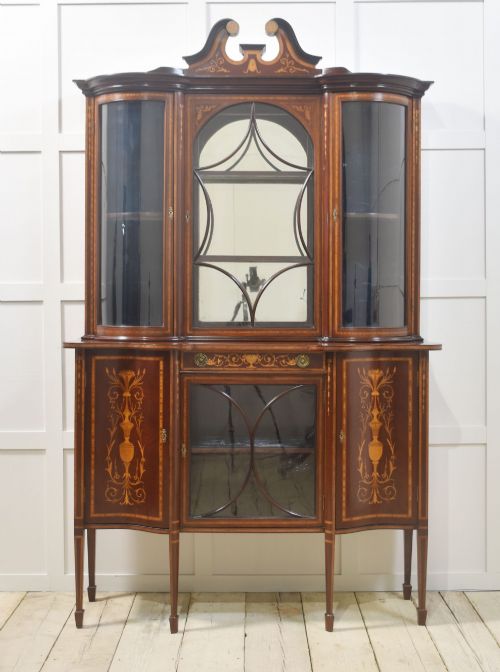
When you search for an edwardian satinwood sideboard, you encounter large dining pieces, smaller side cabinets, and curved commodes produced during the late nineteenth and early twentieth centuries. The dominant aesthetic draws heavily on earlier eighteenth-century designs, resulting in revival pieces that favour symmetry and classical restraint.
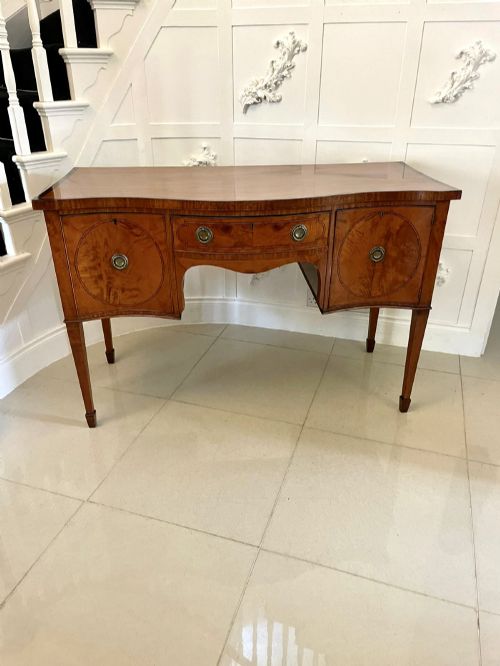
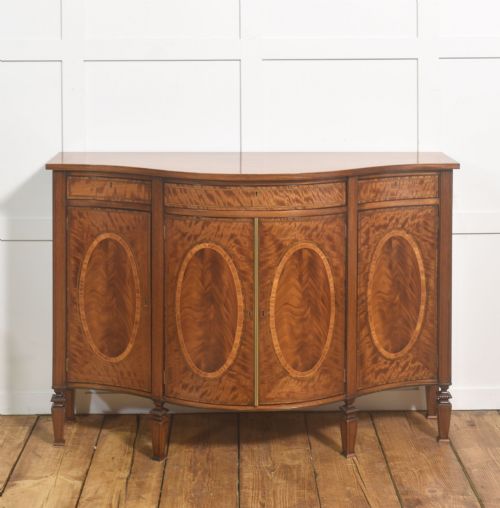
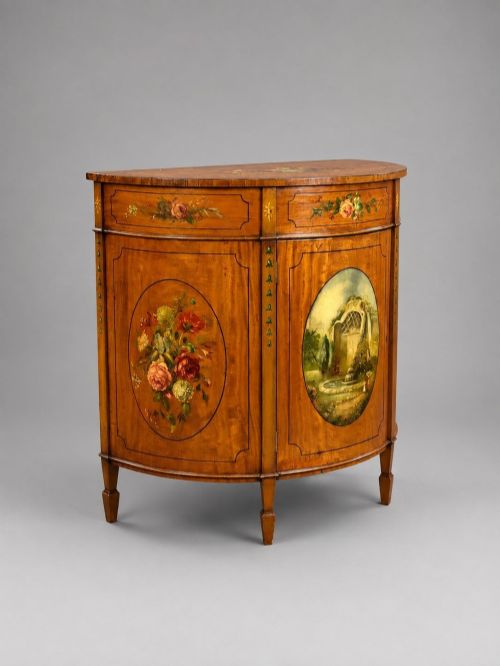
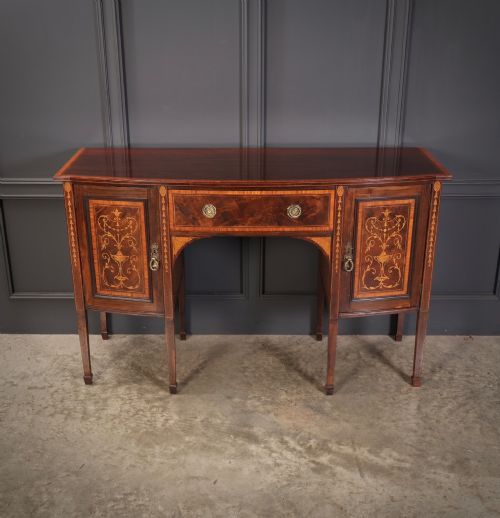
The forms on this page range from straight bow-fronted sideboards to semicircular demi-lune cabinets and serving tables. Makers of the period utilised exotic timbers to create luminous focal points, often combining rich mahogany frames with pale satinwood veneers.
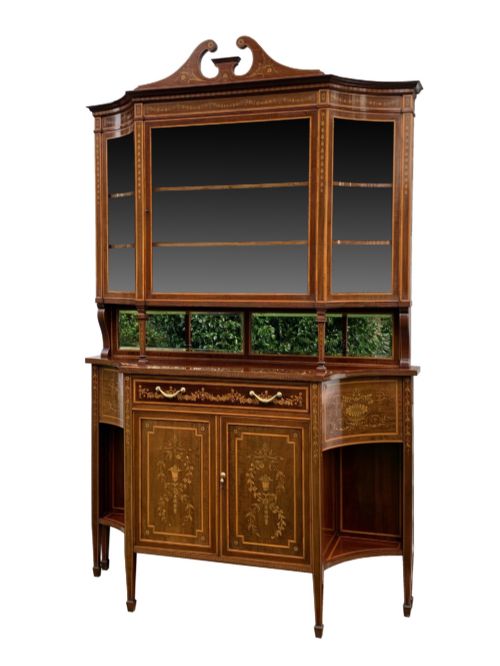
You are most likely to meet pieces executed in the Sheraton Revival style, frequently decorated with intricate marquetry and boxwood stringing. These items reflect a period of high craftsmanship that looked back to the Georgian era for inspiration.
Materials and methods
Cabinet makers constructed these pieces using solid mahogany or pine carcasses overlaid with figured satinwood veneers. Artisans employed contrasting woods such as boxwood and rosewood to form delicate stringing and complex floral or neoclassical marquetry panels.
Surface ornamentation often included hand-painted motifs depicting classical figures or floral garlands, sometimes combined with polychrome paintwork. Structural details were completed with cast brass handles, keyhole escutcheons, and fine wood inlay.
The curved profiles of bow-front and demi-lune forms required advanced steaming and bending techniques to shape the wooden frames accurately before veneering.
The documented periods span from the late nineteenth century through the Edwardian era into the early twentieth century.
Quality differences
The distinction between standard commercial output and exceptional work lies in the depth of the marquetry and the choice of timber figure. Finer examples display meticulously cut veneers with subtle shading in the wood inlay rather than flat, uniform surfaces.
Construction methods also separate tiers of quality, visible in the precision of the dovetail joints on drawers and the alignment of curved doors. Workshops known for high-end retail invested greater care in hand-painted panels and heavy brass mountings.
Edwards & Roberts·James Hicks·Waring & Gillow·Victorian Maple & Co·Collinson & Lock London·Gillows
The Edwardian Satinwood Sideboard Glossary
- Satinwood
- A lustrous, hard timber native to Ceylon and India with a golden-yellow sheen. It served as the primary veneer for high-status cabinet work in the revival periods.
- Marquetry
- The art of forming decorative patterns by fitting together small pieces of coloured wood veneer. This technique defined the ornamented panels of Sheraton Revival furniture.
- Demi-lune
- A half-moon shape used for commodes and side cabinets designed to stand flat against a wall. The curved profile demanded precise joinery.
- Bow-front
- A convex curving front contour found on many sideboards and cabinets of this era. It added a sense of movement to heavy dining room furniture.
- Crossbanding
- A border strip of veneer laid around the perimeter of a panel so the grain runs at right angles to the centre. It provided a neat visual frame to tabletops and drawer fronts.
Edwardian Satinwood Sideboard: Frequently Asked Questions
What is an edwardian satinwood sideboard?
These items are large storage furniture pieces built primarily around the Edwardian period, drawing inspiration from eighteenth-century Sheraton designs. They combine pale satinwood and mahogany with delicate inlay to serve dining rooms and halls.
Craftsmen produced them in various configurations, from straight bow-fronts to curved demi-lune serving tables, using light woods to brighten dark Victorian interiors.
How were they used historically?
Dining rooms utilised these pieces to store heavy silver, linen, and glassware, while the flat top served as a surface for presenting dishes during meals. Smaller side cabinets and commodes functioned as display spaces for decorative ceramics in drawing rooms.
Servants prepared serving trays upon them, and the internal cupboards kept dining accessories organised out of sight.
How do I live with one today?
Positioning these pieces in a dining room, hallway, or living space provides substantial concealed storage while introducing a bright, reflective wooden surface. Their pale timber tones pair well with both contemporary and traditional interior palettes.
Keep them away from direct sunlight and excessive heat sources to protect the delicate satinwood veneer and hand-painted panels from drying out.
How do I tell periods apart?
Earlier nineteenth-century pieces often display heavier proportions and darker mahogany primary woods, whereas Edwardian revivals lean towards lighter satinwood veneers and refined stringing. The revival styles frequently adopt neoclassical motifs with crisp, bright boxwood inlays.
Maker stamps and labels inside drawers or on the backboards offer definitive clues to the workshop and manufacturing decade.