

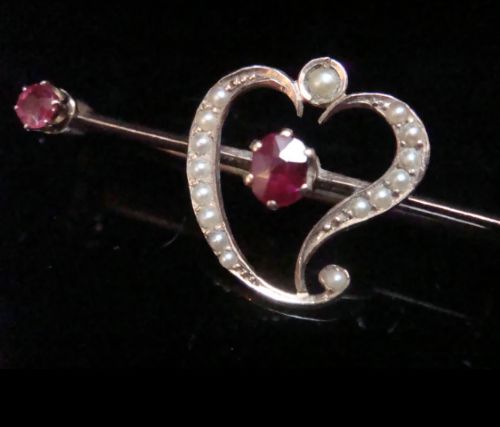


Edwardian Ruby Pin
An edwardian ruby pin brings together rich red gems and gold or silver, offering delicate lapel decoration from the early twentieth century.
Edwardian Ruby Pin
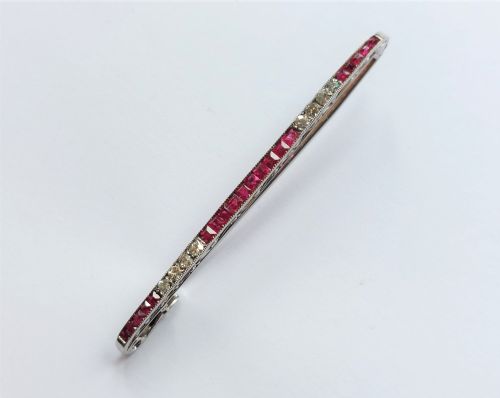
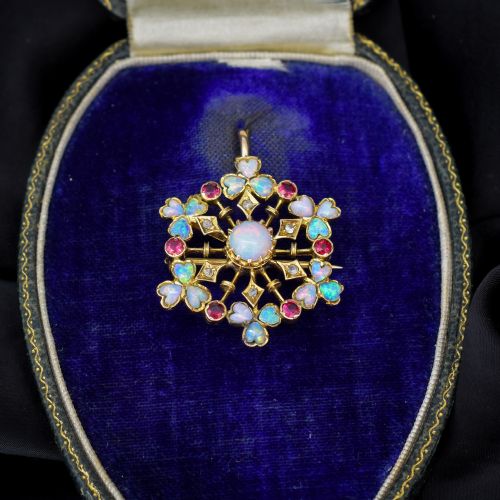
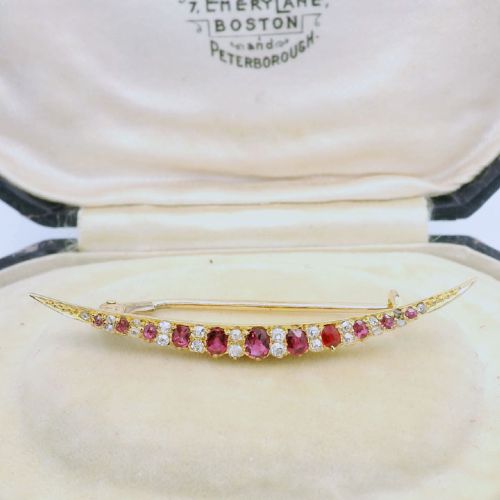
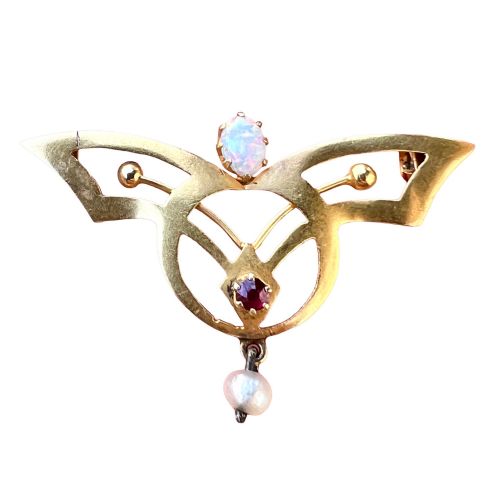
When you search for an edwardian ruby pin, you encounter small decorative brooches and pins made during the Edwardian era, alongside pieces from adjacent Victorian and Art Deco years. These items typically take the form of bar brooches, crescent mounts, or floral and insect motifs.
The version you are most likely to meet on this page is a gold or silver bar brooch set with rubies alongside diamonds or pearls. Makers of the period favoured lighter, lace-like metalwork that showcased gemstones to maximum effect on clothing.
How they were made
Goldsmiths worked with nine carat, fifteen carat, and eighteen carat gold, as well as silver and platinum, shaping the metals into slender bars, curving crescents, and naturalistic shapes like flowers and insects. Stones were securely set by hand, often combining brilliant-cut diamonds and pearls with natural rubies.
Techniques relied on careful piercing and wirework to keep the mounts light and airy, characteristic of the Belle Epoque aesthetic. Enamel work also appears on select pieces to add supplementary colour and detail to animal and floral subjects.
Animals make charming companions in miniature, as seen in pins shaped like cheeky monkeys, busy cockerels, and delicate butterflies.
What varies in quality
Quality rests upon the choice of materials and the fineness of the metalwork. Pieces constructed in higher carat gold or platinum with matched natural stones represent the upper echelon of the period's jewellery production.
Artisanship dictates value through the precision of the stone setting and the delicacy of the pierced gallery work. Simpler nine carat gold bar brooches with smaller gems sit at the accessible end of the scale, yet still demonstrate period charm.
The Edwardian Ruby Pin Glossary
- Bar brooch
- A horizontal pin featuring gems or decorative metalwork mounted along a central bar. This format was exceptionally popular for daily wear on lapels and cravats.
- Crescent brooch
- A piece shaped in the form of a waxing moon, frequently pavé-set with pearls, diamonds, or rubies. It represents a quintessential motif of the early twentieth century.
- Stickpin
- A long pin with a decorative head, originally used to secure neckties or lapels. The archive records examples set with pearls and rubies.
- Platinised silver
- A pairing where silver is treated or combined with platinum to maintain a bright, tarnish-resistant finish. This technique appeared on finer Edwardian mounts.
Edwardian Ruby Pin: Frequently Asked Questions
How do I wear an edwardian ruby pin?
These pieces suit lapels, cardigans, scarves, and hats where the pin stem can pass securely through tight weaves.
Ensure you fasten the safety catch or use a modern protector behind the clasp to prevent loss during daily wear.
Are these pins made of solid gold?
The listings show pieces fashioned from nine carat, fifteen carat, and eighteen carat yellow and rose gold, alongside silver and platinum.
Hallmarks or metal tests typically confirm the exact purity of the precious metals used in each mount.
What is the difference between Edwardian and Victorian pieces here?
Edwardian items tend to feature lighter, airier platinum and gold work with delicate floral, crescent, or insect designs.
Victorian pieces included in the selection often display heavier gold settings or naturalistic themes like butterflies and monkeys from the nineteenth century.
Can these brooches be worn as pendants?
Several listings combine brooch and pendant fittings, featuring hidden loops or hinged bales on the reverse.
This dual functionality allows you to slide the piece onto a chain for necklace wear or pin it directly to clothing.