



1920s Bar Brooch
These 1920s bar brooch designs combine fine stones with geometric mounts, offering an elegant fastening for lapels and scarves.
1920s Bar Brooch
A 1920s bar brooch is a linear jewelled pin typically featuring gemstones set along a narrow metal axis. The examples found here span the Art Deco period, along with related pieces from the Edwardian era and 1930.
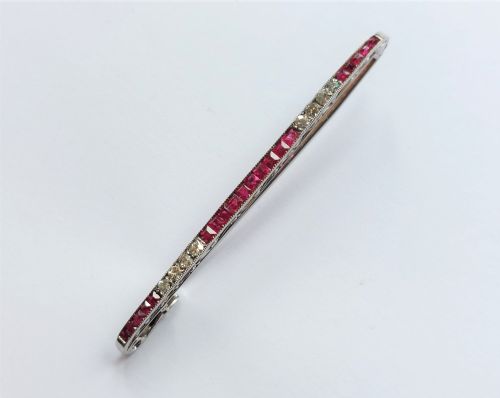
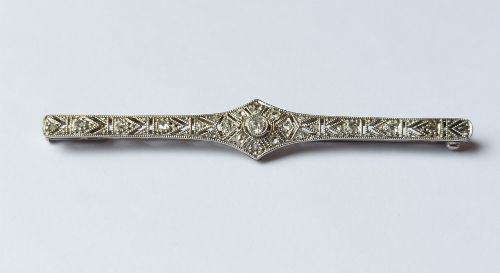
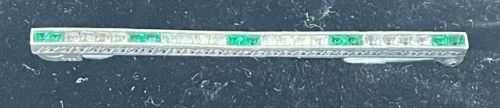
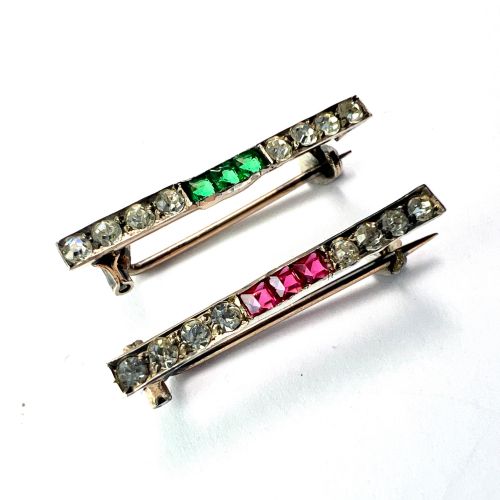
Most items on this page display characteristic Art Deco geometry, utilising precious metals like platinum and white gold alongside yellow gold. Alongside diamond settings, buyers will discover combinations incorporating rubies, emerald paste, pink pearls, and onyx.
Originating from British, French, and Continental workshops, these brooches serve as both functional fasteners and decorative ornaments. Their slim horizontal profiles make them versatile accessories for modern wear.
How they were made
Jewellers constructed these pieces primarily in platinum, white gold, 18ct gold, and silver, often combining metals to highlight specific gemstone arrangements. Platinum provided the necessary strength for delicate, intricate claw and channel settings without adding excessive bulk.
Diamonds form the centrepiece of many designs, accompanied by calibrated rubies, onyx, and paste stones to introduce vibrant colour contrasts. Pink pearls and faux emeralds appear in select mounts, secured via traditional bezel and prong techniques.
Materials recorded across current items include diamond, platinum, ruby, silver, 18ct gold, pink pearl, and paste.
What varies in quality
The sophistication of the metalwork and the selection of materials define the upper tier of these brooches. Fine platinum settings featuring substantial diamond carats contrast with simpler silver and paste or base metal combinations.
Execution of the Art Deco geometric motifs and the uniformity of the stone matching determine the refinement of an individual piece. Better examples show meticulous attention to prong placement and stone symmetry.
The 1920s Bar Brooch Glossary
- Art Deco
- A design style dominant in the 1920s characterised by clean lines, geometric symmetry, and stylised motifs. It succeeded the flowing curves of the Edwardian era.
- Bar brooch
- A slender, elongated pin designed to fasten clothing horizontally. The format allows for continuous gemstone settings across the lapel.
- Platinum
- A dense, durable white metal favoured in high-end 1920s jewellery for its ability to hold tiny diamonds securely in minimal metal. It remains strong over decades of wear.
- Paste
- Hand-cut glass or lead crystal used as a gemstone substitute in period jewellery. High-quality paste displays sharp facets and convincing brilliance.
- Calibrated stones
- Gemstones cut specifically to fit a precise space within a geometric channel or pattern. This technique requires expert lapidary skill.
1920s Bar Brooch: Frequently Asked Questions
How do I wear a bar brooch?
Bar brooches pin securely horizontally across jacket lapels, dress collars, or heavy knitwear. Their slim profile allows them to sit flat against fabrics without pulling or sagging.
Ensure the safety catch functions properly before fastening the pin to delicate silks or vintage woollens.
Are these brooches made of platinum?
Many items from this era utilise platinum, often combined with 18ct white gold or yellow gold. Platinum offered jewellers the strength needed for delicate, intricate stone settings.
Listings specify the exact metal composition for each individual piece, noting combinations of gold and platinum.
What stones are used in these pieces?
Diamonds form the primary stone in most designs, frequently accompanied by rubies, onyx, and pink pearls. Some pieces incorporate paste or faux emeralds to achieve colourful geometric patterns.
Stone combinations vary from all-diamond configurations to contrasting coloured gemstone clusters.