




Antique Diamond Dress Pin
An antique diamond dress pin offers refined sparkle, combining precious metals with brilliant stones across decades of distinct design.
Antique Diamond Dress Pin
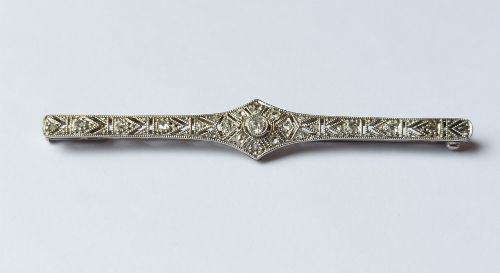
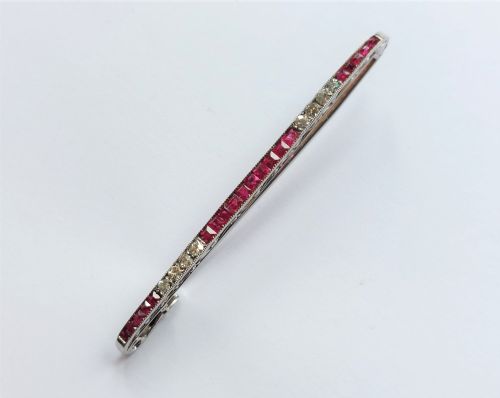
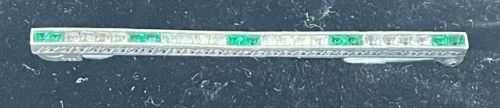
An antique diamond dress pin is a wearable jewel designed to fasten garments while displaying precious stones. Buyers searching for an antique diamond dress pin encounter pieces spanning from the late nineteenth century through the mid-twentieth century, with a strong representation of Art Deco designs.
Beyond the standard bar form, selections include floral motifs from the Victorian era and elaborate cluster brooches incorporating rubies, sapphires, and pearls. Origins stretch across Britain, France, Sweden, and continental Europe.
Materials and construction methods
Makers utilised platinum alongside yellow, white, and rose gold of various carats, frequently combining gold backs with platinum-topped settings to maximise the brilliance of the diamonds. Silver also appears in earlier Victorian work.
Gems were secured using traditional hand-cut techniques, housing old-cut diamonds alongside calibre-cut rubies, sapphires, onyx, and rock crystal quartz. Pierced openwork and millegrain edging defined the metalwork during the Edwardian and Art Deco periods.
The listings span multiple eras from the late Victorian period through the mid-century, with platinum and diamond Art Deco bar brooches forming a major part of the selection.
Factors of distinction
Quality rests upon the weight, cut, and integration of the stones alongside the intricacy of the metalwork. Superior examples display balanced proportions where the platinum or gold setting enhances rather than overpowers the central gems.
The presence of complementary coloured stones, such as natural pearls, rubies, or sapphires, alongside substantial diamond carat weights elevates a piece. Fine craftsmanship is further evident in crisp geometric piercing and secure, integrated pin mechanisms.
The Antique Diamond Dress Pin Glossary
- Bar brooch
- A slender horizontal pin format that became particularly popular during the Edwardian and Art Deco periods. These linear pieces often showcase a central cluster of stones.
- Old-cut diamond
- A diamond shape hand-faceted before modern machinery, characterised by a smaller table and higher crown. These stones produce a softer, distinctive candlelight sparkle.
- Millegrain
- A decorative technique featuring a row of tiny raised metal beads along the edge of a setting. This soft texture was widely used in Edwardian and Art Deco jewellery.
- Calibre-cut
- Coloured gemstones precisely shaped and cut to fit tightly into geometric channels or patterns. It requires high skill to execute within complex mounts.
- Paste
- A heavy, highly reflective lead glass used as a substitute for gemstones in historic jewellery. It is valued for its own antique charm rather than intrinsic mineral worth.
Antique Diamond Dress Pin: Frequently Asked Questions
How do I wear a dress pin?
These pieces function traditionally as garment fastenings on lapels, collars, or heavy scarves. They secure fabrics using a pin stem and safety catch or C-clasp.
Heavier platinum and multi-stone items require sturdier fabrics like wool or tweed to support the weight without sagging.
How are different periods told apart?
Victorian examples tend to use yellow or rose gold with organic motifs like foliage and natural pearls. Edwardian pieces favour delicate platinum work and softer garland styles.
Art Deco items shift entirely to strict symmetry, strong geometric lines, and contrasting black onyx or bright calibrated stones.
What metals are most common?
Gold in nine, fourteen, and eighteen carat variations forms the base of many Victorian and Edwardian items. Platinum emerges prominently in the nineteen-twenties as the preferred metal for securing diamonds.
Combinations of gold and platinum are frequent, utilising gold for structural warmth and platinum for a bright white face.
Are coloured stones natural?
Many listings feature untreated sapphires, rubies, and pearls alongside the primary diamonds. Continental and French pieces often incorporate vivid contrasting gems.
Some historical items utilise paste or synthetic elements, which are specified in the individual descriptions.