
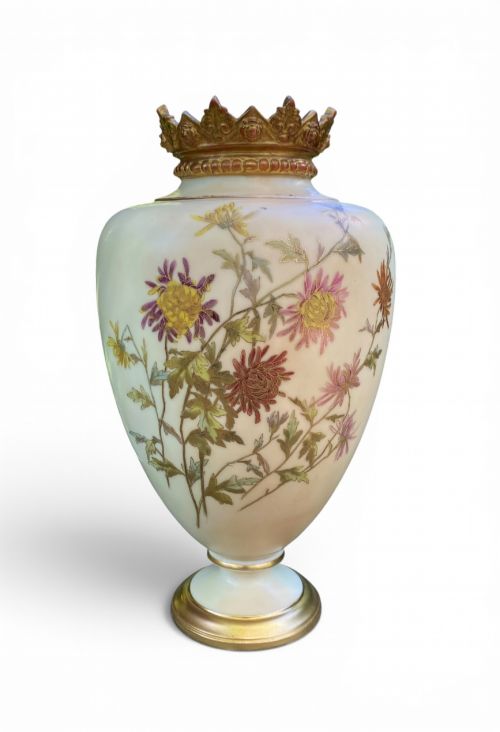


Edwardian Royal Worcester Urn
These Edwardian royal worcester urn and vase forms bring hand-painted porcelain and gilded detail straight into period interiors.
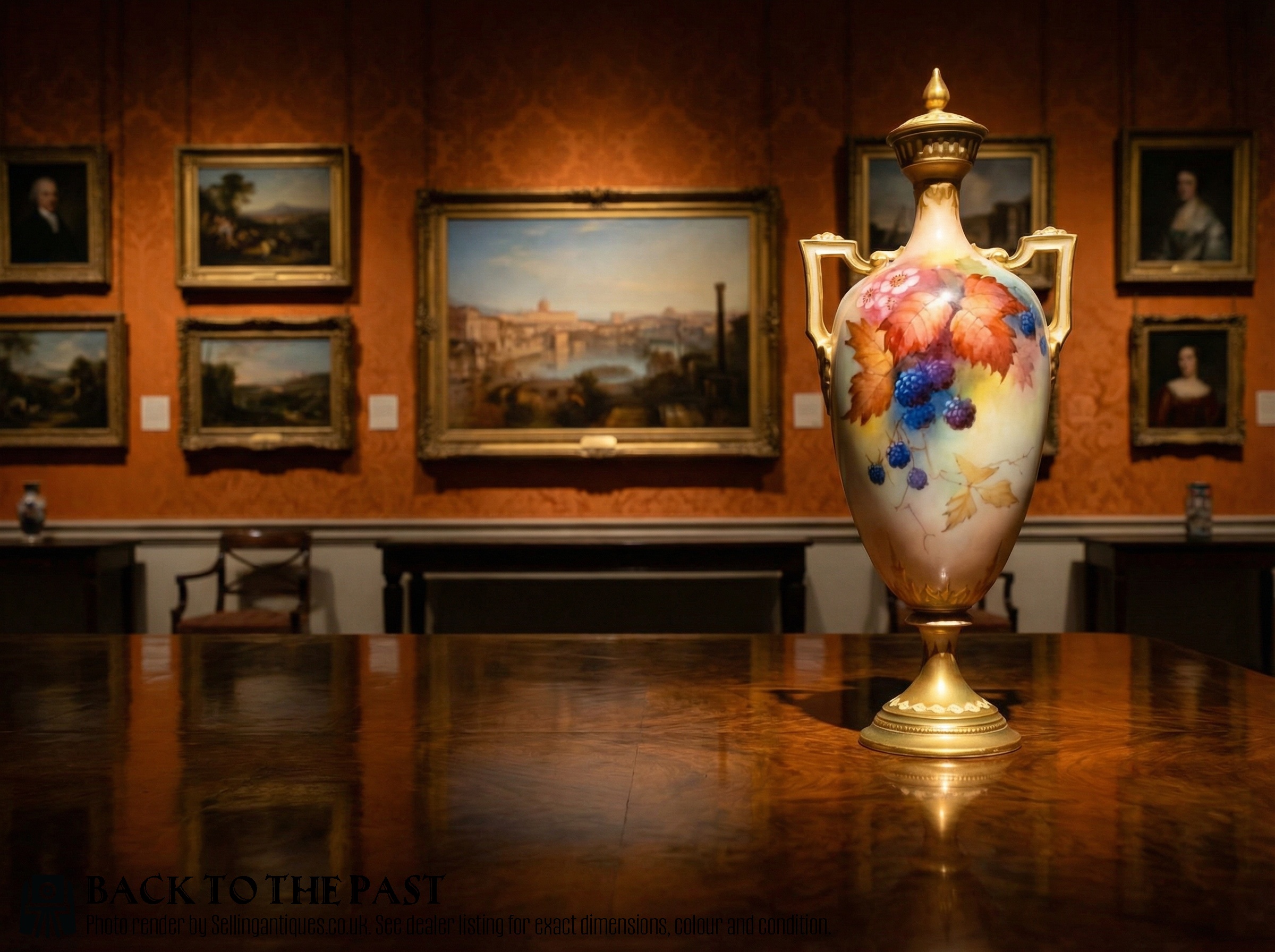
Edwardian Royal Worcester Urn
An Edwardian royal worcester urn or vase represents the pinnacle of early twentieth-century ceramic production, encompassing both cabinet pieces and larger decorative vessels. The pieces listed span the Edwardian era alongside late Victorian and subsequent decades, capturing a rich heritage of British ceramic design.
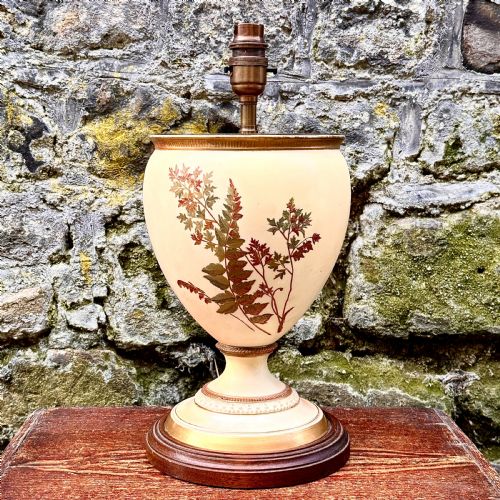
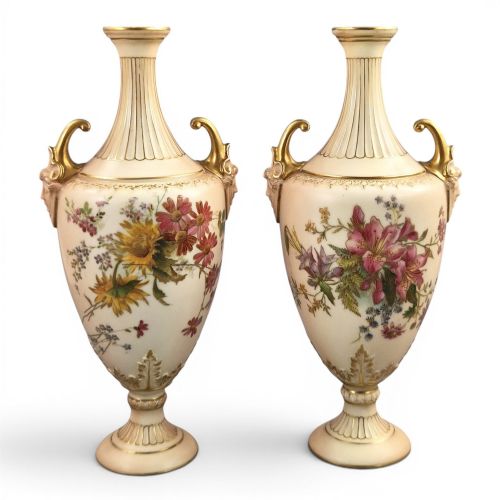
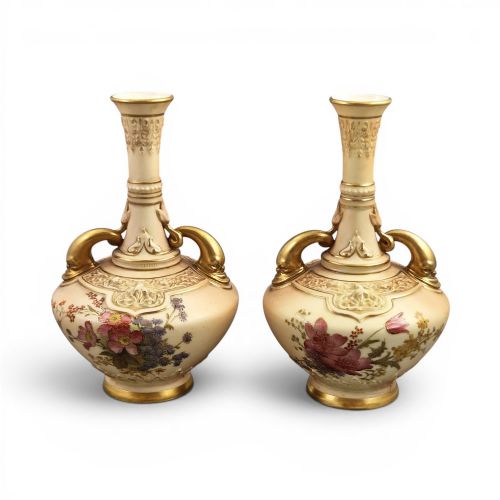
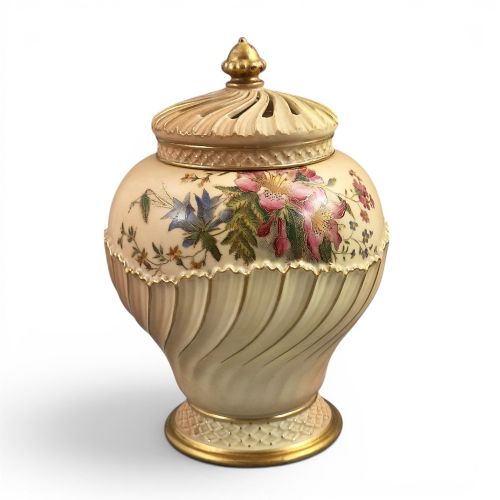
Buyers encounter forms ranging from standard vases and pot-pourri jars with covers to decorative ewers and table lamps. Blush ivory finishes, dolphin handles, and pierced gilt elements define the physical appearance of these items across the period.
Makers and decorators shaped these objects using porcelain bodies combined with enamel, gold leaf, gilding, and glaze. The resulting vessels display subjects including birds, floral motifs, fruit, and landscapes created by notable factory artists.
How they were made
Potters shaped fine porcelain bodies into ovoid vases, urns, and pot-pourri jars, often incorporating intricate pierced handles or reticulated panels. Artisans then applied delicate glazes, including the characteristic blush ivory tone found on many Edwardian examples.
Painters decorated the porcelain surfaces by hand using enamels to depict birds, florals, and landscapes, frequently signing their work. Guilders finished these pieces with gold leaf, gilt, and gilding to accentuate handles, rims, and collars.
Swans and storks frequently gaze across porcelain surfaces, immortalised in enamel by dedicated factory artists.
What varies in quality
The artistic merit of the hand-painted decoration separates standard production from exceptional pieces, particularly when signed by known factory artists. Brushwork detail in subjects such as storks, swans, pheasants, and fruit dictates the desirability of a vessel.
Complexity of form also influences standing, with reticulated work and applied elements like dolphin handles requiring advanced technical skill. The preservation of original gilding, gold leaf, and enamel colours remains central to the integrity of each piece.
Chivers·Walter Powell·Albert Shuck·James Stinton·C Baldwyn·William Hawkins·HH Price·George Owen·Harry Stinton·Kitty Blake·Hadley Ware
The Edwardian Royal Worcester Urn Glossary
- Blush ivory
- A soft, matte cream-coloured ceramic ground developed by Royal Worcester. It provides a muted background for floral and avian hand-painted decoration.
- Reticulated
- Openwork pierced through the porcelain body before firing. This intricate technique demonstrates exceptional skill by the potter, as seen in the work of George Owen.
- Pot-pourri
- A decorative jar or vase fitted with a pierced cover designed to diffuse scent. These vessels often feature inner lids alongside ornate outer covers.
- Gilding
- The application of gold or gold leaf to ceramic surfaces. It highlights rims, handles, and borders on fine porcelain pieces.
- Ewer
- A large jug with a wide spout and scrolled handle, styled after historical vessels. These serve as ornamental items rather than functional pouring jugs.
Edwardian Royal Worcester Urn: Frequently Asked Questions
What subjects appear on these painted vases?
Painters decorated these vessels with a variety of natural subjects including storks, swans, pheasants, highland cattle, and chrysanthemums. Artists rendered these motifs by hand across the porcelain surface.
Specific decorators specialised in particular themes, adding individual artistic value to each piece through detailed brushwork.
How are these porcelain items dated?
Factory date codes stamped or painted on the underside indicate the exact year of production for Royal Worcester items. These marks often consist of dots, letters, or numbers specific to the period.
Stylistic indicators such as blush ivory grounds and Edwardian shapes further help identify the era of manufacture alongside factory ciphers.
What is blush ivory porcelain?
Blush ivory is a distinctive matte cream ceramic finish introduced during the late Victorian period and continued into the Edwardian era. It mimics the warmth of ivory and serves as a base for floral painting.
This finish provides a subtle contrast to the gilt highlights and enamelled details applied across the body of the vase.
How should these fragile vessels be displayed?
Display these porcelain pieces away from direct sunlight to preserve the vibrant enamel colours and gold leaf details. Stable surfaces protected from accidental knocks ensure the safety of delicate handles and covers.
Table lamps require careful placement near appropriate electrical points while maintaining safe clearance around the ceramic body.