
Edwardian Rose Gold Chain
An edwardian rose gold chain brings a warm, coppery glow to the neck or wrist, prized for its distinctive hue and enduring craftsmanship.
Edwardian Rose Gold Chain
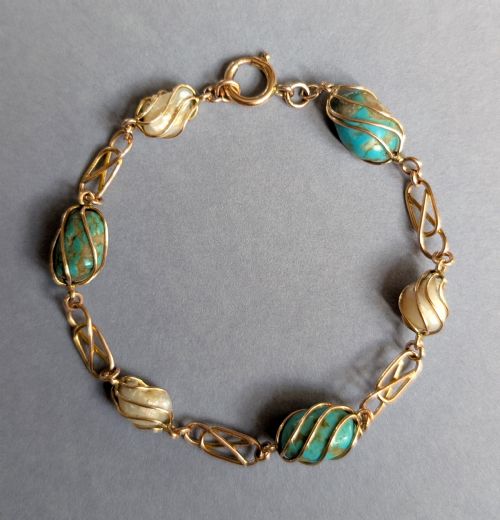
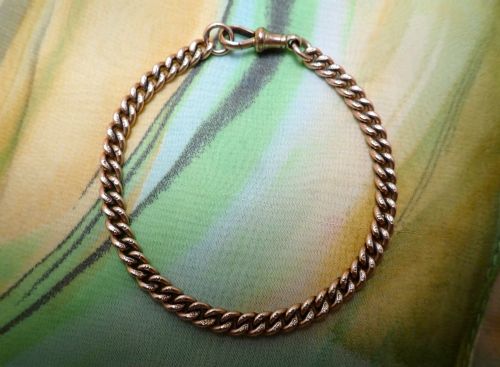
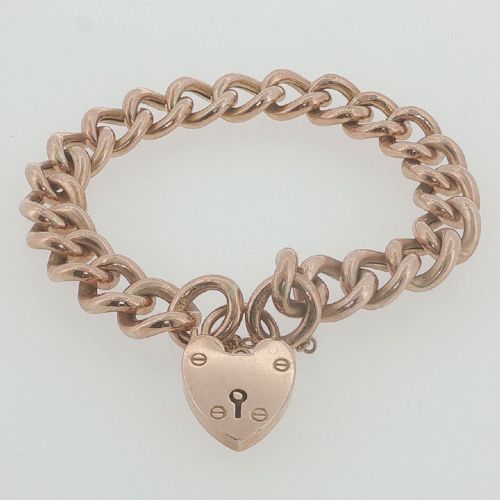
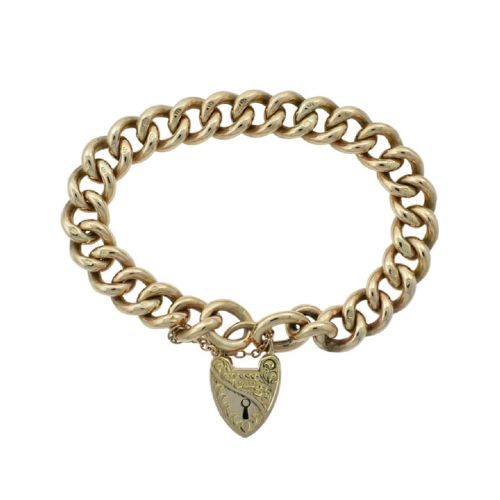
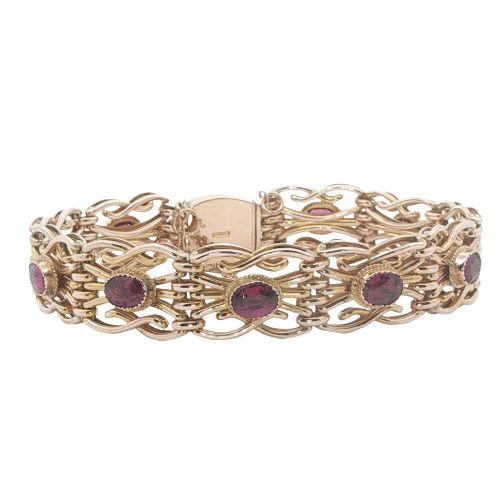
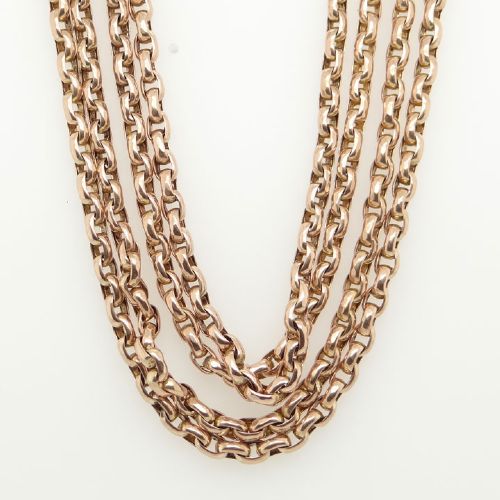
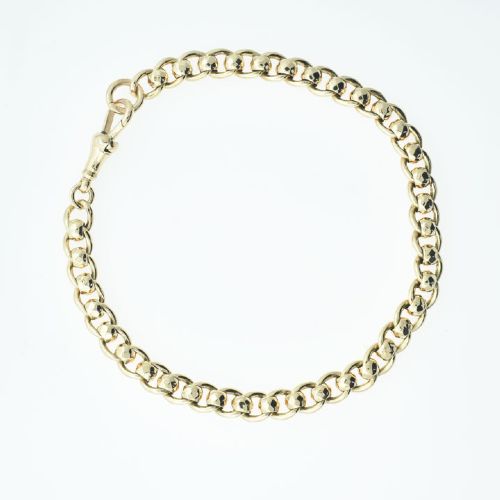
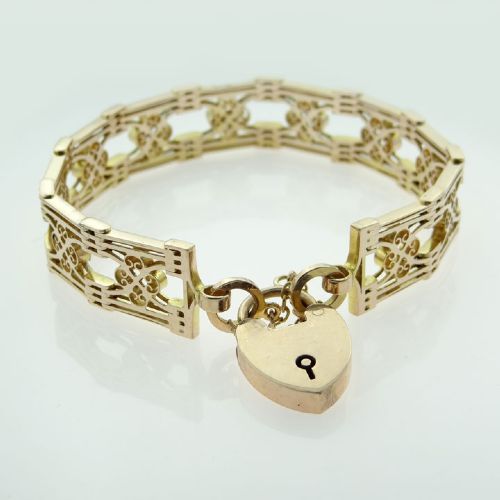
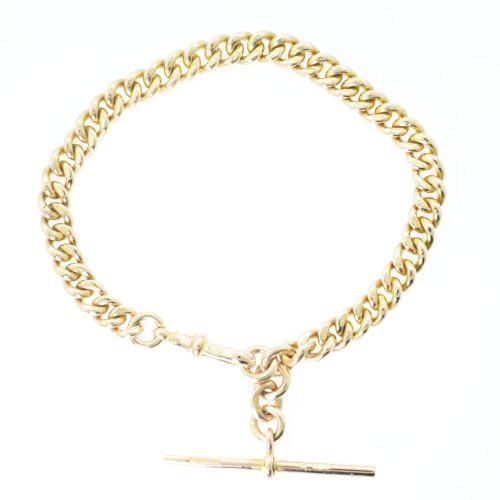
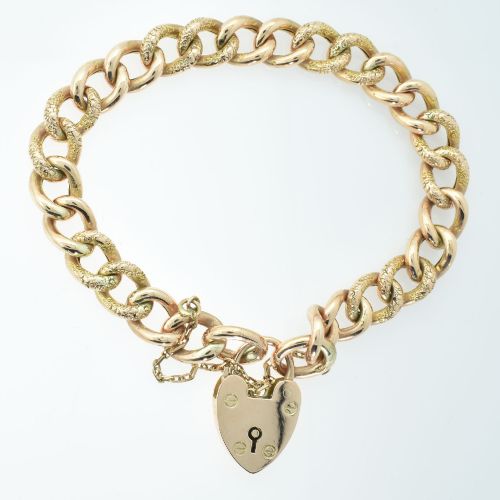
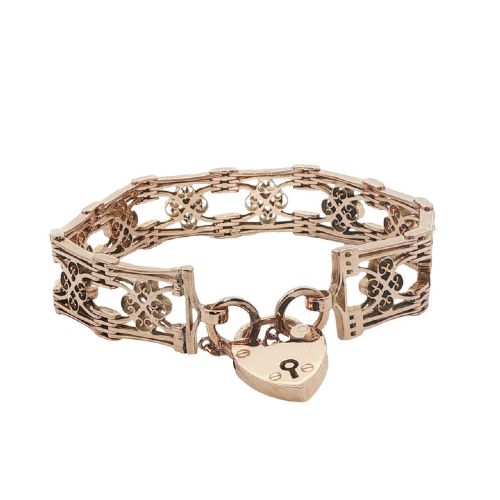
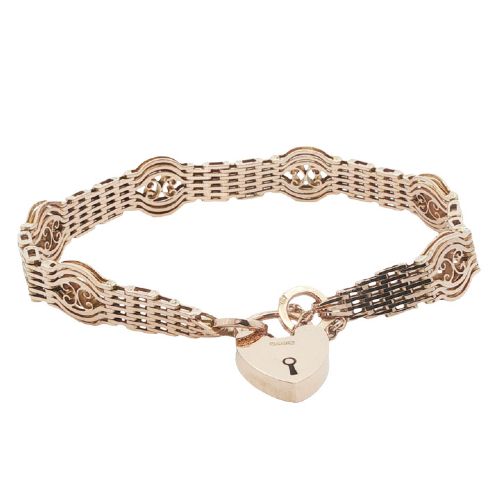
When searching for an edwardian rose gold chain, buyers encounter versatile lengths ranging from short bracelets to long guard chains designed to be doubled around the neck. The selection includes substantial pocket watch chains, standard link necklaces, and gate bracelets fitted with heart padlocks.
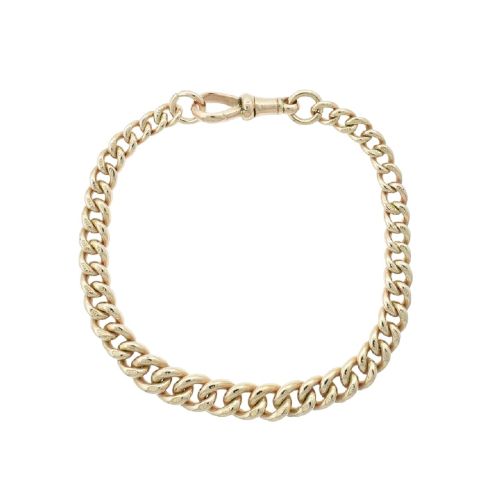
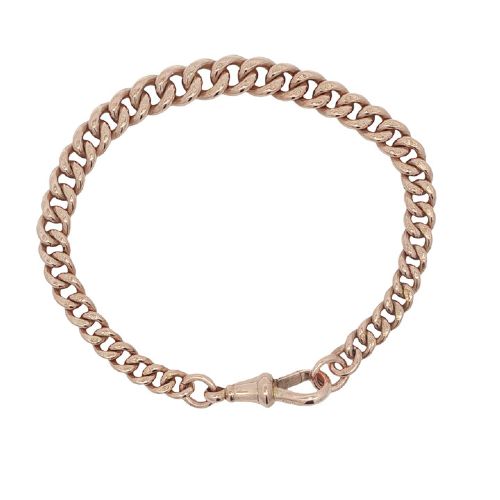
Most pieces date from the Edwardian period or the surrounding decades of the late nineteenth and early twentieth centuries. These items frequently incorporate decorative links such as curb, trombone, fetter, and fancy patterns influenced by Victorian and Edwardian design.
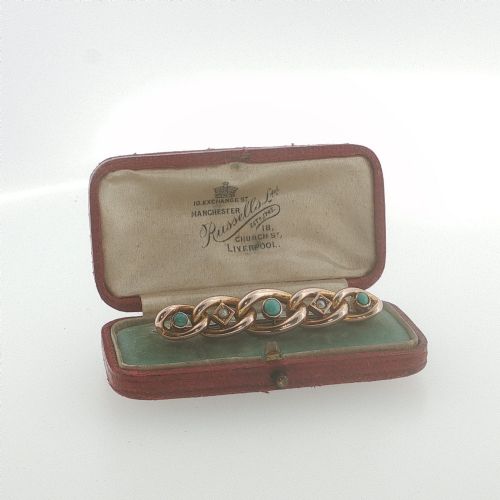
Many examples double as functional items from their era, retaining dog clips, T-bars, or clasps originally intended for pocket watches or fobs. Gemstones like turquoise, seed pearls, almandine garnets, and sapphires occasionally punctuate the gold work.
How they were made
The materials centre primarily on 9ct rose gold, alongside occasional higher carat variants, shaped into hollow or solid links. Goldsmiths formed individual links by hand or using early mechanical stamping, soldering them securely to construct flexible curb, cable, or fancy patterns.
Surface ornamentation involved hand engraving, niello inlay, or texturing such as half-engraved hatching on curb links. Gemstones like turquoise and seed pearls were flush or prong set into accent clasps, hearts, and brooches attached to the chains.
Edwardian Rose Gold Chain Retail Price Guide 2026
Typical asking prices for edwardian rose gold chain among the pieces listed under this phrase on Sellingantiques today, from the lower quarter to the upper quarter. They describe what is for sale here now, not the wider market.
What varies in quality
The overall substance of the item dictates its category, ranging from lightweight hollow chains to heavy solid links with considerable gram weight. Solid construction and robust gauge thickness provide greater durability against daily wear.
The complexity of the link formation and the presence of original components like Birmingham or Chester hallmarks, functional dog clips, and matching T-bars elevate a piece. Masterful hand engraving and secure gemstone settings further distinguish superior examples.
The Edwardian Rose Gold Chain Glossary
- Albert chain
- A pocket watch chain designed to be worn across a waistcoat or draped, featuring a T-bar at one end and a swivel clasp at the other.
- Dog clip
- A spring-loaded swivel fastener commonly used on watch chains to secure fobs, pendants, or pocket watches.
- T-bar
- A short transverse bar attached to the centre of an Albert chain, originally slid through a buttonhole to anchor the watch.
- Gate bracelet
- A flexible bracelet constructed from parallel vertical bars linked together, frequently finished with a heart-shaped padlock.
- Guard chain
- An exceptionally long chain worn draped around the neck or doubled over, sometimes incorporating a slide or watch clip.
Edwardian Rose Gold Chain: Frequently Asked Questions
How do I wear a long guard chain?
Long guard chains can be draped loosely in a single strand or doubled over the neck for a layered look. They often feature secure spring clasps or dog clips to attach pendants.
Originally utilised to secure pocket watches or eyeglasses, these versatile lengths adapt easily to modern wardrobe styling without modification.
What is an Albert chain used for today?
Modern wearers often utilise antique Albert chains as statement necklaces or wrap bracelets. The integrated T-bar and dog clip provide functional and decorative focal points.
These pieces transition seamlessly from historical pocket watch attachments to contemporary neckwear and wrist adornments.
How can I tell if the gold is solid?
Examining the weight relative to the physical volume of the links offers a reliable initial indicator. Solid examples carry a noticeable heft in the hand compared to hollow alternatives.
Hallmarks stamped on the links or T-bars provide official confirmation of the gold standard and assay office origin.
What makes rose gold different from yellow gold?
Rose gold achieves its warm reddish hue through a specific alloy mixture containing copper blended with yellow gold. The proportion of copper determines the depth of the pink or coppery tone.
This coloration gained immense popularity during the Victorian and Edwardian eras, offering a softer alternative to traditional bright yellow gold.