

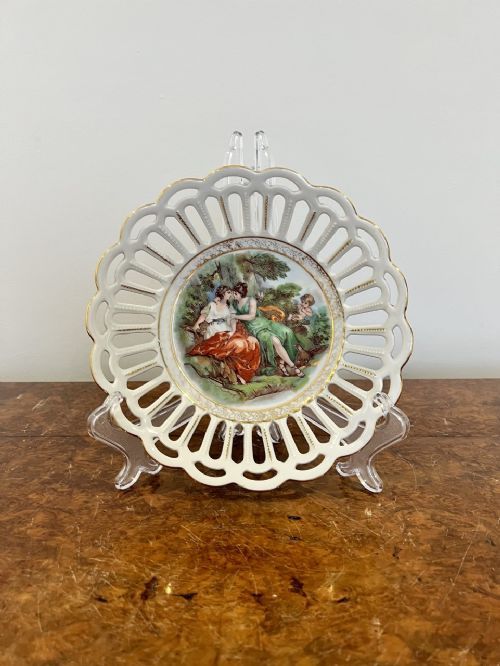


Edwardian Reticulated Porcelain
Edwardian reticulated porcelain pieces are pierced decorative ceramics featuring intricate openwork designs created to display refined craftsmanship.
Edwardian Reticulated Porcelain
Edwardian reticulated porcelain encompasses items such as vases, centrepieces, cabinet plates, and decorative dishes made primarily during the Edwardian period and adjacent decades. These objects combine functional ceramic forms with elaborate pierced designs and hand-painted motifs.
The selection here includes items originating from English and German makers, spanning from the late Victorian era through the Edwardian period into the 1940s. Forms range from large centrepieces adorned with putti to delicate cabinet plates and pot pourri jars.
What varies in quality
The standard of execution in the piercing and the precision of the openwork establish the distinction between ordinary production and superior work. Crispness in the reticulated lattice and balance in the overall form indicate greater skill.
The artistry of the painted decoration, whether featuring hand-painted florals, swans, or pheasants by named artists, influences the character of the piece. The application of gold gilt and enamel details further separates standard items from finer examples.
Edwardian Reticulated Porcelain Retail Price Guide 2026
Typical asking prices for edwardian reticulated porcelain among the pieces listed under this phrase on Sellingantiques today, from the lower quarter to the upper quarter. They describe what is for sale here now, not the wider market.
Listings span the periods from 1890 through the Edwardian era up to 1940, utilising porcelain, enamel, and gold gilt.
Royal Worcester·Schierholz
The Edwardian Reticulated Porcelain Glossary
- Reticulated
- Pierced or openwork decoration cut into the ceramic body before firing. This technique requires steady control to create intricate geometric or organic lattice patterns without distorting the vessel.
- Centrepiece
- A large decorative vessel placed in the middle of a table. These pieces often feature sculptural elements like cherubs or applied roses alongside pierced sections.
- Cabinet plate
- A decorative ceramic plate intended for display in a cabinet rather than for dining. They frequently showcase detailed hand-painted scenes by notable artists.
- Pot pourri
- A perforated jar designed to hold scented dried plant material. The pierced lid or body allows fragrance to diffuse while concealing the contents.
- Gilding
- The application of gold leaf or gilt to ceramic surfaces. This finish accentuates handles, rims, and moulded details.
Edwardian Reticulated Porcelain: Frequently Asked Questions
How do I identify Edwardian porcelain?
Edwardian porcelain is identified through period-specific manufacturing traits, maker marks, and stylistic indicators. Pieces from this era often merge late Victorian opulence with lighter aesthetic movement influences.
Stylistic cues include hand-painted naturalistic motifs, elaborate pierced work, and refined gilding typical of early twentieth-century ceramic production.
Where were these pieces made?
The pieces originate primarily from prominent English and German potteries and porcelain works. Factories such as Royal Worcester and Schierholz produced much of this output.
English works focused heavily on hand-painted cabinet pieces and pierced vases, while German manufactories frequently produced elaborate figural centrepieces.
How should I display cabinet plates?
Cabinet plates are best displayed using dedicated stands inside glass-fronted furniture designed to protect delicate surfaces. This placement keeps them safe from accidental damage.
Good lighting helps reveal the fine details of the hand-painted decoration and the precision of any reticulated borders.