

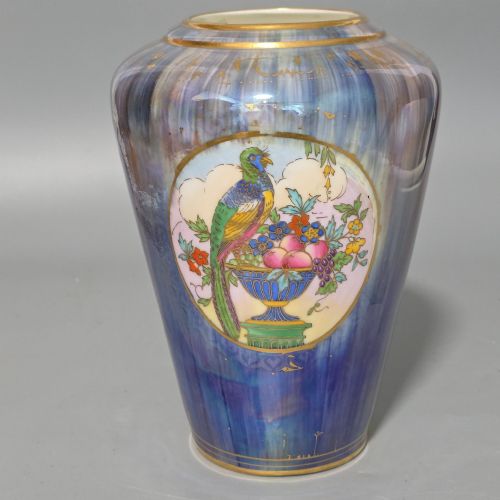


Edwardian Pottery Urn
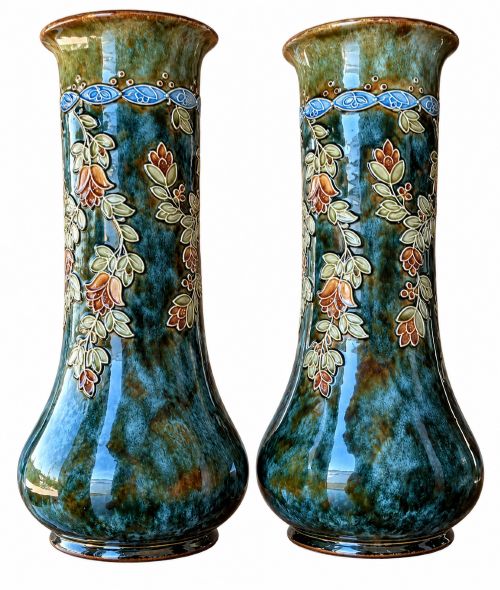
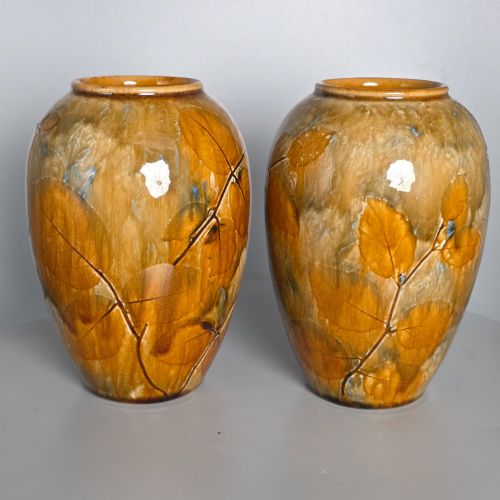
When you search for an edwardian pottery urn, you find ceramic vessels and vases shaped with classical lines and glazed surfaces.
Edwardian Pottery Urn
The edwardian pottery urn category covers decorative vessels and vases produced around the turn of the twentieth century. These pieces draw on classical urn shapes, often featuring handles, pedestal feet, or baluster profiles intended for display on mantelpieces and sideboards.
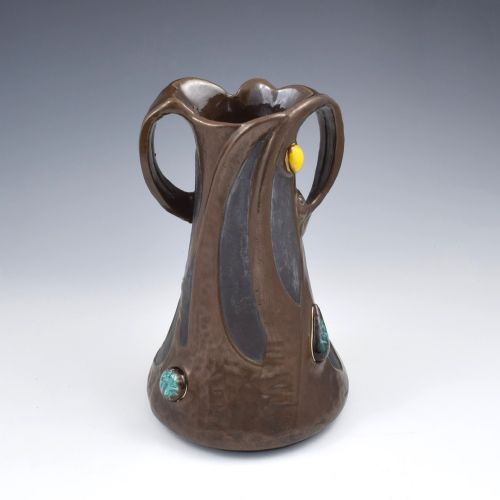
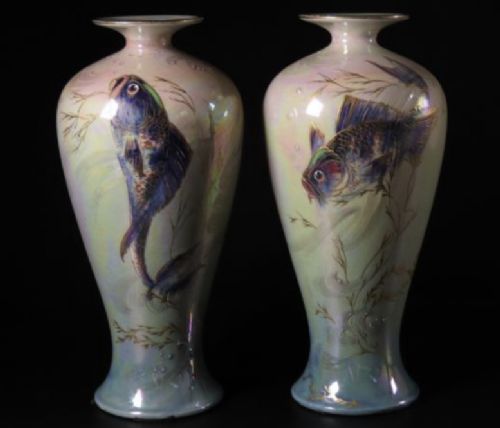
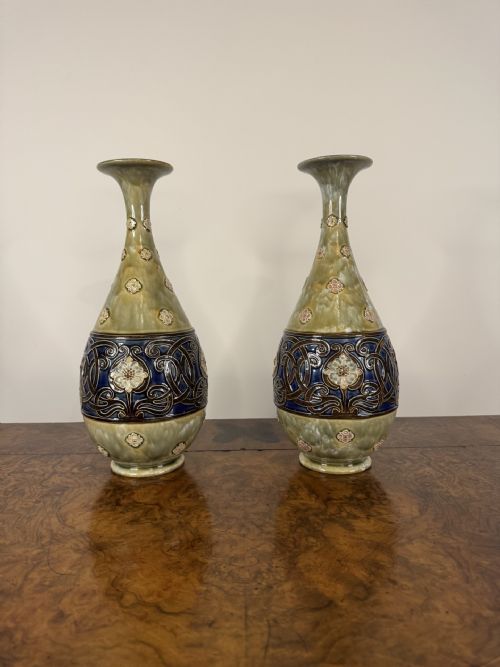
The versions most commonly met on this page span earthenware, stoneware, and porcelain, frequently reflecting the flowing lines of Art Nouveau or the robust forms of the Arts and Crafts movement. Makers of the period applied diverse glazes, enamel colours, and metallic lustre finishes to these decorative bodies.
Many of these vessels serve primarily as ornamental centrepieces rather than utilitarian containers for cut flowers. Their silhouettes range from miniature bud vases to large covered jars and twin-handled urns.
How they were made
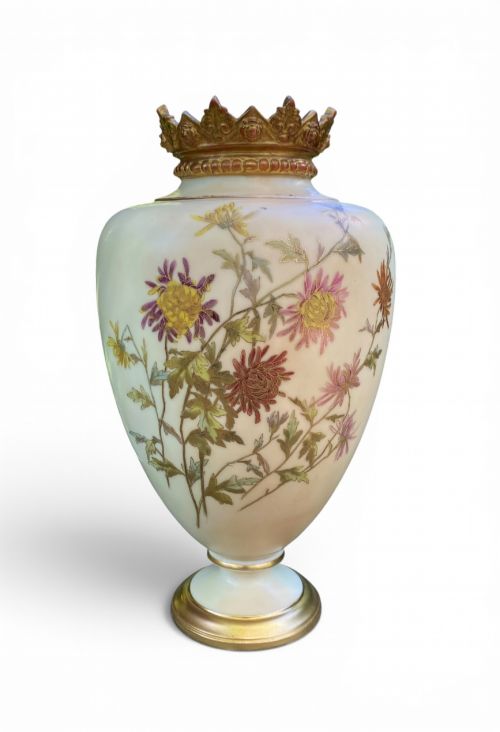
Potters of this era shaped earthenware, stoneware, and porcelain bodies either by throwing on a wheel or by slip-casting in moulds. The resulting vessels received hand-painted decoration, applied floral motifs, or specialised reactive glazes before undergoing high-temperature kiln firing.
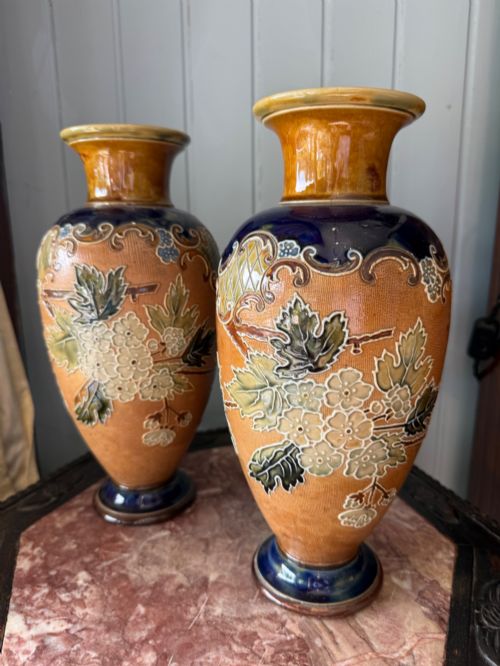
Techniques such as lustre glazing, enamel painting, and gold leaf application required multiple firings to achieve their iridescent or richly coloured surfaces. Specialised treatments like Slater's patent involved pressing lace patterns into damp clay bodies before glazing.
Several makers applied lace directly to damp clay to create textured backgrounds before glazing.
What varies in quality
The quality of an edwardian pottery urn rests upon the crispness of the moulding and the skill evident in the hand-painted or hand-enamelled decoration. Pieces bearing the signatures or monograms of accomplished studio artists demonstrate superior individual craftsmanship compared to standard factory output.
The depth, complexity, and stability of the glaze also separate finer examples from simpler commercial wares. Rich lustre effects, intricate slip work, and well-preserved gilt accents indicate higher production standards and greater workshop care.
Royal Doulton·Royal Worcester·William Moorcroft·Minton·Wedgewood
The Edwardian Pottery Urn Glossary
- Stoneware
- A robust, vitrified ceramic fired at high temperatures until non-porous. It accepts salt and reactive glazes readily, making it durable for decorative vessels.
- Lustre
- A type of pottery glaze containing metallic salts that produce an iridescent, metallic sheen upon reduction firing. This technique creates a shimmering surface effect.
- Secessionist
- A stylistic movement related to Art Nouveau that favoured geometric stylisation, simplified organic forms, and bold, flat patterns. It appears frequently on decorative ceramics of this period.
- Baluster
- An architectural shape featuring a rounded, swelling lower portion tapering upwards to a narrow neck. This profile is common in ornamental urns and vases.
- Imari
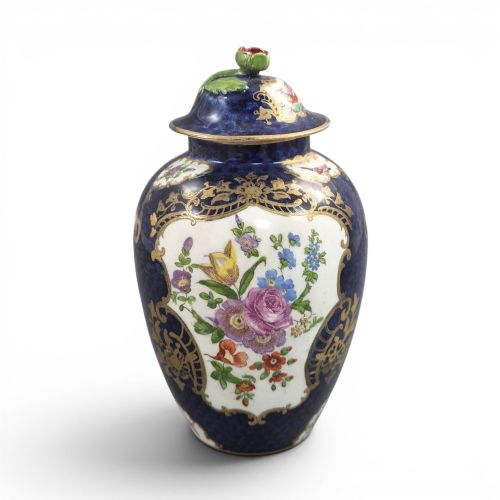
- A decorative style inspired by Japanese export porcelain, characterised by a palette of underglaze blue, iron red, and gilt highlights. British potteries adapted these patterns for various porcelain and earthenware bodies.
Edwardian Pottery Urn: Frequently Asked Questions
How were ceramic urns used in Edwardian homes?
Edwardian households utilised these decorative vessels primarily as ornamental centrepieces on mantelpieces, entrance halls, and drawing-room tables. While some held cut flowers or foliage, many remained empty simply to display their artistic glazes and forms.
Larger versions sometimes functioned as floor vases or garden planters, bringing decorative colour into interior living spaces and conservatories.
What is lustre ware?
Lustre ware is pottery finished with a metallic glaze that creates a rainbow-like sheen or reflective surface. Makers achieved this effect by firing metallic compounds in a kiln with reduced oxygen.
These pieces catch the light and change appearance depending on the viewing angle, making them prized decorative objects.
How should I care for antique pottery?
Display these ceramic pieces away from direct sunlight to prevent fading on enamelled or painted surfaces. Dust them gently with a dry, soft cloth rather than using liquid cleaners.
Avoid filling antique earthenware urns with water unless you know the interior is fully glazed and watertight, as porous bodies can absorb moisture.