
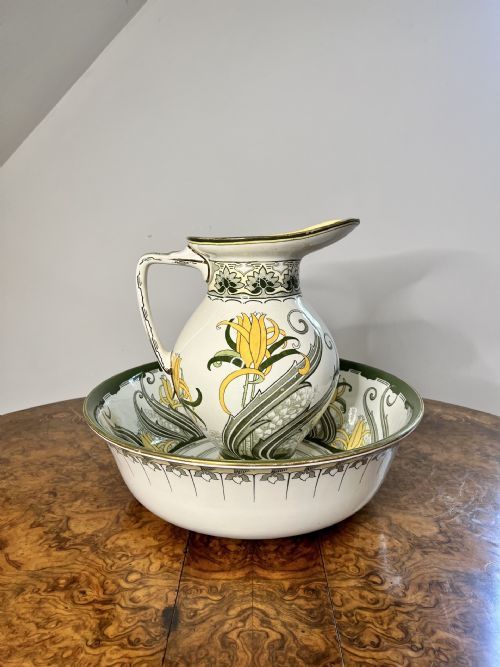
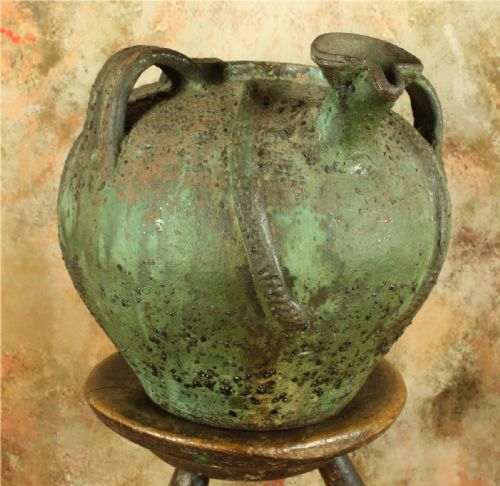

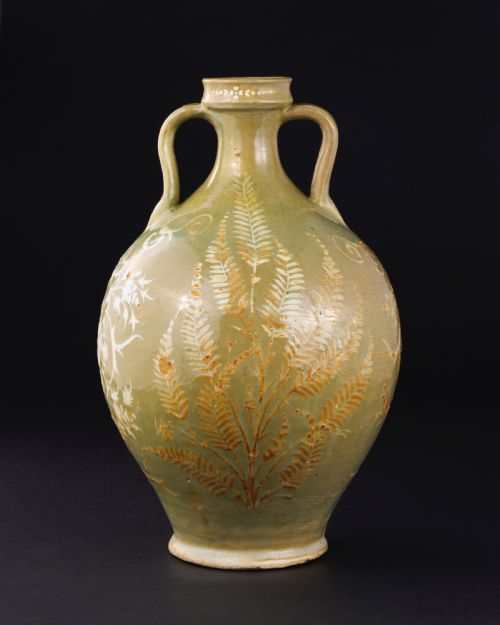





Green Glazed Earthenware Jug
A green glazed earthenware jug brings tactile warmth and rich colour to a room, offering both practical service and centuries of ceramic artistry.
Green Glazed Earthenware Jug
A green glazed earthenware jug is a vessel fashioned from porous clay and finished with a vitreous coating, spanning domestic water pitchers to decorative studio pottery. When exploring this selection, buyers frequently encounter pieces from the nineteenth and twentieth centuries alongside older continental examples.
The forms range from utilitarian cream jugs and water vessels to elaborate majolica pitchers and handled olive jars. Stylistic influences vary widely across these items, drawing on Victorian tastes, Arts and Crafts ideals, and regional folk traditions.
Origins stretch across English potteries, French provincial kilns, and Middle Eastern workshops, reflecting diverse techniques in throwing and casting. Each green glazed earthenware jug carries the distinct characteristics of its period of manufacture, from simple slip decoration to moulded botanical reliefs.
Materials and construction
The foundation of these vessels relies on earthenware and terracotta clays, fired at moderate temperatures to retain a porous body. Potters then apply lead-based, tin, or celadon glazes to seal the surface and impart deep botanical or olive hues.
Surface ornamentation is achieved through varied methods, including slip trailing, hand painting, and sculptural moulding. Studio potters often incorporated naturalistic motifs into the wet clay before glazing and firing, while factory-made examples utilised detailed moulds.
A bullrush and lily jug brings a swampy pond directly to the dining table.
Distinctions in quality
Quality in these pieces is dictated by the crispness of the moulded relief and the depth of the glaze application. Superior examples display an even coating that pools richly in recessed details without obscuring the underlying form.
The reputation of the maker and the intentionality of the studio design elevate certain vessels above standard domestic ware. Balance in the handle, stability in the base, and control during the firing process mark the work of skilled ceramicists.
Sir Edmund Elton·Doulton Burslem·Staffordshire·Doulton Lambeth·George Jones
The Green Glazed Earthenware Jug Glossary
- Earthenware
- Porous pottery fired at lower temperatures that requires a glaze to become impermeable to liquids. It forms the structural body for the majority of traditional pitchers and jars.
- Majolica
- A type of earthenware decorated with opaque tin glazes and fired with metallic oxide colours. This technique produces vibrant surfaces often utilised for botanical and figurative vessels.
- Celadon
- A pale green jade-like glaze originating in Asian ceramic traditions and adopted by various potters. It relies on iron oxides within a reduction firing to achieve its subtle colour.
- Slip
- Liquid clay suspended in water, used by potters for surface decoration or casting. It can be trailed onto the vessel body to create raised linear patterns before glazing.
- Terracotta
- Unglazed or clear-glazed fired red earthenware used for garden pots and storage vessels. The material is characterised by its reddish-brown colour and porous nature.
Green Glazed Earthenware Jug: Frequently Asked Questions
How do I clean an antique jug?
Dust the surface gently with a soft dry cloth to preserve the glaze and any subtle crazing. Avoid submerging older porous earthenware in water for extended periods.
Modern detergents can strip delicate historic surfaces, so stick to dry maintenance where possible. Use a slightly damp cloth only when strictly necessary for hygiene.
Can I use these jugs for fresh flowers?
Many sturdy nineteenth and twentieth-century vessels hold water well, but you should test for hairline fractures first. Place a small glass or plastic liner inside if you harbour doubts about porosity.
Historic glazes can occasionally contain lead, so avoid using decorative pitchers for drinking water or food service. Stick to floral display or dry storage to protect the interior lining.
How do I date a ceramic jug?
Examine the base for maker's marks, registry numbers, or impressed stamps that point to specific manufacturing years. The weight of the clay and the style of the handle also offer strong chronological clues.
Stylistic movements like Art Nouveau or Arts and Crafts provide reliable windows of production. Comparing the glaze texture with known period examples helps confirm the age.