
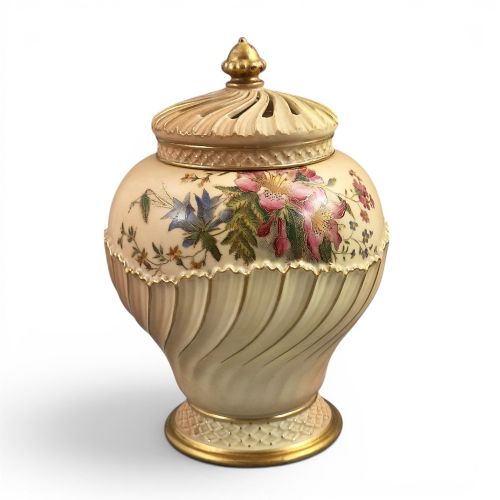


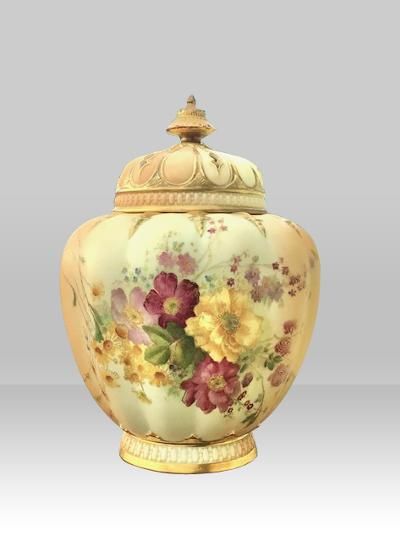


Edwardian Pot Pourri Jar
These edwardian pot pourri jar pieces bring delicate ceramic artistry and fragrant dried petals together into the home with distinct Edwardian elegance.
Edwardian Pot Pourri Jar
An edwardian pot pourri jar is a covered ceramic vessel designed to hold scented botanicals, appearing primarily as pedestal vases and decorative jars. The selection on this page centres heavily on porcelain and earthenware forms shaped during the Edwardian period, along with related pieces dated across the early twentieth century.
Makers such as Royal Worcester dominate the available forms, often utilising blush ivory grounds and hand-painted motifs. Collectors will also encounter Moorcroft Macintyre & Co examples alongside the main Royal Worcester output, spanning styles from Victorian and Late Victorian through to Art Nouveau.
How They Were Made
These vessels are shaped from porcelain or earthenware, then finished with glaze and delicate hand-painting. Artisans applied gold leaf, gilding, and enamel highlights to accent the ceramic bodies.
Renowned painters such as C Baldwyn, Kitty Blake, Jas Stinton, and the output of Hadley Ware decorated these surfaces with scenes of swans, florals, and birds before a final kiln firing.
Some covers feature tiny pierced holes precisely sized to let the scent escape without letting the petals tumble out.
What Varies in Quality
Quality rests principally on the artistry of the painted decoration and the reputation of the studio or artist signing the work. Pieces bearing detailed hand-painted wildlife or florals by known decorators command greater attention than standard decorated wares.
The sophistication of the gilding, the preservation of the enamel work, and the presence of a matching original cover determine the standing of each jar within the broader range.
Royal Worcester·Moorcroft Macintyre And Co
The Edwardian Pot Pourri Jar Glossary
- Blush ivory
- A matte cream-coloured porcelain ground developed by Royal Worcester that mimics the warm tone of elephant ivory. It provides a soft backdrop for hand-painted floral and animal scenes.
- Pot pourri
- A mixture of dried petals and spices traditionally placed inside a lidded jar to perfume a room. The pierced covers on these vessels allowed the fragrance to circulate.
- Gilding
- The application of gold leaf or gold paint to ceramic surfaces for ornamentation. It frequently outlines handles, rims, and painted panels on Edwardian porcelain.
- Hadley Ware
- A line of earthenware produced by Royal Worcester known for subtle, slip-painted decoration and organic forms. It reflects the artistic shifts of the late nineteenth and early twentieth centuries.
Edwardian Pot Pourri Jar: Frequently Asked Questions
How do I use a pot pourri jar?
You fill the interior body of the jar with dried flowers, herbs, and natural oils, then place the pierced cover back on top. The small holes in the lid allow the scent to permeate the room gently over time.
Keep the vessel in a dry space away from direct sunlight to preserve both the ceramic glaze and the potency of the botanicals inside.
Who painted these ceramic jars?
Many jars feature hand-painted artwork by notable ceramic artists associated with major potteries, including C Baldwyn, Kitty Blake, and Jas Stinton. Their signatures often appear on the body of the piece alongside factory marks.
These artists specialised in detailed natural history subjects such as swans, birds, and botanical studies rendered in enamel and fine glazes.
How do I date an edwardian pot pourri jar?
Dating relies on factory pottery marks stamped or painted on the underside of the ceramic base, which changed shape and style across different decades. Stylistic markers such as blush ivory glazes and Art Nouveau motifs also point to the early twentieth-century Edwardian era.
Comparing the shape number and the artist signature helps narrow down the specific year of production within the broader period.