

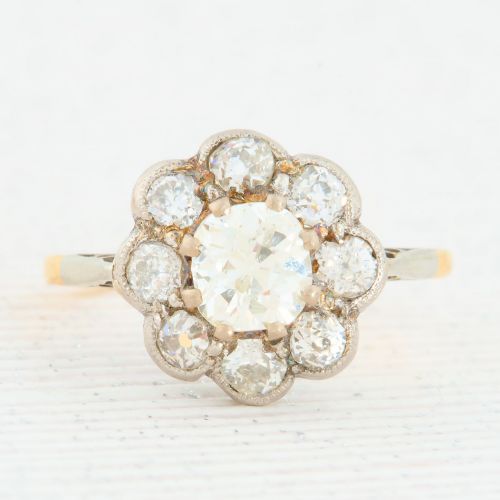

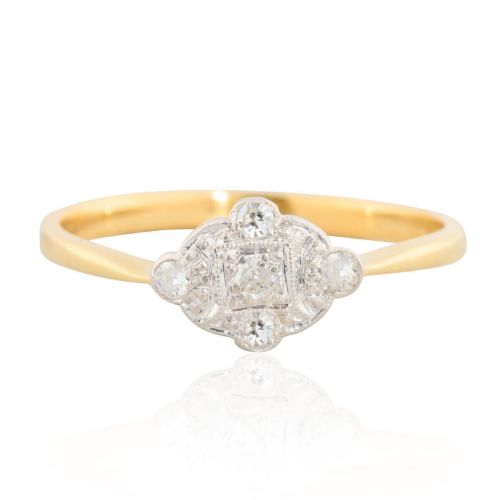
Edwardian Platinum Gold Ring
When choosing an edwardian platinum gold ring, you select a refined piece combining durable precious metal with enduring stones.
Edwardian Platinum Gold Ring
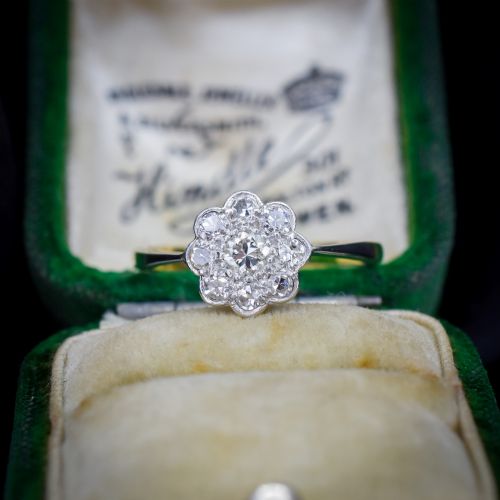
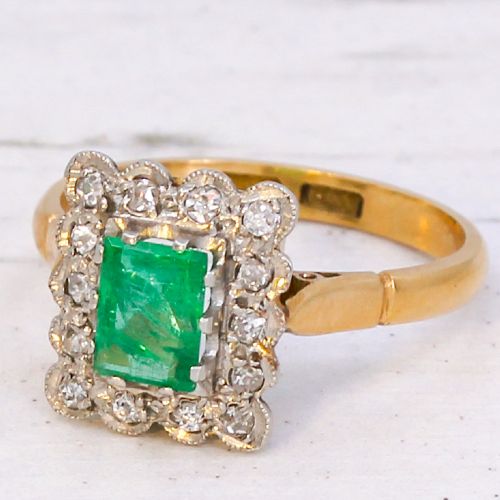
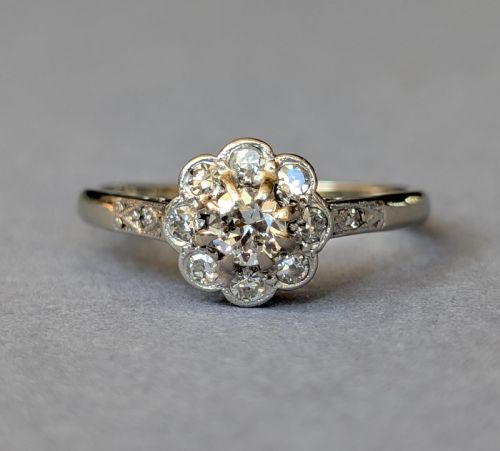
An edwardian platinum gold ring brings together the brightness of platinum settings with the warmth of 18ct yellow or white gold shanks. These jewels originate predominantly from the early twentieth century, spanning the Edwardian and Art Deco periods, alongside later vintage interpretations.
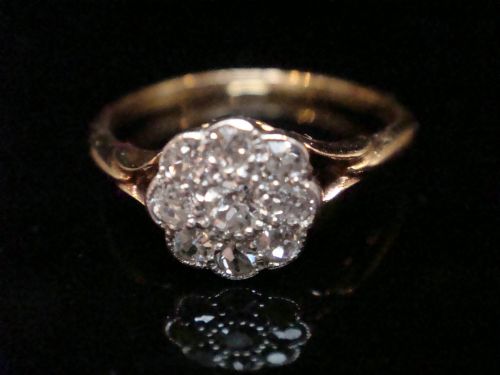
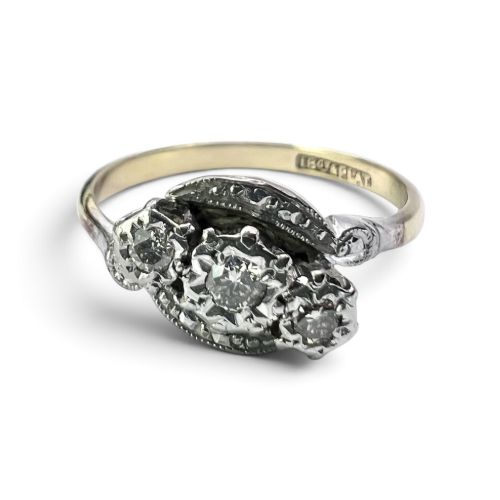
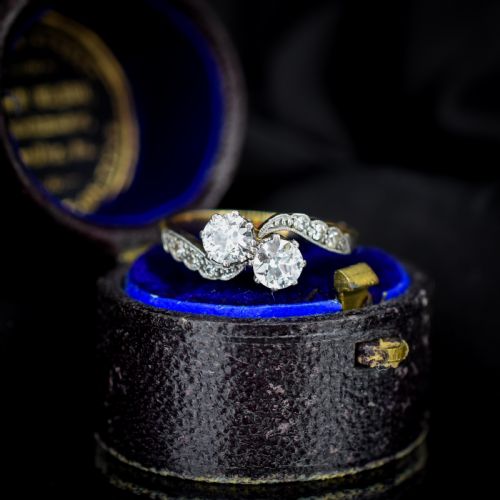
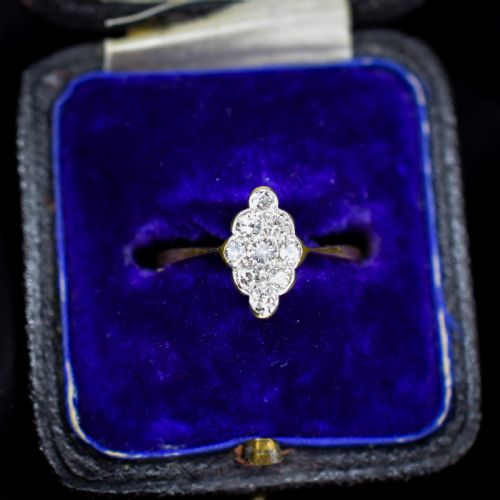
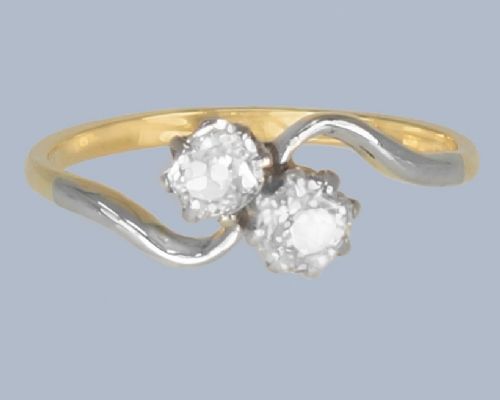
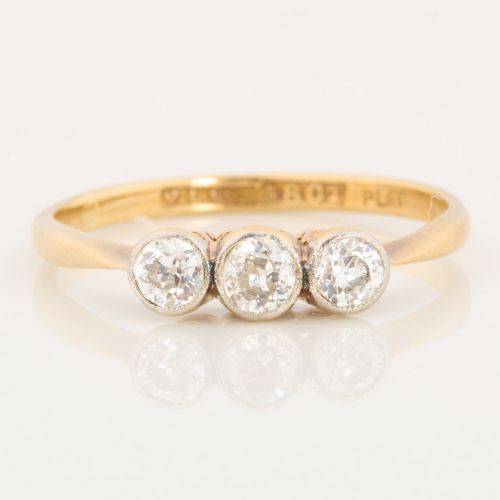
The most common forms encountered on this page include traditional cluster and daisy designs, multi-stone trilogy layouts, and romantic two-stone twist or 'Toi Et Moi' configurations. Central motifs often showcase old cut diamonds accompanied by sapphires, rubies, pearls, or opals.
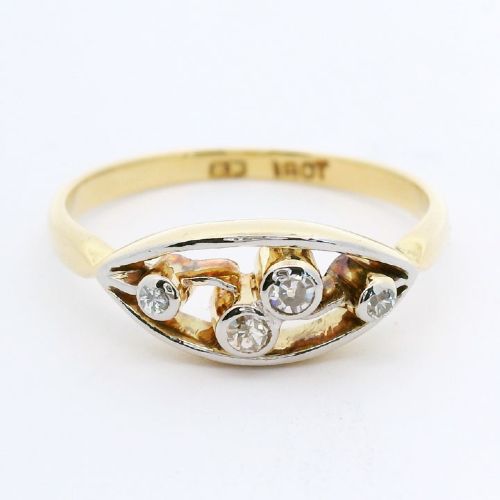
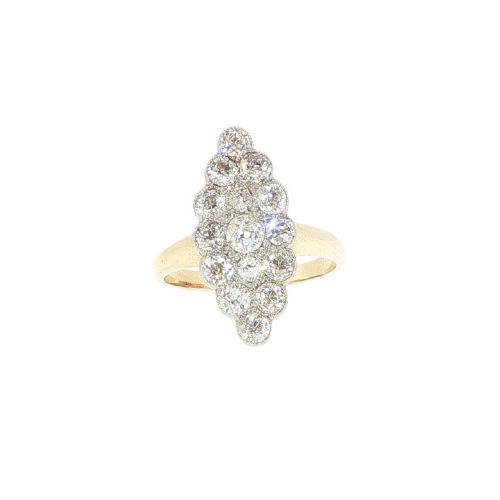
Beyond standard engagement rings, the selection occasionally extends to dress rings and navette shapes that sit lengthwise along the finger. Each piece reflects the detailed craftsmanship characteristic of the period's jewellers.
How they were made
Makers utilised a dual-metal technique, fusing durable platinum tops directly onto 18ct gold shanks. This method allowed artisans to secure delicate old cut diamonds and coloured gemstones within minimal, crisp metal claws or grain settings without obscuring the stones.
Gems were hand-cut, yielding characteristic facets such as old European, old mine, and rose cuts that scatter candlelight distinctively. Shanks were cast and finished by hand, frequently incorporating subtle shoulder details or engraved galleries.
Listings span periods from the late nineteenth century through to the 1950s, dominated by Edwardian and Art Deco aesthetics.
What varies in quality
The distinction between tiers rests upon the proportions and matching of the central stones relative to the supporting metalwork. Superior examples display harmonious stone weight and pristine claw integrity that preserves the original profile without excessive re-tipping.
Overall refinement shows in the crispness of the platinum top-plate and the balance of the gold shank. Pieces accompanied by gemmological reports or retaining untouched French export marks often represent higher manufacturing standards.
The Edwardian Platinum Gold Ring Glossary
- Old cut diamond
- A hand-faceted diamond cut before modern automated standards, typically featuring a smaller table, higher crown, and open culet.
- Toi et Moi
- A two-stone ring style translating to 'You and Me', symbolising two souls joined together in a twist or crossover design.
- Navette
- A boat-shaped ring setting that tapers to points at either end, designed to sit lengthways along the finger.
- Cluster
- An arrangement of smaller gemstones surrounding a larger central stone, frequently resembling a daisy flower.
- Trilogy
- A three-stone ring configuration representing past, present, and future.
Edwardian Platinum Gold Ring: Frequently Asked Questions
How do I wear an old cut diamond ring daily?
These rings pair easily with plain bands or stand alone as a feature piece on the hand. Their low profile makes them suitable for regular wear when treated with reasonable care.
Removal during heavy manual tasks protects the delicate claw settings and softer gold shanks from unnecessary wear over time.
What is the difference between Edwardian and Art Deco rings?
Edwardian pieces generally lean towards organic motifs, lace-like platinum work, and flowing garland styles. They prioritise softer romantic lines alongside pearls and old cut diamonds.
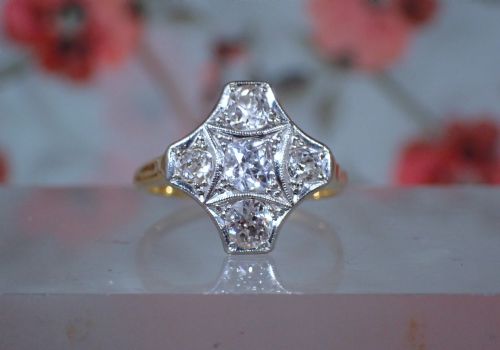
Art Deco examples shift towards geometric symmetry, bolder lines, and sharper angles, often incorporating calibrated sapphires alongside transitional cut diamonds.
Can these engagement rings be resized easily?
Most rings featuring an 18ct gold shank can be adjusted by a skilled jeweller accustomed to antique pieces. The process requires care to avoid disturbing the platinum top-plate.
Consulting a specialist ensures the structural integrity of the shoulders and any adjacent grain-set stones remains intact during alteration.
Why use platinum on top of gold?
Platinum provided a bright white surface that reflected light through diamonds without tarnishing or requiring rhodium plating. Combining it with a gold shank offered structural strength combined with traditional warmth.
This clever pairing defined early twentieth-century jewellery manufacturing before white gold became widely adopted.