
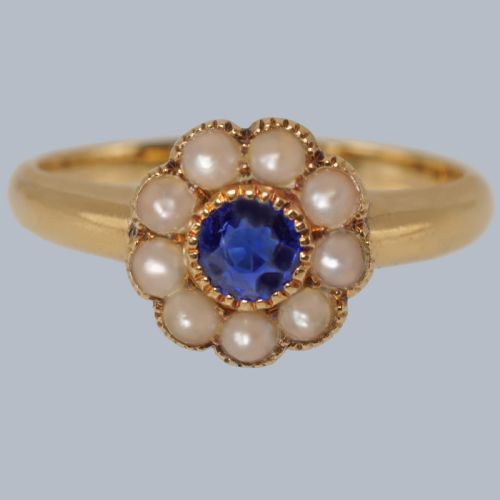


Gold Pearl Engagement Ring
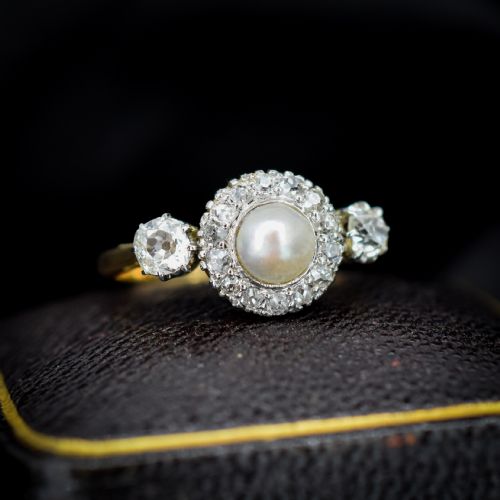
A gold pearl engagement ring combines the soft lustre of natural or cultured pearls with the brilliance of old cut diamonds set in gold.
Gold Pearl Engagement Ring
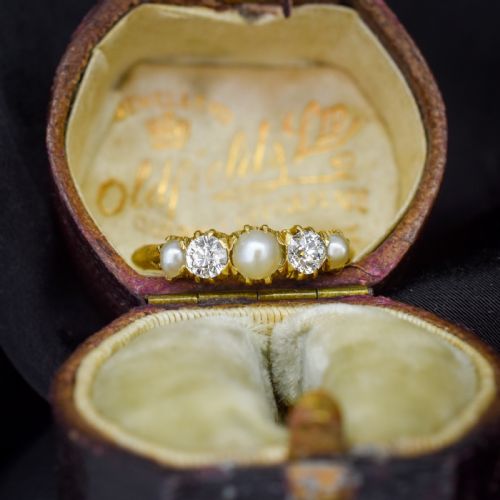
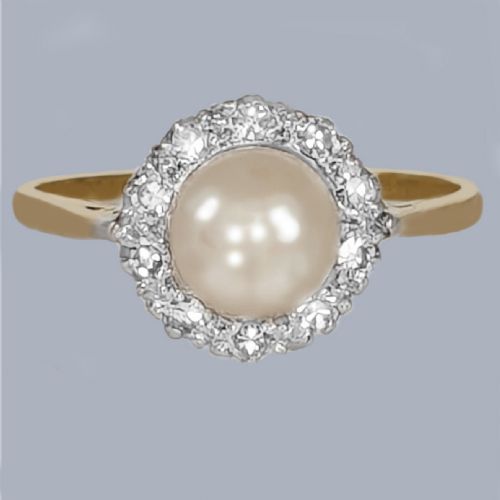
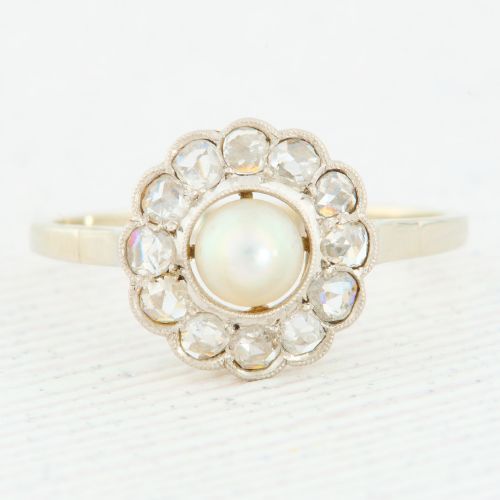
A gold pearl engagement ring spans periods from the Victorian era through Edwardian, Art Deco, and Mid-Century designs, reflecting shifting aesthetic movements over decades. Buyers searching for a gold pearl engagement ring will encounter cluster formats, trilogy settings, and crossover configurations.
Edwardian pieces dominate the selections, frequently pairing pearls with old cut diamonds in mountings of 18ct yellow gold and platinum. Victorian examples often utilise split pearls or robust band structures alongside diamonds.
Later mid-century iterations introduce clean lines in 18ct white gold or yellow gold, maintaining the traditional pairing of diamonds and pearls. The central focus remains the contrast between organic pearl luminescence and faceted diamond sparkle.
Materials and construction methods
Goldsmiths utilised 18ct yellow gold, 18ct white gold, and platinum to fabricate the structural mounts for these rings. Platinum gained prominence during the Edwardian period for intricate, lace-like settings that held diamonds securely around the central pearl.
Gemstones incorporated into the settings include natural pearls, saltwater pearls, cultured pearls, split pearls, and seed pearls, accompanied by old cut and rose cut diamonds. Rubies and sapphires occasionally appear as accent stones in cluster configurations.
French workshops of the early twentieth century favoured the romantic Toi et Moi layout, intertwining pearls and diamonds in everlasting embrace.
Quality factors in period rings
The distinction between tiers rests upon the origin and surface condition of the pearl, alongside the cut and carat weight of the accompanying diamonds. Natural saltwater pearls command higher regard than cultured counterparts.
Craftsmanship in the metalwork, particularly the delicacy of platinum claw settings and the symmetry of cluster arrangements, indicates the skill of the original workshop.
The Gold Pearl Engagement Ring Glossary
- Cluster ring
- A ring featuring a central gemstone surrounded by a ring of smaller stones, typically diamonds encircling a pearl. This layout maximises visual impact and light reflection.
- Old cut diamond
- A precursor to modern brilliant cuts, hand-facetted with a smaller table and a higher crown to catch candlelight. These stones display distinct proportions unique to historical cutting techniques.
- Trilogy ring
- A three-stone ring symbolising past, present, and future, often combining a central pearl with flanking diamonds.
- Toi et Moi
- A French term meaning you and me, denoting a crossover ring design featuring two main gems sitting side by side.
- Split pearl
- A half-pearl sliced and polished for use in flush or closed-back settings where a full spherical pearl would sit too high.
Gold Pearl Engagement Ring: Frequently Asked Questions
Are pearls durable enough for daily wear?
Pearls possess a softer composition than diamonds, requiring more mindful care during daily activities. Owners often remove them during strenuous tasks to protect the nacre from surface abrasion.
Setting styles also influence longevity, as bezel or basket mountings offer greater physical protection to the pearl than high-set claws.
How do I identify an Edwardian ring?
Edwardian rings frequently utilise platinum-topped yellow gold settings to create lightweight, intricate lace patterns. The incorporation of old cut diamonds alongside natural pearls is typical of this period.
Maker marks and hallmarking conventions stamped inside the band also assist in verifying the era of manufacture.
What is the difference between natural and cultured pearls?
Natural pearls form organically in molluscs without human intervention, making historical examples exceptionally scarce. Cultured pearls are grown with human assistance by introducing a nucleus into the oyster.
Both types appear across various periods, with natural specimens typically found in antique Edwardian and Victorian pieces.
How should I clean a vintage ring?
Cleaning requires gentle methods, using a soft damp cloth to wipe the pearl rather than harsh chemical dips. Harsh liquids can damage the organic nacre layers and weaken historic settings.
Periodic inspection by a jeweller ensures the security of the claws holding both the pearl and the diamonds.