



Natural Pearl Engagement Ring
A natural pearl engagement ring carries the soft lustre of organic gemmology paired with old cut diamonds.
Natural Pearl Engagement Ring
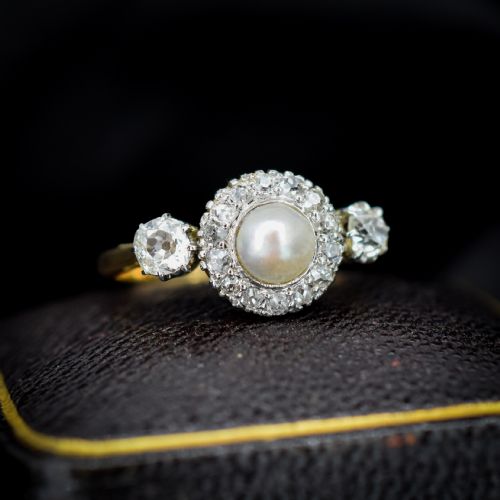
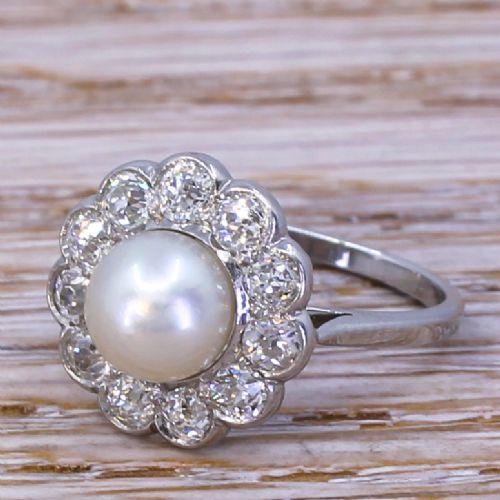
A natural pearl engagement ring brings together saltwater pearls and early twentieth century diamond work. You will most frequently meet Edwardian cluster rings and Art Deco crossover designs on this page.
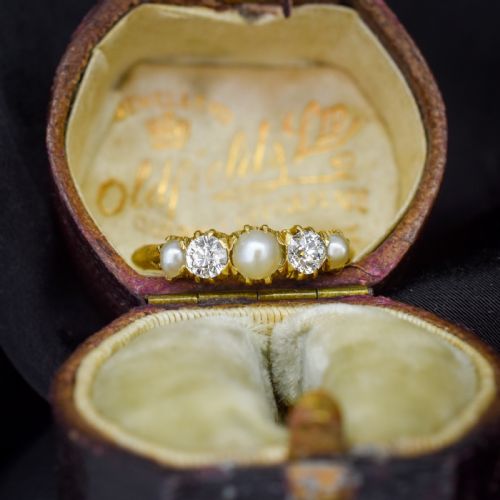
The inventory spans from the nineteenth century through the Edwardian era and the Art Deco period into mid century pieces. These rings feature organic pearls set alongside old cut diamonds in yellow gold, white gold, and platinum settings.
How they were made
Goldsmiths utilised 18ct yellow gold and platinum to construct robust settings that secured both organic pearls and diamonds. Hand fabrication involved claw and cluster arrangements designed to showcase the lustre of natural saltwater pearls.
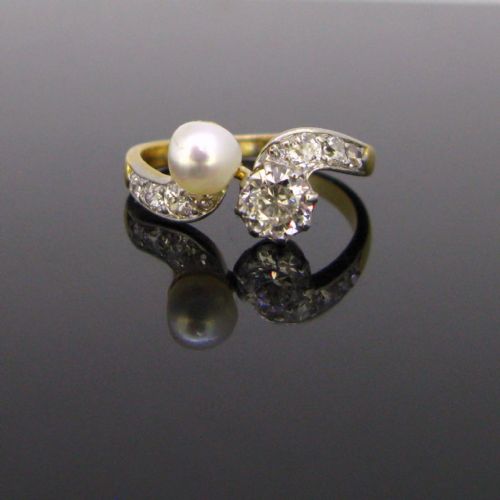
Diamonds were predominantly old cut stones, shaped by hand before modern machine cutting standardised faceted symmetry. These gems were integrated into cluster, trilogy, and toi et moi configurations alongside pearls.
Materials appearing across the inventory include natural pearl, diamond, platinum, and 18ct yellow gold.
What varies in quality
The distinction between tiers rests upon the natural origin and preservation of the pearl's surface. High quality examples display matching nacre depth and unblemished lustre alongside well proportioned old cut diamonds.
Metalwork execution also dictates the standard of the piece, where delicate claw work and secure platinum or gold settings demonstrate superior bench craftsmanship. Structural integrity in crossover and cluster designs separates fine examples from standard production.
The Natural Pearl Engagement Ring Glossary
- Natural pearl
- A pearl formed organically in a mollusc without human intervention. These gems possess a distinctive orient and depth of lustre cultivated entirely in nature.
- Old cut diamond
- A hand faceted diamond shape characteristic of older periods. These stones feature smaller tables and larger culets that produce a softer candlelit sparkle.
- Cluster ring
- A ring style featuring a central gemstone surrounded by a border of smaller stones. In this selection, pearls typically form the centrepiece or alternate with diamonds in the cluster.
- Toi et moi
- A ring design translating to you and me, featuring two main gemstones placed side by side. This configuration frequently pairs a natural pearl with a diamond in crossover bands.
- Platinum
- A dense, white precious metal utilised for fine jewellery settings. Its strength allows for delicate claw placement and secure mounting of delicate pearls and diamonds.
Natural Pearl Engagement Ring: Frequently Asked Questions
How do I care for a natural pearl ring?
Natural pearls are organic and softer than diamonds, requiring gentle cleaning with a soft cloth and mild soapy water. Avoid harsh chemicals, ultrasonic cleaners, and prolonged contact with cosmetics or perfumes.
Store your ring separately from other hard jewellery to prevent scratching the nacre surface. Regular checks by a jeweller ensure the settings remain secure.
Are these pearls certified as natural?
The pearls found in these pieces are described as natural based on period context and gemmological observation. Many collectors seek independent laboratory certification to confirm natural saltwater origin.
Examining the internal structure through specialised testing distinguishes natural formation from cultured alternatives.
What is the difference between Edwardian and Art Deco settings?
Edwardian settings emphasise delicate platinum work, lace-like filigree, and garland motifs that highlight the softness of pearls. Yellow gold is frequently utilised for the band while platinum frames the stones.
Art Deco settings shift toward geometric lines, symmetry, and bolder contrasts between white metals and yellow gold bands.
Can I wear a natural pearl engagement ring daily?
Daily wear is possible with mindful handling due to the lower hardness rating of pearls compared to diamonds. Removing the ring during rigorous physical activities protects the organic gem from impact and abrasion.
Frequent wearers often choose protective settings like bezels or low profile clusters that shield the pearl from direct knocks.