
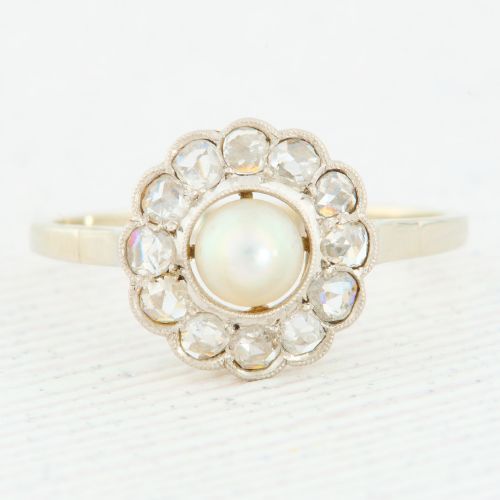


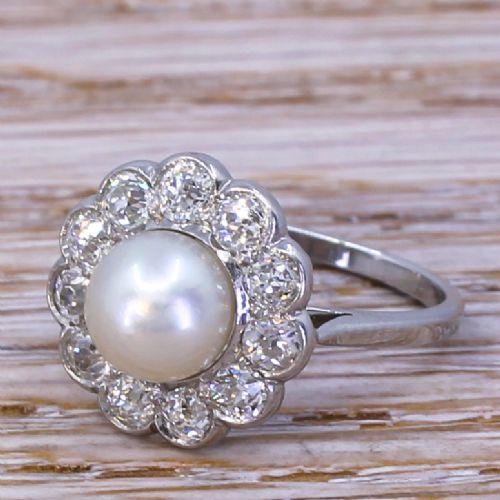
Art Deco Pearl Ring
An art deco pearl ring brings together lustrous organic pearls and geometric precious mountings from the early decades of the twentieth century.
Art Deco Pearl Ring
An art deco pearl ring combines the organic lustre of pearls with the sharp geometry characteristic of the nineteen-twenties and nineteen-thirties. You encounter cluster, solitaire, and multi-stone configurations frequently on this page, reflecting popular designs from the period.
The selection encompasses pieces originating from the nineteen-tens through to mid-century revivals. Jewellers mounted these pearls in platinum or white gold, often framing them with diamonds.
How they were made
Goldsmiths utilised platinum and various grades of gold, including eighteen-carat white gold, to construct sturdy yet delicate settings. These metals were shaped into cluster mounts and slender bands designed to hold pearls securely.
Natural pearls, blister pearls, and saltwater cultured pearls were paired with old-cut diamonds. Metalwork often featured fine millgraining and precise claw or bezel settings.
Art Deco Pearl Ring Retail Price Guide 2026
Typical asking prices for art deco pearl ring among the pieces listed under this phrase on Sellingantiques today, from the lower quarter to the upper quarter. They describe what is for sale here now, not the wider market.
Some pearls prefer wearing a silk thread between them to prevent chafing, though rings prefer staying firmly on your finger.
What varies in quality
The fineness of the metalwork and the origin of the pearl dictate the standing of a piece. Platinum settings with natural saltwater pearls occupy the upper tier of craftsmanship.
Diamond weight and cut precision also differentiate standard dress rings from high-end examples. The uniformity and lustre of the pearl remain central to the overall standard.
Liberty And Co
The Art Deco Pearl Ring Glossary
- Natural pearl
- A pearl formed organically within a mollusc without human intervention. These are prized for their authentic genesis and unique orient.
- Platinum
- A dense, durable white metal favoured during the period for intricate, delicate wirework. It held small stones firmly without bulk.
- Cluster ring
- A ring design featuring a central stone surrounded by a tighter grouping of smaller gems. This layout maximised visual impact on the finger.
- Old-cut diamond
- A diamond cut by hand before modern machinery standardised facet angles. These stones exhibit smaller tables and deep pavilions that catch candlelight effectively.
Art Deco Pearl Ring: Frequently Asked Questions
How do I care for an art deco pearl ring?
Pearls are organic gems that require gentle handling and protection from harsh chemicals and cosmetics. Wipe them with a soft cloth after wearing to preserve their natural lustre.
Store the ring separately from harder diamond jewellery to prevent scratching the delicate surface of the pearl. Have the settings checked periodically by a professional jeweller to ensure the stones remain secure.
Are these pearls natural or cultured?
The inventory includes both natural pearls formed organically and saltwater cultured pearls grown with human assistance. Period documentation and gemmological testing help determine the precise origin.
Natural pearls generally command higher regard among collectors due to their scarcity. Cultured pearls nevertheless offer the same bright lustre suited to period jewellery.
What metals are used in these rings?
Jewellers during the period predominantly utilised platinum and eighteen-carat white gold for mounting stones. These white metals provided a sleek backdrop that enhanced the brilliance of diamonds.
Lower carat golds also appear in certain dress rings from the era. Platinum remains the most desirable due to its strength and association with high-end manufacture.
How can I date an art deco pearl ring?
Stylistic markers such as geometric motifs and millgrained edges point toward the interwar decades. Assays, hallmarks, and specific cutting styles of accompanying diamonds further narrow the production era.
Pieces range from the nineteen-tens through to mid-century interpretations. Comparing mounting techniques with documented periods helps establish a reliable timeline.