


Pearl Diamond Cluster Ring
A pearl diamond cluster ring brings together lustrous organic pearls and sparkling stones in designs spanning the Victorian, Edwardian, and Art Deco eras.
Pearl Diamond Cluster Ring
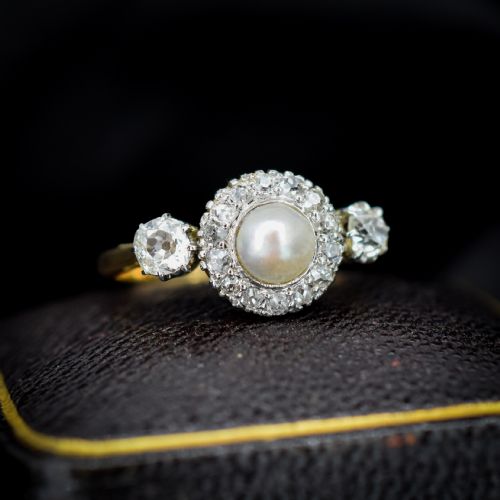
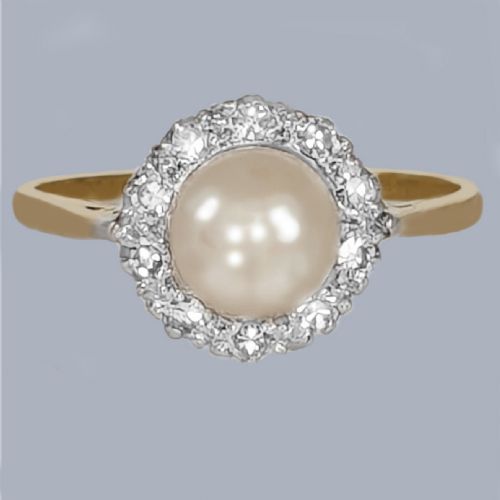
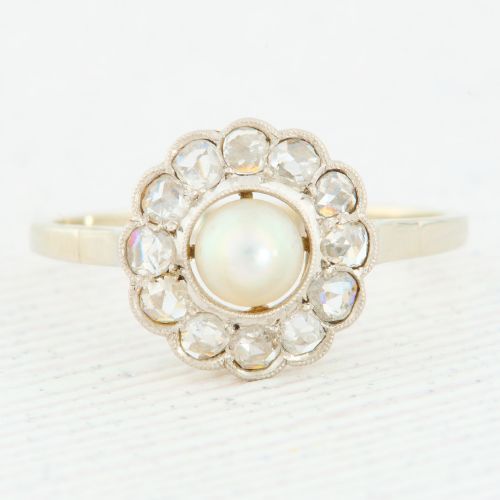
A pearl diamond cluster ring gathers a central pearl surrounded by diamonds to form a distinct floral or geometric outline. The form appears frequently across Victorian, Edwardian, and Art Deco periods, each era bringing specific design characteristics to the finger.
Victorian examples often present a daisy cluster or a navette silhouette set in yellow gold, sometimes incorporating turquoise, ruby, or enamel alongside the pearls and diamonds. Edwardian and Belle Epoque versions favour delicate platinum-topped yellow gold or white gold work with old-cut diamonds framing natural pearls.
Art Deco interpretations shift towards geometric lines, utilising platinum settings and structured arrangements of old-cut diamonds around saltwater or cultured pearls. Later mid-century and 1960s pieces maintain the cluster format with cleaner lines and varied gold purities.
How they were made
Goldsmiths constructed these rings using 18ct yellow gold, white gold, or platinum, frequently combining yellow gold shanks with platinum-topped settings in Edwardian pieces to enhance the whiteness around diamond work. Gemstones were secured with hand-cut claw settings, grain settings, or bezel mounts adapted to the curves of the stones.
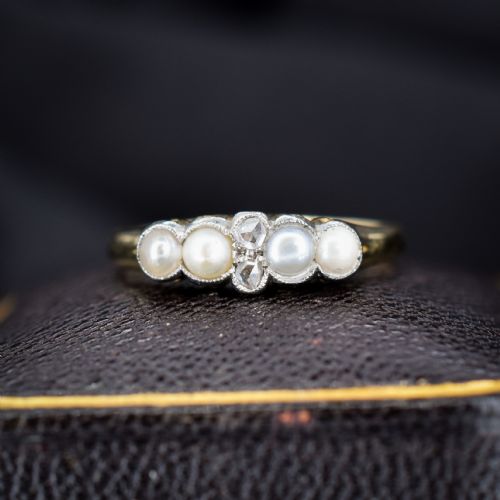
Pearls used in these pieces range from natural saltwater specimens to cultured varieties and mabé pearls, chosen for their lustre and oriented as buttons or slight baroques. Diamonds in older pieces are typically hand-faceted old-cut or rose-cut stones, reflecting candlelight rather than the precise geometry of modern brilliant cuts.
Some Victorian makers arranged pearls and diamonds into affectionate floral daisy clusters designed to send secret romantic messages across the parlour.
What varies in quality
The harmony of the cluster composition distinguishes finer examples from simpler production, with balanced proportions between the central pearl and the surrounding diamond border. Master jewellers ensured that claw work remained minimal and precise, allowing maximum light to enter the rose-cut or old-cut diamonds without overwhelming the soft lustre of the pearl.
The integrity of the pearls, whether natural or cultured, heavily influences the standing of a piece, alongside the matching and clarity of the surrounding diamonds. Original settings that retain their structural depth without thinning from past resizing represent higher manufacturing standards from their respective periods.
The Pearl Diamond Cluster Ring Glossary
- Cluster ring
- A ring featuring a central gemstone surrounded by a border of smaller stones, creating a concentrated focal point on the hand.
- Old-cut diamond
- A hand-faceted diamond cut before the standardisation of the modern brilliant cut, typically possessing a smaller table, higher crown, and open culet.
- Rose-cut diamond
- A vintage diamond cut characterised by a flat base and a domed crown faceted into triangles, resembling an unopened rosebud.
- Natural pearl
- A pearl formed organically in a mollusc without human intervention, prized for its deep orient and irregular organic formation.
- Navette cluster
- A boat-shaped or marquise-aligned cluster design that extends lengthwise along the finger, popular in Victorian jewellery.
Pearl Diamond Cluster Ring: Frequently Asked Questions
How do I care for a pearl diamond cluster ring?
Pearls are organic gems sensitive to acids, cosmetics, and harsh ultrasonic cleaners. Wipe the ring gently with a soft damp cloth after wearing and store it separately from harder stones.
Have the setting inspected periodically by a jeweller to ensure the claws holding both the pearl and the diamonds remain secure.
Can I wear a pearl ring every day?
While diamonds are exceptionally durable, pearls possess a lower hardness rating and require mindful wear. Daily tasks involving impact or exposure to chemicals can damage the nacre over time.
Reserve the ring for occasions where hand activity is moderate to preserve the lustre of the pearl.
How do I tell an Edwardian pearl ring from a Victorian one?
Victorian rings frequently utilise yellow gold or rose gold mountings with floral or daisy cluster motifs, sometimes pairing pearls with turquoise, ruby, or enamel. They date from the nineteenth century up to about nineteen hundred.
Edwardian and Belle Epoque pieces often incorporate platinum-topped gold or white gold to give a lighter, lace-like appearance around old-cut diamonds and natural pearls.
What is the difference between natural and cultured pearls in antiques?
Natural pearls formed entirely by chance in wild molluscs without human seeding, making them characteristic of antique pieces predating widespread culturing techniques. Cultured pearls introduced a human-implanted nucleus to stimulate pearl growth, becoming more common in mid-century jewellery.
Examinations under magnification or specialist testing reveal these structural differences in the nacre layers.