
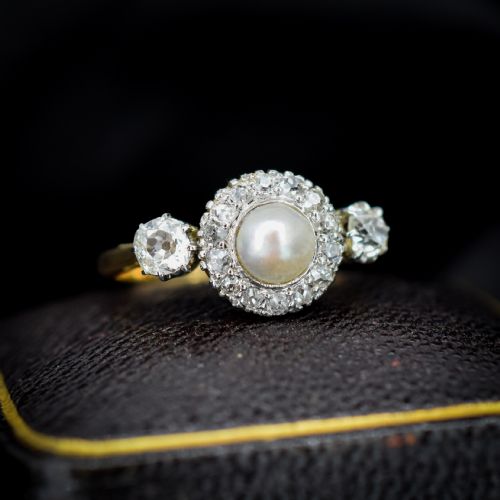
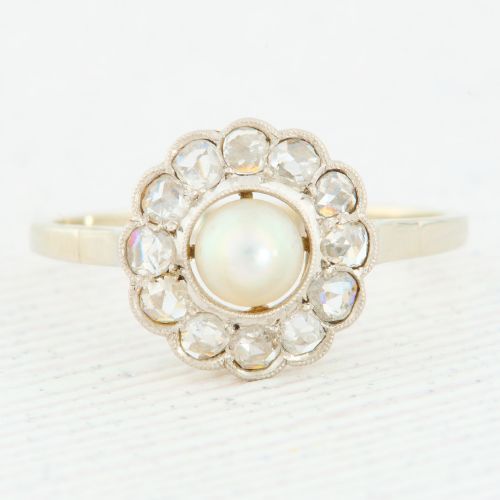


Pearl Target Ring
A pearl target ring draws the eye with its concentric arrangement of gems, offering a neat geometry that suits any hand.
Pearl Target Ring
A pearl target ring presents a central gem or pearl surrounded by concentric rings of contrasting stones, forming a distinct circular motif reminiscent of a target. Most pieces appearing under this search phrase belong to the Edwardian period, though examples stretch from the Georgian era through to the Art Deco years.
The layout typically relies on clusters where pearls sit alongside diamonds, rubies, or emeralds on low-profile mounts. These configurations concentrate visual weight directly over the finger, making the most of modest stones through disciplined symmetry.
Makers of these rings favoured circular geometries that allowed smaller gems to create substantial presence without bulk. The resulting cluster format remains the definitive shape for this specific style of antique jewellery.
Materials and construction
Construction relies heavily on 18ct yellow gold, 18ct white gold, and platinum, often pairing the two metals to keep diamond settings bright while maintaining warm gold shanks. Platinum emerges particularly in later Edwardian and Art Deco pieces, allowing for finer claws and millegrain edges.
Gems are secured using traditional grain setting or bezel work, with old-cut diamonds and natural pearls dominating the inventory. Enamel also appears in select variations, adding rich blue tones to the concentric bands surrounding the central pearl.
Some rings hide tiny blue enamel details beneath their pearl tiers, giving a private flash of colour to anyone examining the underside.
What separates the best from the rest
Quality rests on the symmetry of the concentric circles and the matching of the stones that form each tier. Evenness in the size and lustre of the surrounding pearls or diamonds dictates whether the piece achieves a balanced visual rhythm.
The condition of the metalwork around the microscopic claws and the integrity of the central pearl surface define the grade of the ring. Superior examples retain crisp millegrain work and well-matched gem sizes that show no sign of uneven wear.
The Pearl Target Ring Glossary
- Target design
- A concentric arrangement of gemstones around a central point, creating rings or earrings shaped like a target. This layout defines the visual structure of the pieces.
- Millegrain
- A decorative technique involving a row of tiny raised metal beads along the edge of a setting. It softens the transition between metal and stone.
- Old-cut diamond
- A hand-faceted diamond cut before the standardisation of modern brilliants, typically featuring a smaller table and a higher crown. These stones exhibit softer, warmer light return under candlelight.
- Seed pearl
- A very small natural or cultured pearl, often drilled and threaded or set closely in clusters. They provide delicate texture within antique multi-stone arrangements.
Pearl Target Ring: Frequently Asked Questions
How do I care for a pearl ring?
Pearls are organic gems that require gentle handling, as they react poorly to harsh chemicals, perfumes, and ultrasonic cleaning methods. Wipe them with a soft cloth after wearing and store them separately to avoid scratching.
Because settings from the Edwardian and Georgian eras can be delicate, checking the claws periodically ensures the central pearl and surrounding stones remain secure.
Are these pearls natural?
Many pieces from the Edwardian and Georgian periods feature natural pearls, while others incorporate cultured varieties as production methods shifted. Examining the lustre and the micro-structure under magnification helps determine origin.
Testing by a specialist can confirm whether the pearls grew wild in salt or fresh water, which influences the character of the piece.
Can I wear a pearl ring daily?
Pearls score lower on the hardness scale than diamonds or sapphires, making them vulnerable to knocks and abrasion during heavy tasks. Wearing them with care preserves the nacre and prevents undue wear to the surrounding gold or platinum setting.
Many collectors reserve these rings for lighter wear or special occasions to protect the delicate central pearl from damage.
How do I date a target ring?
Dating relies on metal combinations, such as platinum-topped yellow gold typical of the Edwardian era, alongside stone-cutting styles like old-cut diamonds. Georgian examples often show distinct closed-back settings and different gold purities, such as 15ct.
Design motifs and hallmark stamps, where present, offer further clues to the decade of manufacture.