


Edwardian Pendant Brooch
When you handle an edwardian pendant brooch, you find a versatile piece of convertible jewellery designed to be worn pinned to a bodice or suspended from a chain.
Edwardian Pendant Brooch
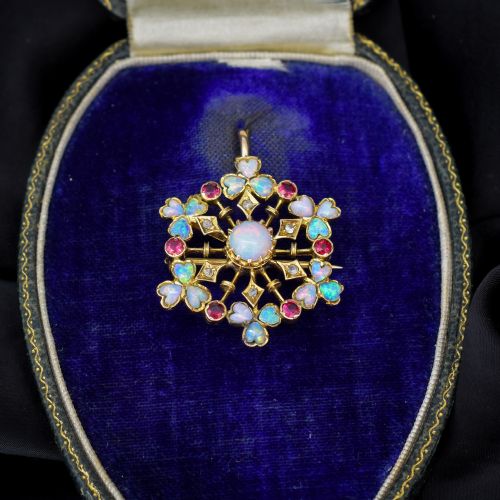
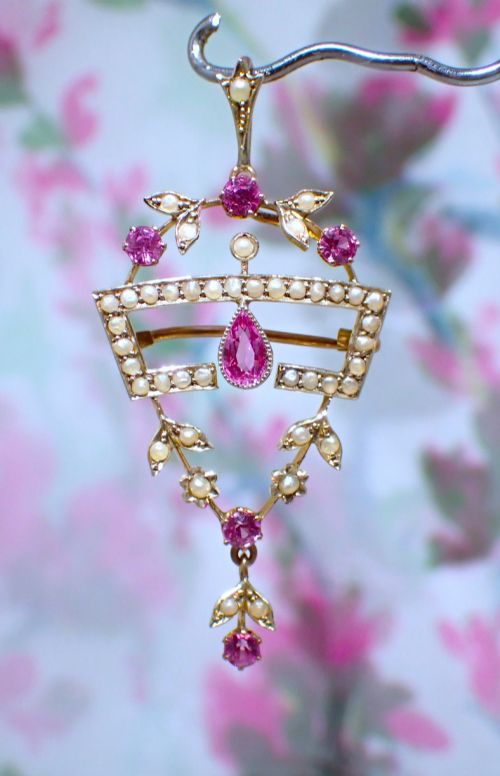
An edwardian pendant brooch is a dual-purpose piece of jewellery engineered to function as both a breast pin and a necklace ornament. The form bridges the late nineteenth century and the early decades of the twentieth century, drawing on Victorian styles while anticipating lighter, airier designs.
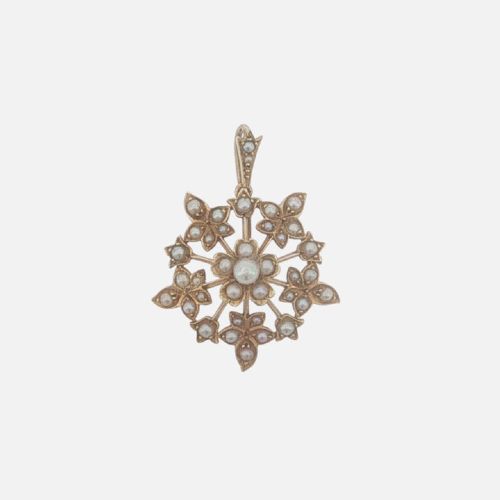
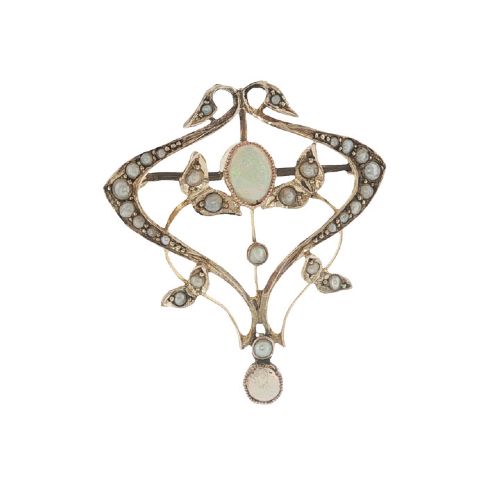
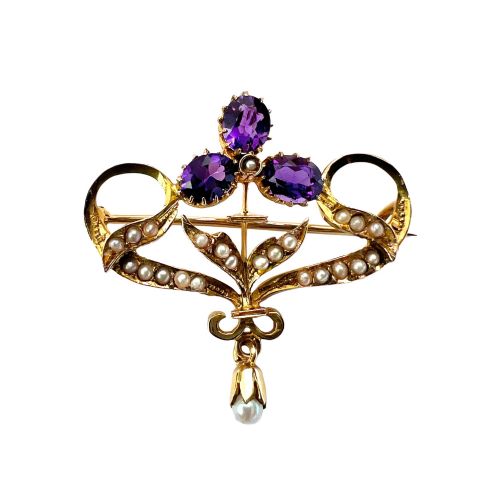
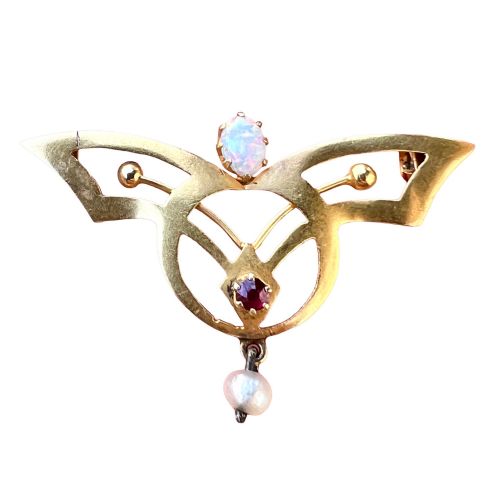
Most examples encountered here originate from the Edwardian period or the late Victorian era, spanning gold and silver mounts set with pearls, peridots, and diamonds. These hybrid jewels often incorporate detachable bails, hidden loops, or screw-in pin stems that allow the wearer to alter the function instantly.
Makers of the period favoured symmetrical floral motifs, starbursts, and flowing Art Nouveau lines executed in higher-carat golds and platinum. The survival of these dual fittings demonstrates the Victorian and Edwardian demand for adaptable day-to-night accessories.
Materials and Craftsmanship
Goldsmiths and silversmiths utilised nine-carat, fifteen-carat, and eighteen-carat yellow gold alongside silver and emerging platinum. Silver was frequently used for the face of a mounting to reflect the fire of old-cut diamonds, backed by gold to prevent tarnishing against clothing.
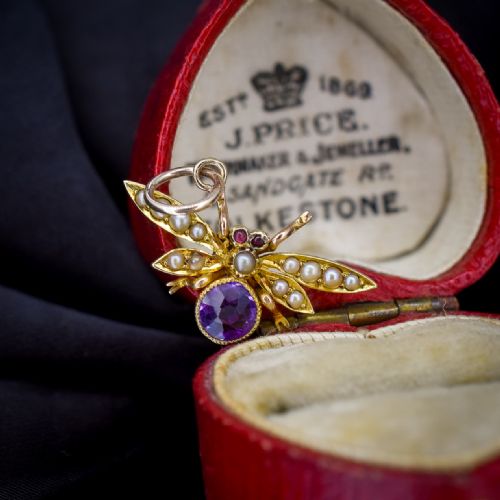
Gemstones including seed pearls, peridots, amethysts, and opals were often collet-set or grain-set by hand into openwork frames. Delicate wirework, millegrain edges, and hinged bale mechanisms required precise bench work from jobbing jewellers and workshop artisans.
Listings feature 15ct gold mounts alongside 9ct and 18ct, frequently pairing peridots, amethysts, and natural seed pearls within Edwardian and Victorian designs.
Factors of Quality and Execution
The standard of an edwardian pendant brooch rests on the integration of its dual-purpose mechanics and the selection of its stones. Superior pieces conceal their conversion elements cleanly, ensuring the pin mechanism folds flat or detaches entirely without disrupting the pendant symmetry.
Mastery is also visible in the lightness of the metalwork and the matching of natural pearls or coloured gems. Finer workshops employed hand-cut millegrain decoration and balanced openwork frames that maximised light entry, whereas utilitarian pieces relied on heavier, cast metal stampings.
The Gaskins
The Edwardian Pendant Brooch Glossary
- Bail
- The loop on a pendant that suspends it from a chain or collar. This ring or hinge is often hidden or removable on convertible pieces.
- Millegrain
- A decorative technique featuring a row of tiny raised metal beads along the edge of a setting. This softens the metal outline and frames the stones.
- Old-Cut Diamond
- A diamond cut by hand before the standardisation of modern brilliants, typically featuring a small table and a high crown. These stones display broader flash patterns under candlelight.
- Seed Pearl
- A very small, natural or saltwater pearl used extensively in clusters and floral garlands. They are frequently strung on silk or held with tiny golden pins.
- Lavalier
- A necklace featuring a pendant that drops below the main chain line, often incorporating swinging gemstone components.
Edwardian Pendant Brooch: Frequently Asked Questions
How do I wear a pendant brooch?
You remove or tuck away the pin stem when hanging the piece from a fine chain around the neck. To wear it as a brooch, you slide the chain off and secure the pin safety clasp through woven fabric.
Many examples feature a removable bail or a drop component that detaches to change the total length and weight distribution against the bodice.
Are these pieces fragile?
While they survived a century of wear, the delicate openwork gold frames and seed pearls require careful handling. Avoid exposing antique pearls to harsh chemicals, perfumes, or ultrasonic cleaning tanks.
Store each piece flat in a lined box to protect the hinged pin stems and delicate drops from bending under pressure.
How do I date an edwardian piece?
You examine the metal types, gemstone cuts, and structural motifs for characteristics of the era. The use of platinum-topped gold, garland designs, and bright peridots typically points to the early twentieth century.
Hallmarks stamped on the reverse of the mount often provide specific assay office marks and date letters for exact verification.
Can I replace a missing pearl?
A specialist jeweller can match natural seed pearls or small old-cut gems using period-appropriate salvaged stock. Sourcing a matching pearl requires attention to lustre, orient, and exact millimeter sizing.
Interventions should respect the original collet or peg settings without altering the surrounding gold framework.