



Peridot and Pearl Pendant
A peridot and pearl pendant brings together the vibrant green of August's birthstone and the soft lustre of seed pearls in gold settings.
Peridot and Pearl Pendant
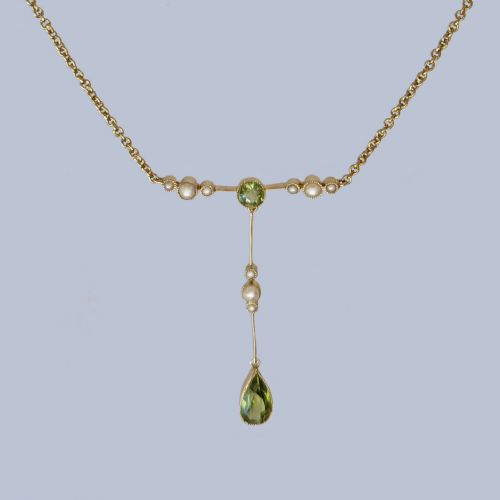
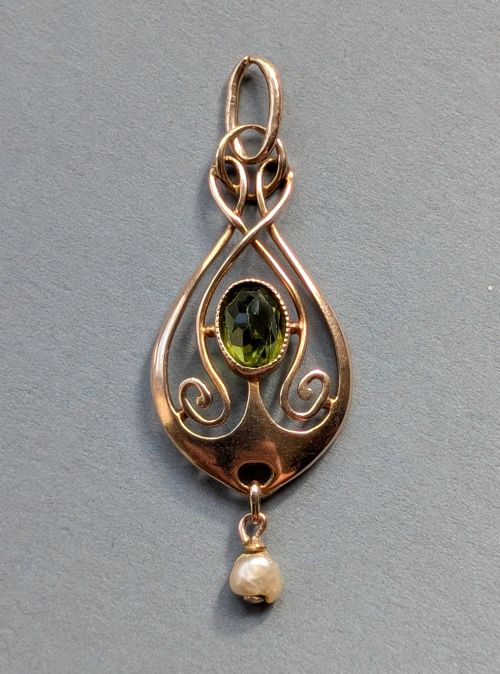
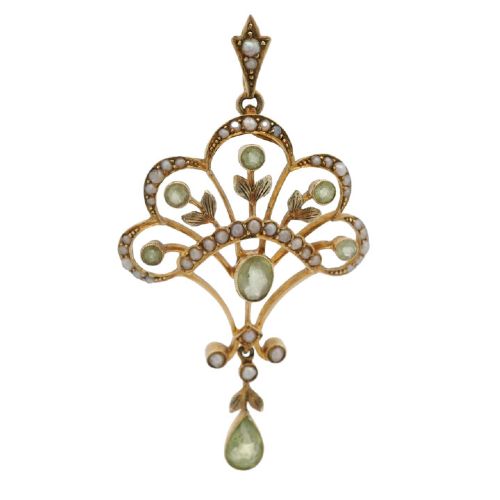
When you examine a peridot and pearl pendant, you look at pieces predominantly created during the late Victorian and Edwardian eras, stretching from around eighteen eighty to nineteen ten. These jewels often take the form of delicate lavalier necklaces, garland drops, or convertible brooch pendants that reflect the tastes of their period.
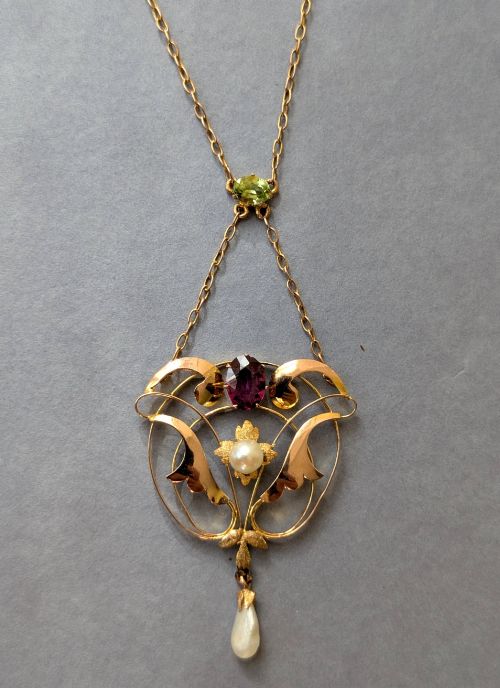
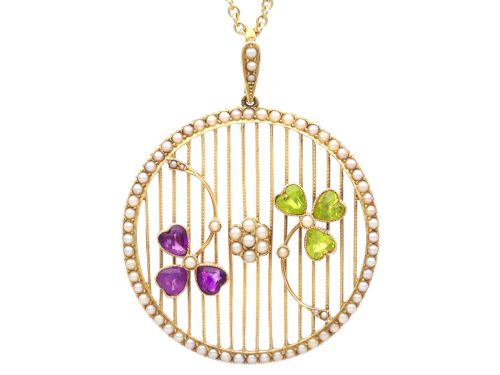
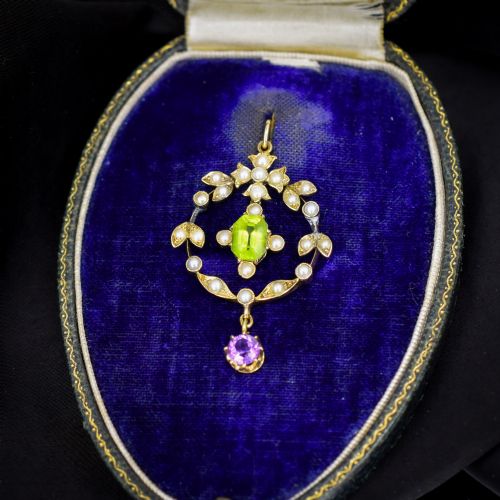
The designs draw heavily upon Art Nouveau curves and floral motifs, alongside symmetrical Edwardian garlands. Many examples incorporate other stones such as amethyst, garnet, or tourmaline, occasionally reflecting Suffragette colour palettes through the combination of green, white, and violet stones.
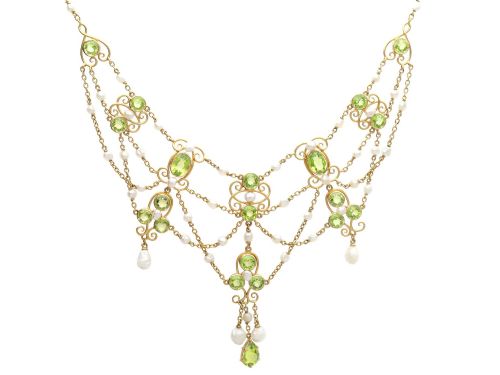
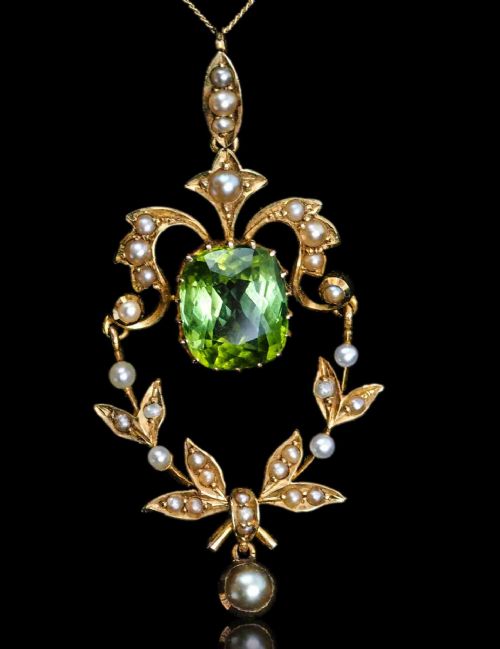
You are most likely to encounter 9ct or 15ct yellow and rose gold settings that cradle faceted peridots accented by tiny seed pearls. These pieces frequently survive with their original chains or convert easily from brooches to pendants.
Materials and Techniques
Goldsmiths of the Victorian and Edwardian periods employed 9ct and 15ct yellow or rose gold, occasionally incorporating platinum highlights by the turn of the century. These metals were shaped into fine wirework, collet settings, and cast floral or scroll elements to support the gemstones.
Peridots are typically step-cut or oval-faceted to maximise their characteristic olive-green brilliance, while seed pearls are carefully drilled and secured on tiny pegs or threaded with fine silk. More ambitious pieces utilise plique-à-jour enamel, creating translucent cells of colour that catch the light behind the central peridot.
Peridot and Pearl Pendant Retail Price Guide 2026
Typical asking prices for peridot and pearl pendant among the pieces listed under this phrase on Sellingantiques today, from the lower quarter to the upper quarter. They describe what is for sale here now, not the wider market.
Listings span the Victorian and Edwardian periods, featuring 9ct and 15ct gold alongside platinum.
Assessing Quality and Execution
The distinction between ordinary and exceptional work rests on the crispness of the gold wirework and the harmonious integration of the pearls and peridots. Finer examples display meticulous claw work and balanced proportions where the peridot remains bright and free from heavy inclusions.
Artistic ambition elevates certain pieces above standard production, particularly those employing plique-à-jour enamel or complex garland structures that require advanced goldsmithing skills. The survival of original fittings, such as secure pin stems or matching chains, further distinguishes superior survivals.
The Peridot and Pearl Pendant Glossary
- Lavalier
- A pendant featuring a swinging drop or stones suspended below the main body, popular during the Edwardian era.
- Seed Pearl
- A very small natural or cultured pearl, often unperforated or half-drilled, used in clusters or delicate borders.
- Plique-à-jour
- An enamelling technique where enamel is applied without a backing, resembling miniature stained glass that allows light to pass through.
- Garland Style
- A decorative design popular in late nineteenth and early twentieth-century jewellery, mimicking ribbon bows, swags, and floral wreaths.
- Peridot
- A gem-grade variety of olivine valued for its distinct lime or olive-green colour, serving as the primary gemstone in these pieces.
Peridot and Pearl Pendant: Frequently Asked Questions
How do I date a peridot and pearl pendant?
Dating relies upon stylistic markers such as asymmetrical Art Nouveau whiplines, symmetrical Edwardian garlands, and the specific gold carat marks used during the period. The integration of convertible brooch fittings also points towards late Victorian and Edwardian manufacturing habits.
Examining the back of the setting and the cut of the peridot helps confirm whether the piece originates from the final decades of the nineteenth century or the first decade of the twentieth.
Were these pendants originally worn as brooches?
Many examples were manufactured with removable pins and hidden loops, allowing the owner to wear the jewel interchangeably as a pendant on a chain or pinned to a garment. This versatility was particularly common in pieces produced around nineteen hundred.
When buying, check the reverse for hinged pin stems and safety catches alongside fixed suspension loops to see if your piece was designed for dual use.
What is a Suffragette pendant?
Suffragette jewellery frequently combines green peridot, white pearls or sapphires, and violet amethyst to represent the colours of the Women's Social and Political Union: green, white, and freedom.
While not every green and white stone combination carries this specific historical association, pieces featuring this exact gemstone triad from the Edwardian era are widely collected under this description.
How should I care for antique peridot jewellery?
Peridot is a softer gemstone compared to diamond or sapphire, measuring around 6.5 on the Mohs scale, which means it requires gentle handling to avoid scratching. Clean your pendant using warm soapy water and a soft cloth, avoiding harsh chemical dips or ultrasonic cleaners that can damage seed pearls.
Store the necklace separately in a lined box or pouch to prevent the gold and harder stones from rubbing against the pearls.