
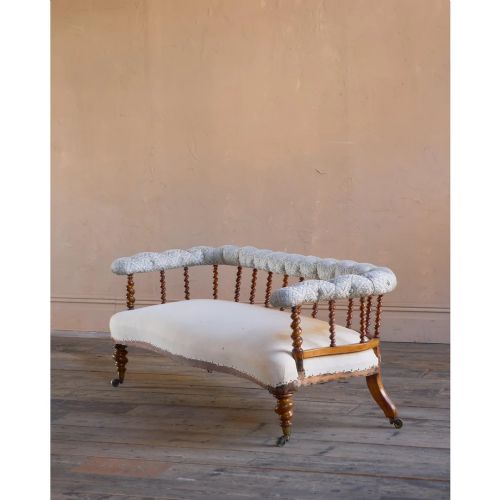
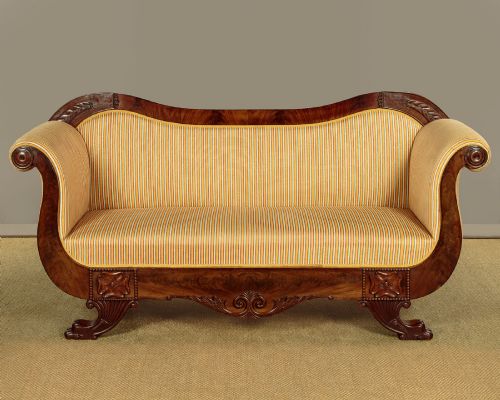
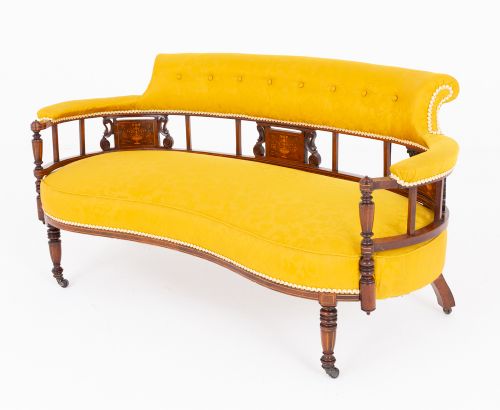


Edwardian Parlour Couch
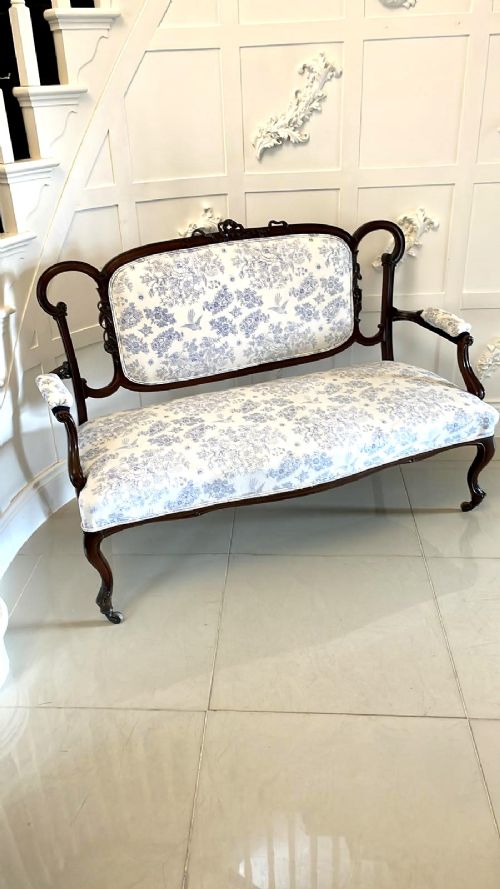
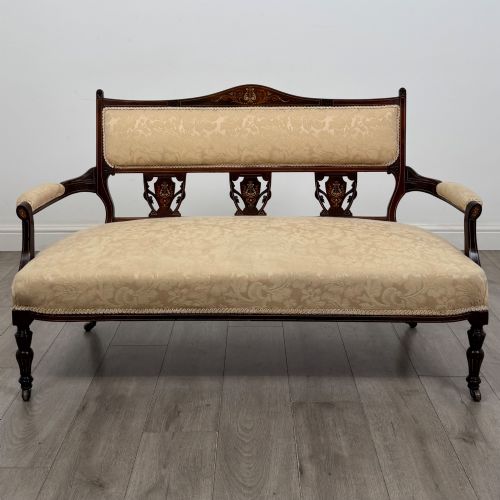
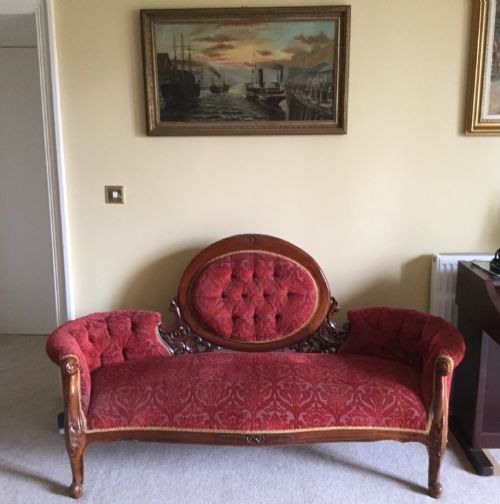
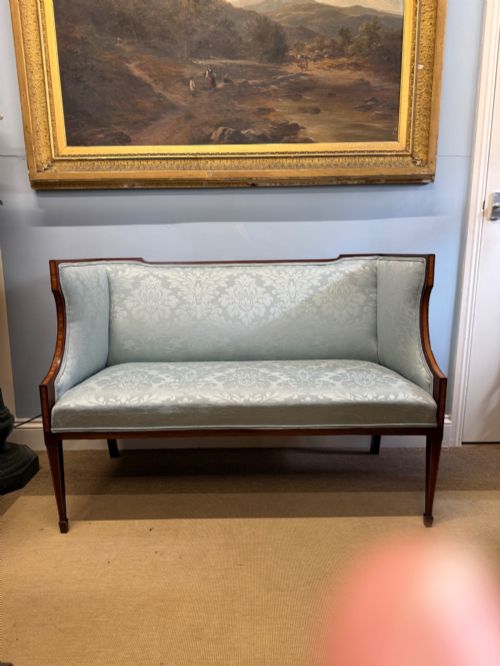
An edwardian parlour couch is a formal seating piece designed for reception rooms, offering compact elegance and intricate timber framing.
Edwardian Parlour Couch
When you search for an edwardian parlour couch, you encounter a variety of sophisticated seating forms originating from the late nineteenth and early twentieth centuries. These pieces span periods from the Victorian era through Edwardian times, alongside earlier Regency influences and nineteen-hundreds designs.
The selections on this page predominantly feature mahogany and satinwood frames, often paired with rosewood accents or brass details. Forms range from two-seater salon settees and double-ended sofas to spindle back salon sofas and inlaid couches.
Buyers frequently find matching pairs or individual pieces intended for formal reception spaces. Many examples incorporate upholstery fabric, damask, or deep pile brocade, while others await fresh covering to suit modern interiors.
How they were made
Cabinetmakers constructed these frames using dense hardwoods like mahogany and rosewood, frequently incorporating satinwood inlay for decorative contrast. Timber components were often carved, turned, or shaped into scroll ends and spindle backs.
Upholstery techniques involved sprung settee bases paired with traditional stuffing and durable textiles. Silk damask, brocade, and patterned fabric were secured over sprung foundations to provide firm yet comfortable seating.
Several settees require total re-upholstery, offering a blank canvas for eclectic textile choices.
What varies in quality
The distinction between standard and superior pieces rests upon the crispness of timber carving and the precision of wood inlay. Finer examples display meticulous grain selection in the mahogany and delicate, unbroken satinwood banding.
Structural integrity also separates the range, as robustly joined frames resist looseness at the joints over decades of use. Furthermore, the retention of original decorative elements and high-grade upholstery fabrics elevates the standing of an individual piece.
C. Hindley and Sons·Maple and Co
The Edwardian Parlour Couch Glossary
- Satinwood
- A hard, yellow timber imported from tropical regions and utilised for fine decorative banding and contrasting inlay on mahogany furniture.
- Scroll end
- A curved wooden arm or terminal resembling a rolled scroll, frequently seen on couches influenced by Regency and Victorian designs.
- Damask
- A reversible, figured fabric traditionally woven with patterns formed by contrasting warp and weft threads.
- Spindle back
- A chair or settee back constructed from a series of thin, turned wooden vertical pillars.
Edwardian Parlour Couch: Frequently Asked Questions
What is an edwardian parlour couch used for?
These pieces served as formal seating in the principal reception rooms of townhouses and country residences during the early twentieth century.
Today, they function well as accent seating in living spaces, studies, or large bedrooms where compact elegance is required.
How do I identify an Edwardian piece?
Edwardian furniture typically displays lighter timber tones, refined proportions, and delicate inlay work compared to heavier Victorian predecessors.
Makers of this period favoured mahogany and satinwood, often incorporating subtle floral or geometric decorative motifs.
Are these couches comfortable for daily sitting?
Many examples feature sprung bases and padded upholstery designed for formal lounging rather than deep, relaxed reclining.
Re-upholstered pieces can be tailored with modern internal cushioning to enhance daily comfort while preserving historical aesthetics.
How do I care for antique wood and upholstery?
Protect timber frames from direct sunlight and fluctuating humidity to prevent the polished mahogany or rosewood from drying out.
Vacuum upholstered surfaces gently with a soft brush attachment and consult a professional conservator for fabric cleaning.