


Edwardian Painted Chair
An edwardian painted chair brings light, hand-decorated character to a room through delicate satinwood frames and floral motifs.
Edwardian Painted Chair
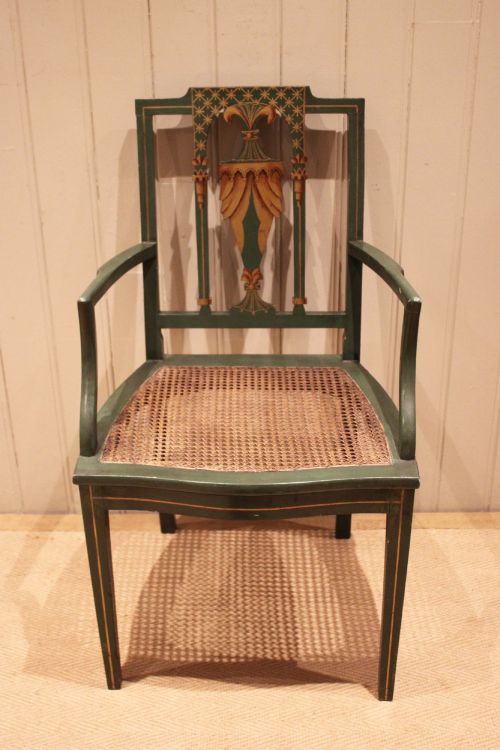
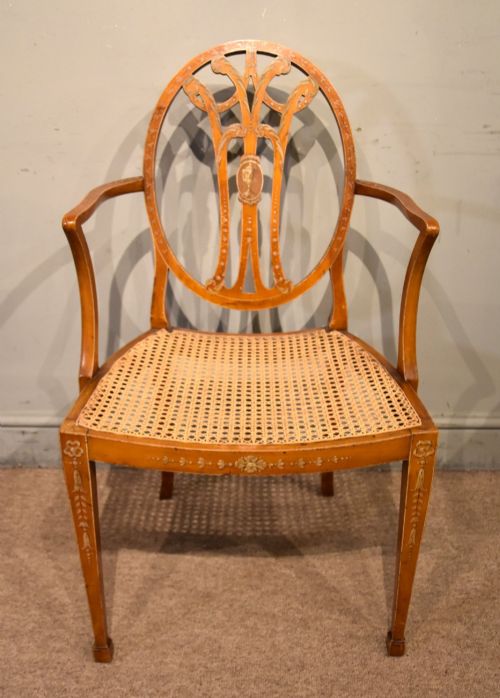
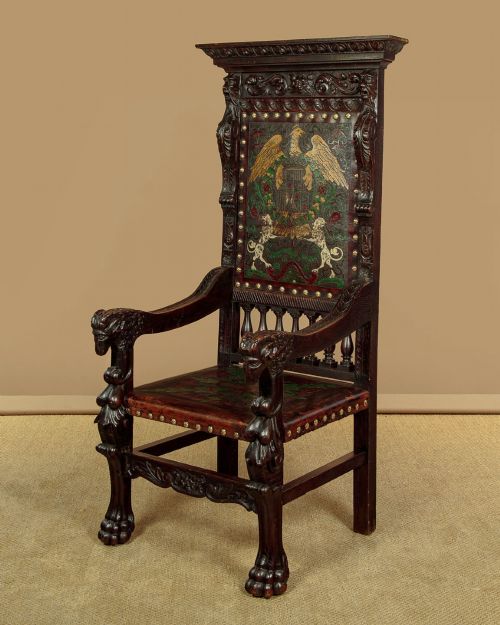
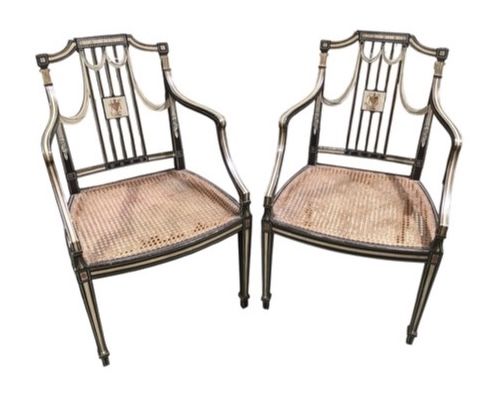
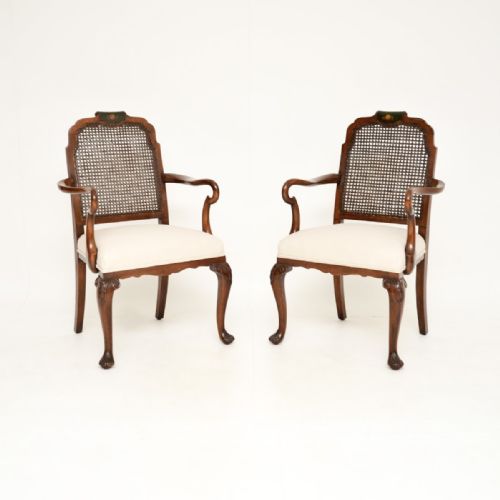
The edwardian painted chair category centres predominantly on lighter seating from the early twentieth century, drawing heavily on Sheraton and Hepplewhite revivals. Buyers encounter satinwood armchairs, bergere chairs with cane seats, and matching salon sets featuring decorative brushwork.
Beyond standard bedroom and drawing-room seating, the evidence reveals variants utilising mahogany, walnut, and pine, alongside occasional French Louis-style designs and Chinoiserie motifs. The underlying forms range from open armchairs to hall chairs and small settees.
While many examples date directly to the Edwardian period, listings also incorporate related early twentieth-century interpretations and nineteenth-century antecedents that share the same painted decorative vocabulary.
Materials and Construction
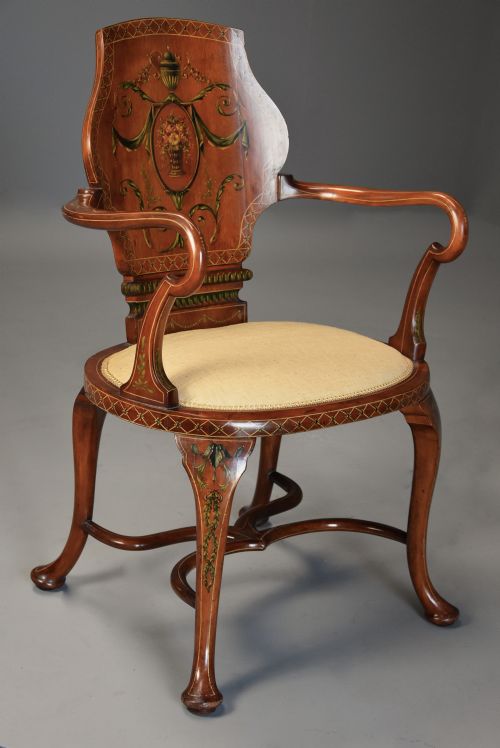
Makers utilised pale timbers such as satinwood, alongside mahogany and walnut, building robust frames designed to support delicate decorative programmes. Caned panels and upholstered pads provided seating comfort within these lighter structural frameworks.
Surface decoration relied on direct hand-applied paint, lacquer, and pictorial motifs executed upon the wood or over prepared grounds. These brush-painted details often drew on classical or floral themes to complement the underlying revival styles.
Edwardian Painted Chair Retail Price Guide 2026
Typical asking prices for edwardian painted chair among the pieces listed under this phrase on Sellingantiques today, from the lower quarter to the upper quarter. They describe what is for sale here now, not the wider market.
One recorded armchair doubles as a musical resting spot, featuring a revolving mechanism for the aspiring pianist.
Markers of Distinction
Quality rests significantly upon the crispness of the hand-painted decoration and the retention of original surfaces rather than later over-painting. Finer examples display meticulous floral or classical detailing directly on well-figured satinwood or polished frames.
Structural integrity of cane panels, joints, and delicate arms separates superior survival rates from pieces requiring extensive intervention. Matching pairs and sets command greater cohesion than solitary seating items.
The Edwardian Painted Chair Glossary
- Satinwood
- A hard, yellowish timber native to Ceylon and India, highly prized for its lustrous grain and used extensively for fine Edwardian furniture.
- Bergere
- An enclosed upholstered armchair with a wooden frame, frequently incorporating cane work to the back and sides.
- Chinoiserie
- European artistic style reflecting Chinese motifs, often rendered in painted decoration upon furniture frames.
- Sheraton Revival
- A late nineteenth and early twentieth-century design movement copying the lighter, classical furniture forms associated with Thomas Sheraton.
- Cane
- Woven rattan material utilised for seat panels and chair backs to provide resilient yet lightweight support.
Edwardian Painted Chair: Frequently Asked Questions
How do I care for an edwardian painted chair?
Keep painted seating out of direct sunlight to prevent the pigments and varnishes from fading or yellowing over time. Dust gently with a dry, soft cloth and avoid chemical polishes that can lift delicate surface decoration.
Maintain stable indoor humidity to protect both the timber frame and any fragile cane work from drying out and snapping. Treat antique textiles or upholstered pads with gentle professional care rather than heavy saturation.
Are these chairs suitable for daily dining use?
Many painted chairs from this era were designed as lighter salon, bedroom, or desk seating rather than robust dining room furniture. Assessing the sturdiness of the joints and the integrity of any cane panels helps determine daily suitability.
Pinned or reinforced frames handle regular use better than fragile open armchairs or pieces with delicate caned backs. Selecting sturdy wood frames ensures practical longevity in active household spaces.
How do I identify a true Edwardian piece?
Look for characteristic construction methods, timber selections like satinwood, and decorative styles reflecting the 1900 to 1910 decade. Revival motifs mirroring Sheraton and Hepplewhite designs are typical markers of this period.
Examine the wear patterns on the painted surfaces and the underside construction for signs of early twentieth-century manufacturing. Archival comparisons with documented salon chairs and bergere models confirm typical period proportions.
What is the difference between satinwood and mahogany versions?
Satinwood chairs present a lighter, golden-yellow tone that forms an ideal pale background for delicate floral and classical painted decoration. They project an airy aesthetic intended for refined drawing rooms and bedrooms.
Mahogany frames offer a darker, heavier appearance, often associated with formal hall chairs or robust revival seating. The choice between them dictates whether the piece provides a bright decorative accent or a grounding architectural presence.