

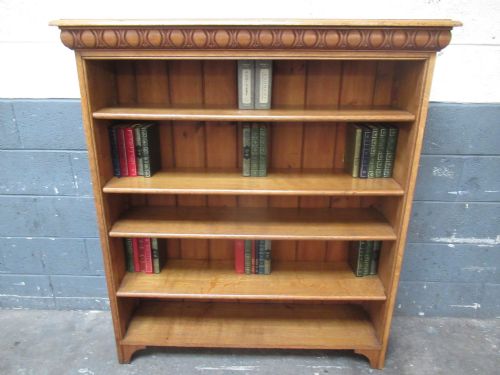
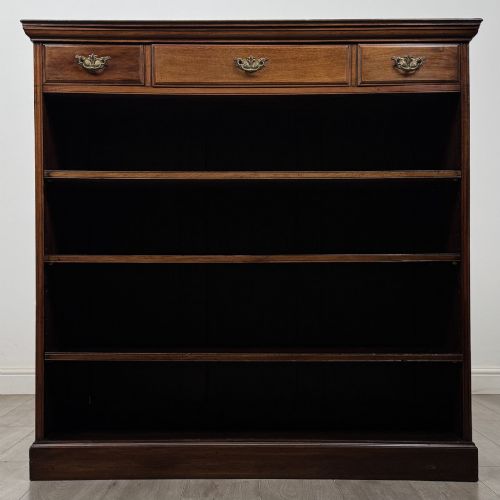
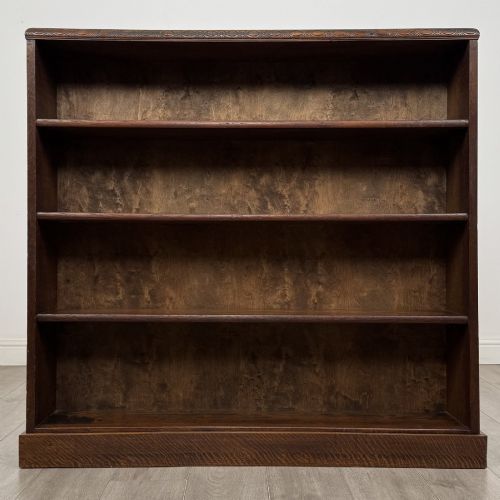
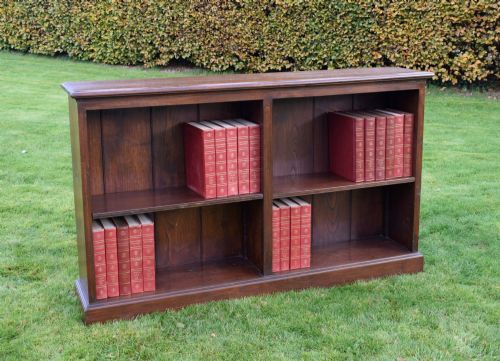

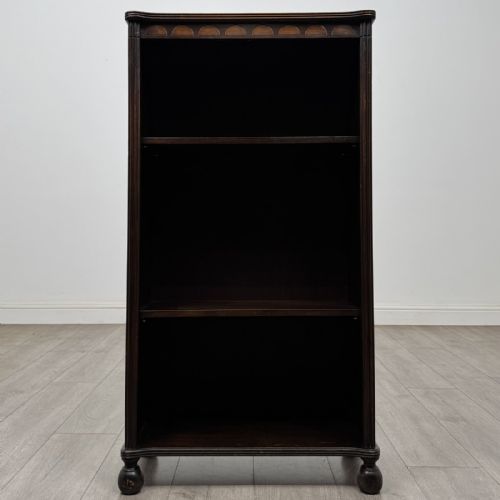

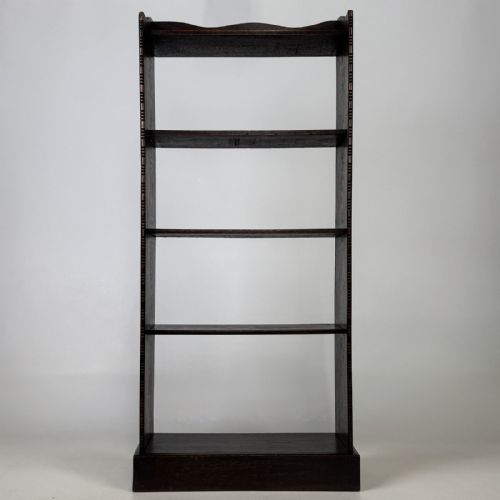
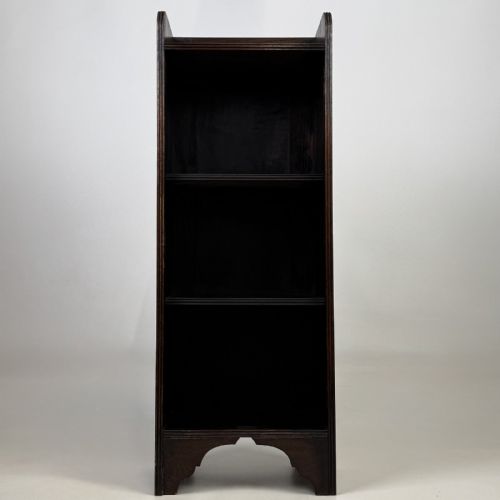
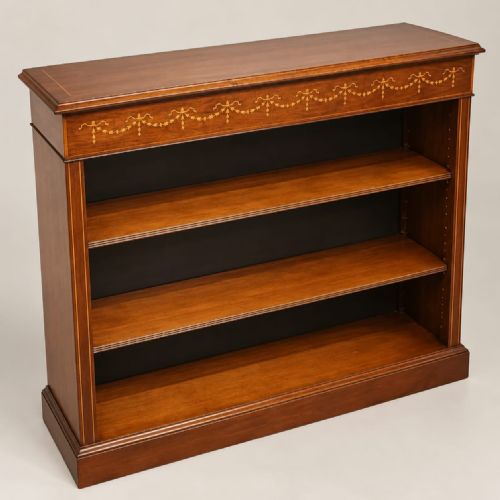
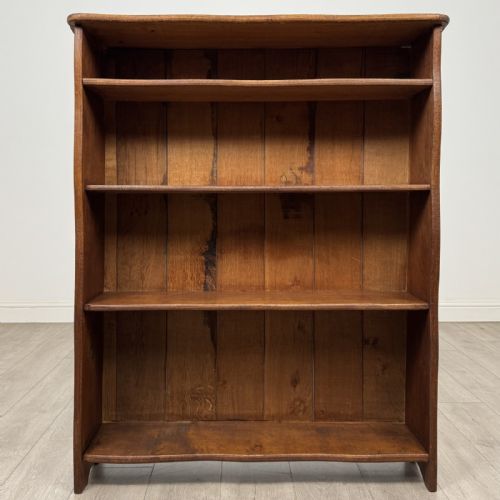
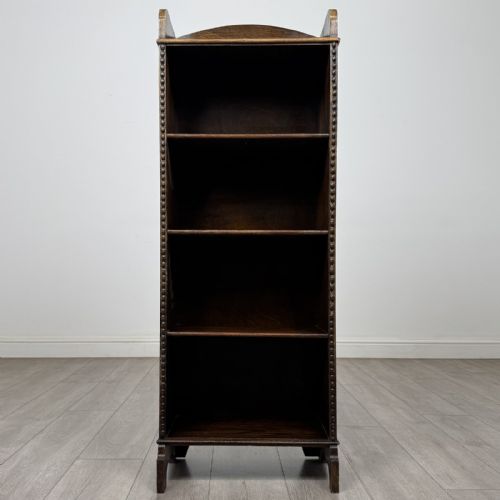
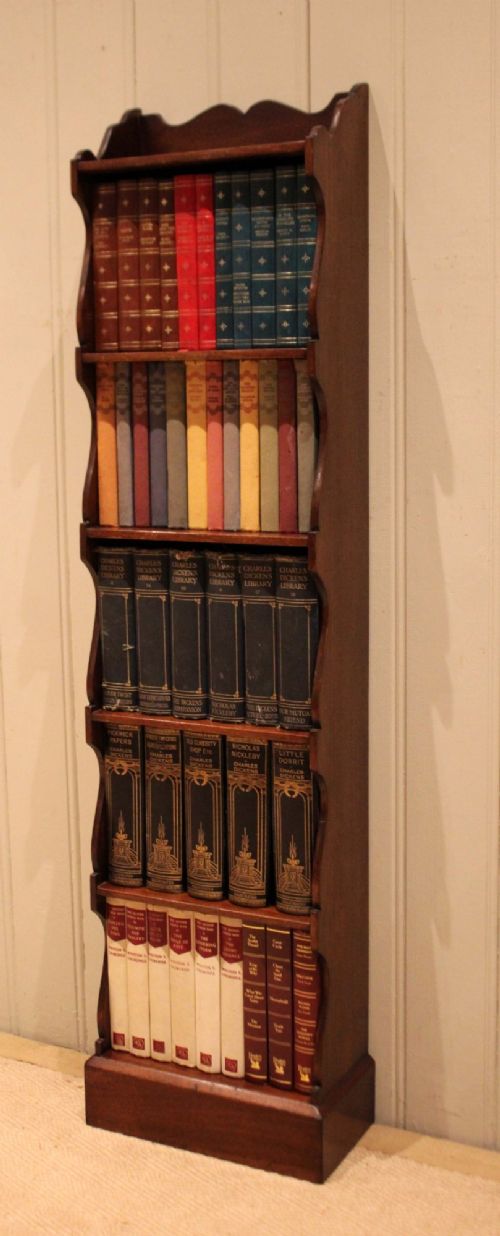

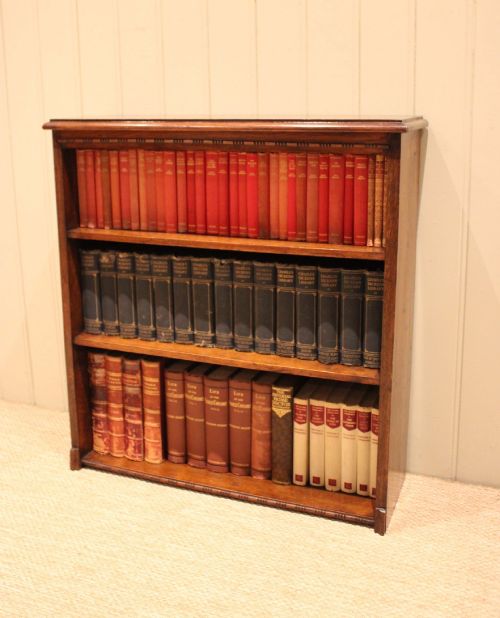
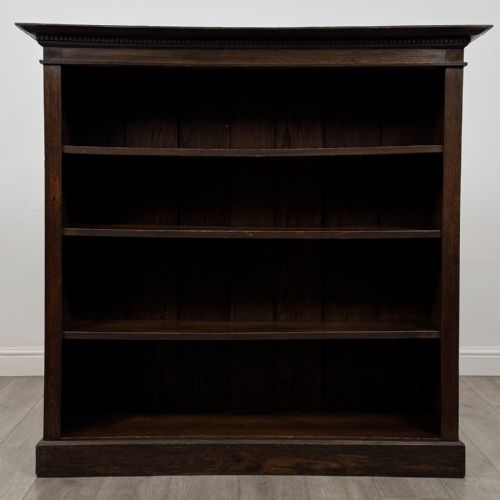
Edwardian Open Shelving Unit
An edwardian open shelving unit brings practical display space into a room, combining straightforward utility with period timber and proportion.
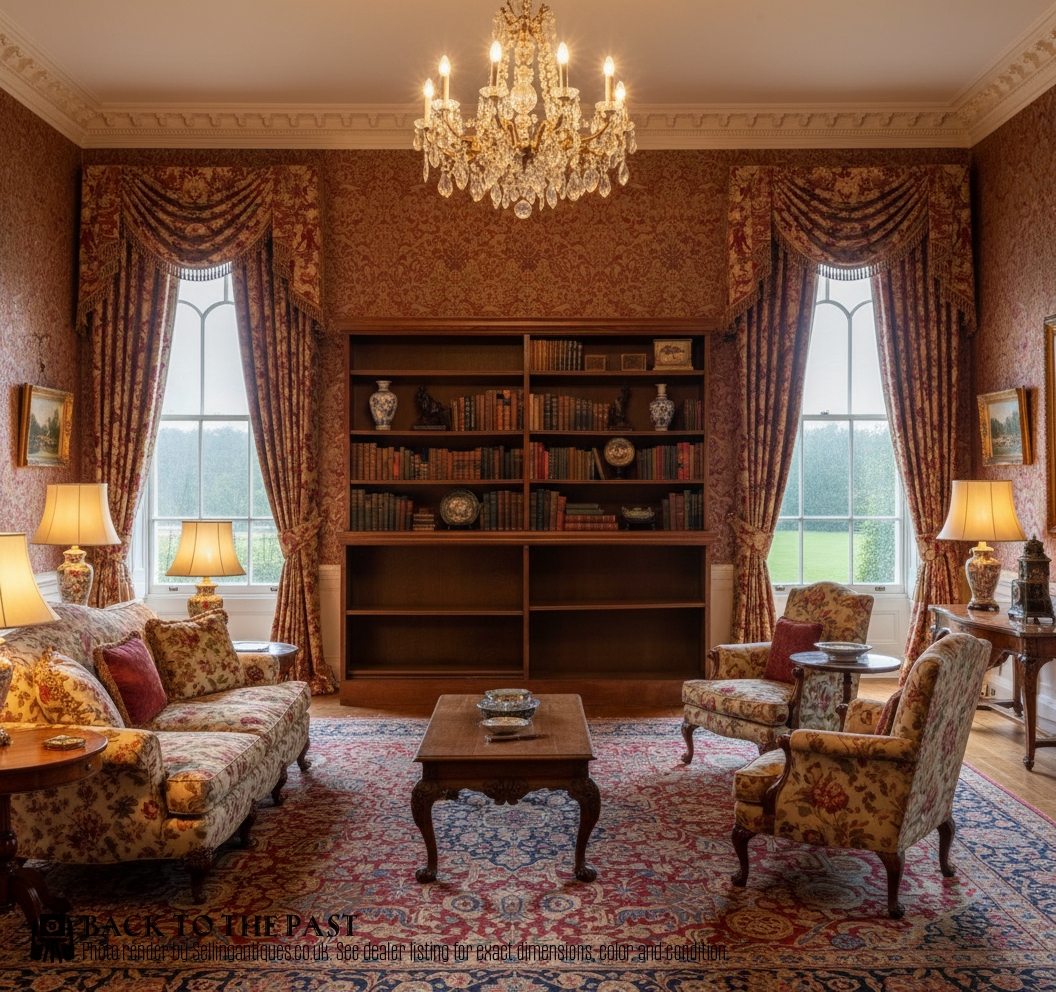
Edwardian Open Shelving Unit
An edwardian open shelving unit primarily takes the form of an open bookcase, bookcase and shelving, or wall shelves designed for domestic use. The items on this page span the Edwardian period, the late Victorian era, and the early twentieth century, reflecting the tastes of the home during those decades.
The most common version met here is constructed from oak or mahogany, often featuring adjustable shelves for practical storage. Pieces range from small variants suitable for compact spaces to large library bookcases and stepped configurations.
Other variations appearing alongside the standard bookcases include whatnots, corner display cabinets, and pieces influenced by the Arts and Crafts movement or Sheraton Revival styles. These formats offer versatile display options for books and decorative objects.
What varies in quality
The standard of timber selection and decorative finish dictates the distinction between everyday utility pieces and finer cabinetmaking. Richly figured burr walnut, intricate inlay, and careful carving set the more ambitious examples apart from plain vernacular items.
Proportion and structural adaptation also define the grade of a piece, such as the inclusion of adjustable shelving systems that offer practical flexibility. The integrity of the original joints and timber surfaces remains central to the character of each unit.
Edwardian Open Shelving Unit Retail Price Guide 2026
Typical asking prices for edwardian open shelving unit among the pieces listed under this phrase on Sellingantiques today, from the lower quarter to the upper quarter. They describe what is for sale here now, not the wider market.
The listings show materials ranging from standard oak and mahogany to decorative burr walnut, satinwood, and inlaid details.
The Edwardian Open Shelving Unit Glossary
- Edwardian
- Pertaining to the reign of King Edward VII, spanning the early twentieth century up to the First World War. Furniture from this era often lighter in scale than preceding Victorian designs.
- Arts and Crafts
- A design movement valuing honest construction and simple materials, frequently manifested in solid oak furniture with subtle hand-finished details.
- Inlay
- A technique where contrasting woods or other materials are inserted into the primary surface to create decorative patterns, common in Sheraton Revival pieces.
- Adjustable shelves
- Shelving supported by moveable brackets or tracks, allowing the interior height to be altered for different book sizes.
- Waterfall bookcase
- A tiered shelving unit where each lower shelf is slightly deeper than the one above it, creating a cascading silhouette.
Edwardian Open Shelving Unit: Frequently Asked Questions
Where should I place an open shelving unit?
These units suit living rooms, studies, or hallways where accessible book storage or display space is required.
Because the sides and back are often open, positioning them against a solid wall ensures stability and frames the contents effectively.
Are the shelves adjustable?
Many of the bookcases featured include adjustable shelving, allowing you to alter the interior layout to accommodate varying book heights.
Fixed-shelf variants also appear, maintaining a rigid traditional structure suited to standard volumes.
How do I distinguish Edwardian from Victorian pieces?
Edwardian furniture generally exhibits lighter timbers, simpler lines, and less heavy carving than its Victorian predecessors.
Late Victorian pieces often incorporate darker oak or rich mahogany with more elaborate decorative motifs.
What maintenance do these wooden units need?
Standard care involves dusting with a dry cloth and occasionally applying a suitable beeswax to nourish the timber surface.
Keeping them away from direct heat sources and strong sunlight preserves the finish and prevents the wood from drying out.