



Edwardian Opalescent Glass
Edwardian opalescent glass brings together milky translucence and soft fire, capturing the shifting light of the early twentieth century in pendant lights, perfume bottles, and centrepieces.
Edwardian Opalescent Glass
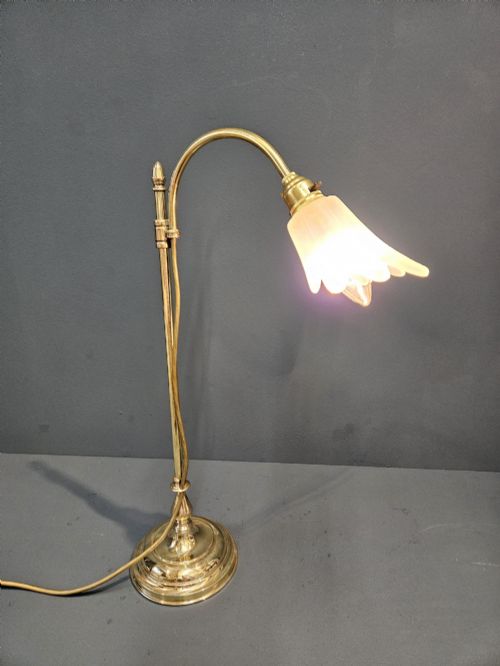
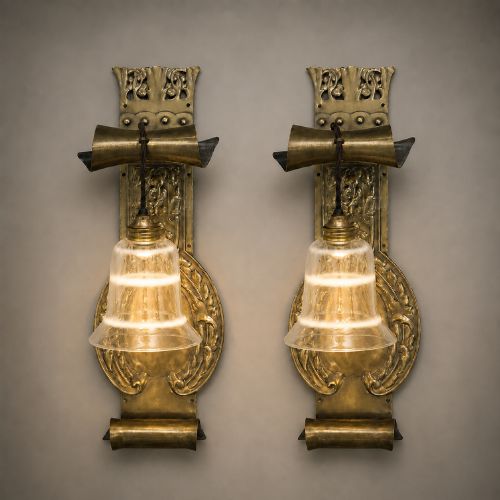
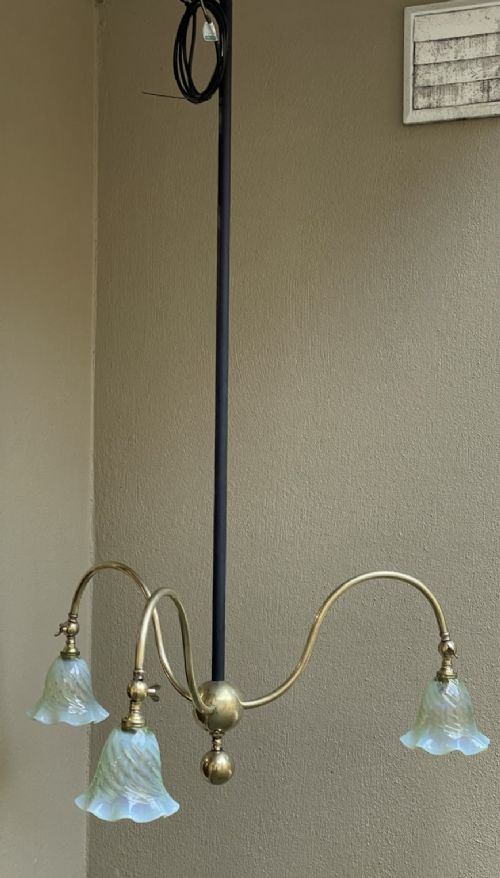
When buyers search for edwardian opalescent glass, they encounter lighting and decorative objects defined by a distinct milky quality that diffuses illumination. The pieces on this page span ceiling lights, pendant lights, perfume bottles, epergnes, and oil lamps.
Most items belong to the Edwardian period or the surrounding decades of 1900 and 1910, with some roots in the nineteenth century. Forms lean heavily into the curving lines of Art Nouveau and the honest construction of the Arts and Crafts movement.
Lighting dominates the selection, from brass rise and fall ceiling fittings to large pendant bowls and copper hanging lights. Alongside these fixtures sit delicate items like the Rene Lalique perfume bottle and decorative pearlescent glass epergnes.
How they were made
Makers shaped these items using glass, opalescent glass, frosted glass, and pearlescent glass, combining the medium with structural mounts of brass and copper. Fabric cord often suspends the electrical fittings, integrating metalwork and glass.
Glassmakers manipulated mineral compounds within the molten batch to achieve the characteristic milky opalescence that catches blue and orange tones in the light. Metalworkers hammered and cast the supporting brass and copper frames to house these bowls and shades.
Edwardian Opalescent Glass Retail Price Guide 2026
Typical asking prices for edwardian opalescent glass among the pieces listed under this phrase on Sellingantiques today, from the lower quarter to the upper quarter. They describe what is for sale here now, not the wider market.
Listings feature items spanning the 19th Century, 1900, 1910, and the Edwardian period, alongside Victorian examples.
What varies in quality
Quality rests upon the depth of the glass opalescence and the harmony between the metalwork and the shade. Superior examples display a rich play of colour across the glass surface rather than a flat, uniform milkiness.
The integration of the metal components, whether cast brass or worked copper, separates standard production from finer pieces. Art Nouveau and Arts and Crafts designs show particular care in the shaping of frames and mounts to hold the glass securely.
The Edwardian Opalescent Glass Glossary
- Opalescent glass
- Glass that milky or translucent appearance with milky blue and amber tones when lit. This material scatters light softly across a room.
- Epergne
- A tabletop centrepiece featuring multiple horns or receptacles for fruit or flowers. Pearlescent versions use iridescent glass finishes.
- Rise and fall
- A lighting mechanism using weights and pulleys to allow the pendant height to be adjusted. Brass fittings often employ this system.
- Arts and Crafts
- A design movement prioritising handcraft and natural materials over mass production. Copper and brass mounts frequently accompany glass shades in this style.
- Art Nouveau
- A style characterised by sinuous, organic lines and floral motifs. Lighting fixtures from this period often echo natural forms in metal and glass.
Edwardian Opalescent Glass: Frequently Asked Questions
What is opalescent glass?
Opalescent glass contains chemical additives that create a milky, semi-translucent appearance with shifting tones of blue and amber. When lit, it diffuses a soft glow without harsh glare.
This material became popular for domestic lighting and decorative items during the late nineteenth and early twentieth centuries.
How do I hang a ceiling light?
Many ceiling lights use brass or copper frames suspended by chains or fabric cords, requiring secure ceiling anchor points. Professional installation ensures the electrical components meet current safety standards.
Adjustable rise and fall mechanisms require careful balancing during installation to function smoothly.
How do I clean perfume bottles?
Clean glass perfume bottles gently with warm water and mild soap, avoiding harsh abrasives that might damage the surface. Rinse thoroughly and allow them to air dry.
Original stoppers should be handled with care to prevent chipping the delicate glass necks.
What defines Arts and Crafts lighting?
Arts and Crafts lighting relies on visible construction, hammered copper or brass, and simple geometric or organic forms. These pieces emphasise the character of the materials used.
They pair naturally with opalescent glass shades that soften the illumination in a room.