



Edwardian Opal Band
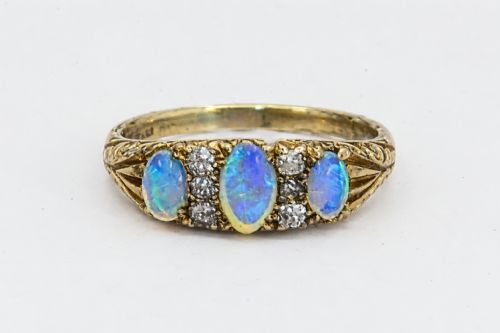
These delicate rings are an edwardian opal band, prized for their luminous play of colour set against warm yellow gold.
Edwardian Opal Band
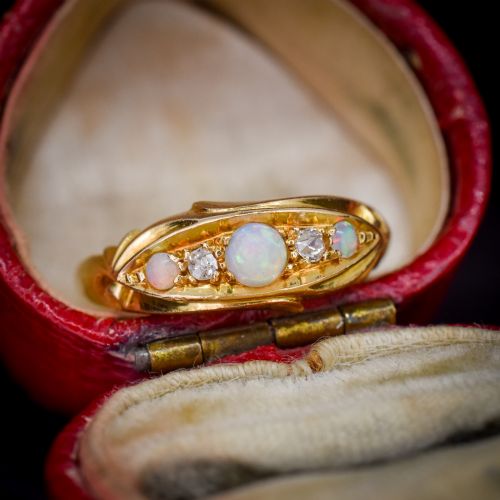
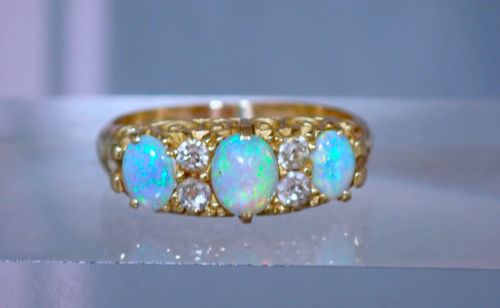
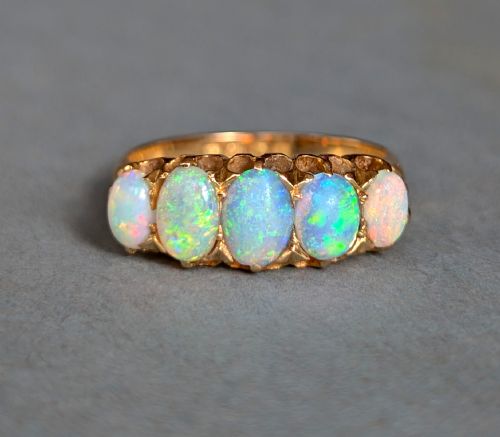
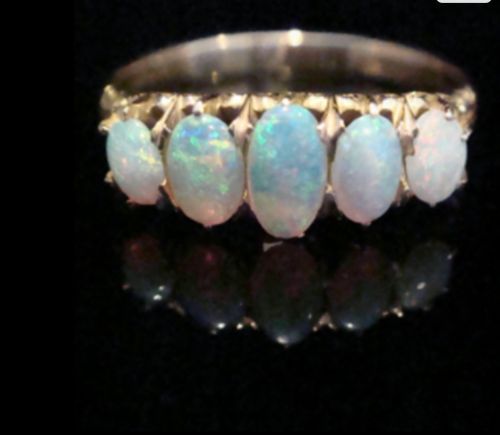
An edwardian opal band brings together shimmering natural opals and bright diamonds mounted securely in substantial yellow gold. Most examples encountered here date from the early twentieth century or the late Victorian era.
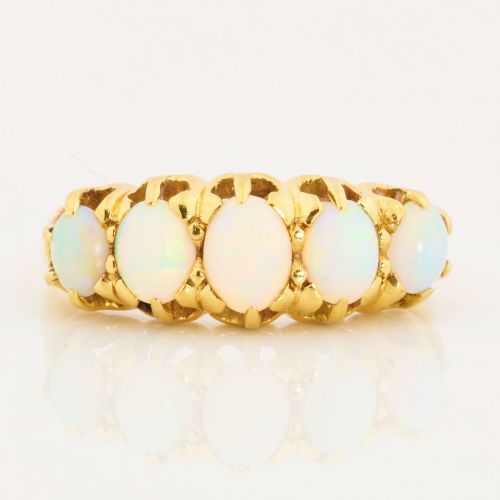
The dominant forms are five-stone settings and boat-shaped clusters that sit low on the hand. These rings display characteristic craftsmanship of the period, often incorporating Chester or Birmingham hallmarks.
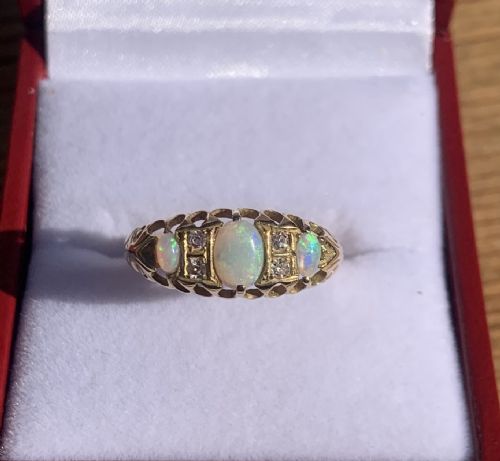
Makers of the era favoured combinations of fiery opals flanked by small accent diamonds. These pieces served as sentimental tokens and everyday dress rings for the discerning Edwardian wearer.
How they were made
Goldsmiths worked primarily in eighteen-carat yellow gold to construct the robust bands and delicate settings needed to secure fragile stones. Stones were hand-set into claw or boat arrangements designed to maximise light capture.
Natural opals were meticulously selected for their internal play of colour, then paired with small brilliant-cut diamonds. Metalwork often featured understated shoulders and traditional British assay office stamps.
History includes a child's ring sized for a diminutive finger, proving that Edwardian families started jewellery collections very early indeed.
What varies in quality
The vibrancy of the optical play within the natural opal dictates the visual impact of each piece. Strong flashes of spectral colour elevate the piece above stones with a dull or milky appearance.
The integrity of the eighteen-carat gold mount and the secure setting of both opals and diamonds determine the overall standard. Crisp hallmarks and minimal wear to the claws distinguish the finest surviving examples.
The Edwardian Opal Band Glossary
- Boat ring
- A curved mounting style resembling the hull of a ship, popular in jewellery of the late nineteenth and early twentieth centuries. This shape allowed multiple stones to sit horizontally across the finger.
- Trilogy ring
- A ring featuring three principal stones, often symbolising the past, present and future. In this selection, they pair central opals with flanking diamonds.
- Hallmark
- An official stamp applied by an assay office indicating the purity of the metal and the year of testing. British marks provide precise provenance for dating.
- Five-stone ring
- A linear arrangement of five gems spanning the top of the band. This layout showcases graduated or uniform opals interspersed with diamonds.
Edwardian Opal Band: Frequently Asked Questions
How do I care for my opal ring?
Opals contain water and require gentle handling to preserve their internal structure. Avoid harsh chemicals, ultrasonic cleaners and sudden temperature changes.
Remove the ring before swimming, gardening or heavy manual tasks. Store it in a dedicated fabric pouch away from harder gemstones that might scratch the gold or stone surface.
Are these rings suitable for daily wear?
These antique rings were built for regular use but demand mindfulness due to the softer nature of opal compared to diamond. Daily wear is entirely possible with appropriate care.
Consider taking the ring off for sleeping and rigorous physical activities to protect the settings and claws from accidental knocks.
What does an 18ct gold mark mean?
An eighteen-carat gold mark denotes that the metal alloy contains seventy-five percent pure gold by weight. This guarantees a rich yellow tone and durable strength.
British pieces frequently carry accompanying leopard head, crown or town marks alongside the maker's stamp.
How can I tell an Edwardian ring from a Victorian one?
Edwardian jewellery typically exhibits lighter, more graceful mounts with platinum accents and diamond-heavy cluster work. Victorian pieces often lean towards heavier yellow gold and robust stone arrangements.
Hallmarks provide the most definitive dating evidence, matching the year letter to official assay office records.